


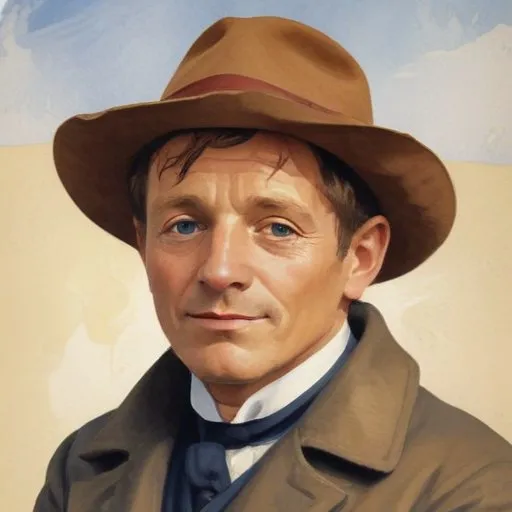
An American Post-Impressionist painter and art instructor, known for vibrant, expressive depictions of urban leisure activities and landscapes. His work bridges the gap between Impressionism and Fauvism.
Maurice Prendergast is renowned for his captivating landscapes and scenes of modern life, characterized by a unique mosaic-like color palette that has become synonymous with Post-Impressionism. With a style that blends the rustic charm of the Ashcan School with the vibrant colors of Impressionism, Prendergast created a distinctive visual language that continues to inspire artists and art enthusiasts alike.
Born on October 10, 1858, in St. Johns, Newfoundland, Maurice Prendergast was the twin brother of Lucy Prendergast. After his family's trading post failed, they moved to Boston, where he grew up in the South End. At the tender age of 14, Prendergast was apprenticed to a commercial artist, an experience that instilled in him a deep appreciation for bright colors and flat patterning effects that would define his mature work.
Prendergast's artistic journey took a significant turn when he traveled to Paris in 1891, where he studied at the Académie Colarossi and Académie Julian. During his time in Paris, he met prominent artists such as Gustave Courtois, Jean-Joseph Benjamin-Constant, and James Morrice, who introduced him to the avant-garde circle of Walter Sickert and Aubrey Beardsley. This exposure to the works of Vincent van Gogh, Georges Seurat, and Paul Cézanne had a profound impact on Prendergast's artistic vision, solidifying his position as a Post-Impressionist painter.
Prendergast's unique style is characterized by a focus on modern life, capturing the urban landscape and its inhabitants with a palette of vibrant, mosaic-like colors. His paintings often feature fragments of daily life, such as street scenes, parks, and beaches, which he transforms into visual tapestries of color and texture. By exploring the relationship between color and form, Prendergast created a distinctive visual language that blended the rough, urban quality of the Ashcan School with the lyricism of Impressionism.
Prendergast's innovative approach to color and composition has had a lasting impact on modern art, influencing generations of artists, from the Fauvists to the Abstract Expressionists. His work continues to inspire artists, designers, and art enthusiasts, ensuring his legacy as one of the most important American Post-Impressionist painters of the early 20th century.
A shy individual who struggled with deafness in his later years, Prendergast remained a bachelor throughout his life, devoting himself to his art and his younger brother, Charles, who was also a painter. Despite his reserved nature, Prendergast's artistic vision continues to resonate with audiences today, a testament to his enduring legacy as a master of Post-Impressionism.
Born in 1865
A pioneering figure in American art, known for advocating for a more spontaneous and expressive approach to painting, and for teaching and mentoring many notable artists.
Born in 1867
A pioneering figure in the Ashcan School, known for vivid, gritty depictions of urban life and its struggles. His bold, expressive brushstrokes captured the essence of early 20th-century America.
Born in 1870
American painter and illustrator known for capturing the vibrant spirit of urban life in the early 20th century through his bold, colorful depictions of city streets and everyday people.
Born in 1844
An American Impressionist painter and educator, she created intimate, tender portraits of women and children, capturing the quiet beauty of everyday life. Her artwork often explored the complexities of motherhood and femininity.
Born in 1836
A renowned artist capturing American life and landscapes through his evocative paintings and illustrations, particularly focusing on the Civil War and coastal scenes.
Born in 1859
An American Impressionist painter and illustrator, known for capturing the essence of urban life and landscapes, particularly in his iconic flag-themed works.
Born in 1844
A pioneering American artist who explored the human form through realistic and psychologically complex works, capturing the spirit of his subjects with unflinching honesty.
