


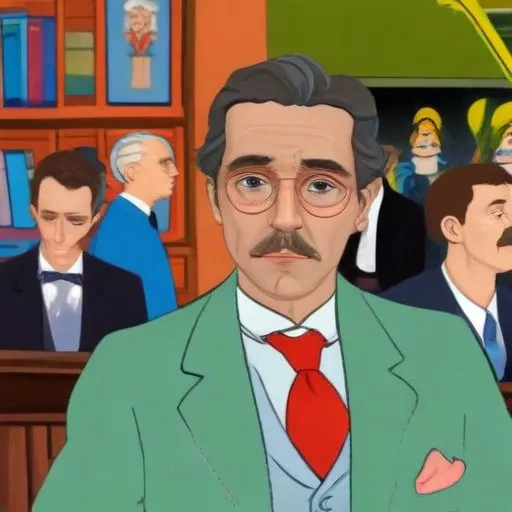
American painter and illustrator known for capturing the vibrant spirit of urban life in the early 20th century through his bold, colorful depictions of city streets and everyday people.
William Glackens, a renowned American realist painter, is celebrated for his vivid depictions of urban life in pre-World War I New York and Paris. As a founding member of the Ashcan School, he rejected traditional artistic boundaries, paving the way for a new era of modern art.
Born on March 13, 1870, in Philadelphia, Pennsylvania, Glackens grew up in a family of artists. His older siblings, Ada and Louis, a cartoonist and illustrator, instilled in him a passion for drawing and drafting. After graduating from Central High School in 1890, Glackens enrolled at the Pennsylvania Academy of the Fine Arts, where he studied under the renowned realist Thomas Anshutz.
Glackens' career began as an artist-reporter for The Philadelphia Record, followed by a stint as an illustrator for the Philadelphia Press. His experience in illustration helped him develop a keen eye for detail, which he later applied to his painting. In the early 1890s, he began taking evening classes at the Pennsylvania Academy of the Fine Arts, where he met John Sloan, who introduced him to Robert Henri, a charismatic figure in Philadelphia art circles.
In the early 1900s, Glackens became a key figure in the Ashcan School, a group of artists who sought to break free from the constraints of traditional art. Alongside Henri, Sloan, and others, Glackens created vibrant, realistic paintings of urban life, often focusing on the working class and the city's underbelly. His work during this period, characterized by dark hues and a sense of gritty realism, earned him recognition as a major artist.
In the 1920s, Glackens' style underwent a significant transformation, influenced by the Impressionist master Pierre-Auguste Renoir. His later work, characterized by brighter tones and a more expressive brushstroke, showcased a new level of sophistication and nuance. This evolution in style cemented Glackens' reputation as a master painter, capable of adapting to changing artistic trends.
Glackens' contributions to modern art go beyond his own work. He played a crucial role in helping Albert C. Barnes acquire the European paintings that form the nucleus of the renowned Barnes Foundation in Philadelphia. His influence can be seen in the work of subsequent generations of artists, including the social realists of the 1930s and 1940s.
Glackens married Edith Dimock in 1904, and the couple had two children, Lenna and Ira. He traveled extensively throughout his life, including a trip to Europe in 1895, which deeply influenced his artistic development. Glackens passed away on May 22, 1938, leaving behind a legacy as one of the most important American painters of the early 20th century.
William Glackens' innovative spirit, passion for urban life, and dedication to artistic expression have left an indelible mark on the world of art. As we celebrate his life and legacy, we are reminded of the power of creativity to transform and uplift humanity.
Born in 1865
A pioneering figure in American art, known for advocating for a more spontaneous and expressive approach to painting, and for teaching and mentoring many notable artists.
Born in 1867
A pioneering figure in the Ashcan School, known for vivid, gritty depictions of urban life and its struggles. His bold, expressive brushstrokes captured the essence of early 20th-century America.
Born in 1858
An American Post-Impressionist painter and art instructor, known for vibrant, expressive depictions of urban leisure activities and landscapes. His work bridges the gap between Impressionism and Fauvism.
Born in 1873
A pioneering figure in American Impressionism, capturing the beauty of urban and natural landscapes with vibrant colors and loose brushstrokes. Known for his dreamy, ethereal depictions of everyday life.
Born in 1892
A pioneering American modernist, blending cubism and abstract expressionism to create vibrant, jazz-inspired paintings that explored the intersection of art and everyday life.
Born in 1880
Pioneering abstract artist and educator who explored expressive forms and colors, creating a unique American modernist style. Known for his innovative and emotive works that bridged representation and abstraction.
