


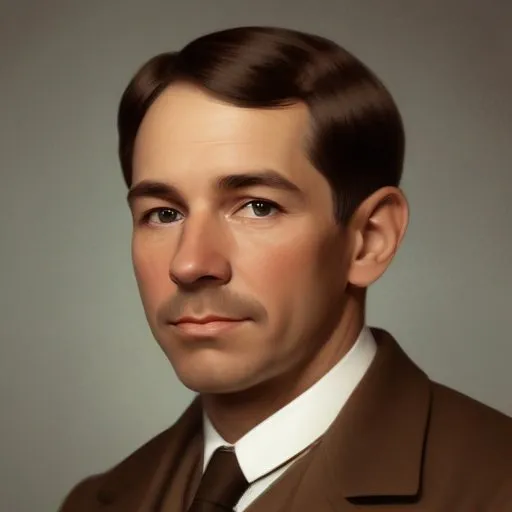
American Impressionist painter and instructor at the Art Students League of New York, known for capturing rural landscapes and everyday life in a soft, dreamy style.
J. Alden Weir was an American impressionist painter and a founding member of The Ten, a group of artists who defied traditional art organizations and exhibited their works as a stylistically unified group. Weir's artistic rebelliousness and innovative style continue to influence American art to this day.
Born on August 30, 1852, in West Point, New York, Weir was the second to last of sixteen children. His father, Robert Walter Weir, was a painter and professor of drawing at the Military Academy at West Point, who taught notable artists such as James Abbott McNeill Whistler. Weir's older brother, John Ferguson Weir, was also a well-known landscape artist who painted in the styles of the Hudson River and Barbizon schools.
Weir received his first art training at the National Academy of Design in the early 1870s before enrolling at the École des Beaux-Arts in Paris in 1873. There, he studied under the famous French artist Jean-Léon Gérôme and became good friends with Jules Bastien-Lepage.
In the 1890s, Weir became a member of the Cos Cob Art Colony near Greenwich, Connecticut, a community of artists who sought to break away from traditional art forms and experiment with new styles. In 1898, Weir co-founded The Ten, a group of artists who were dissatisfied with professional art organizations and sought to exhibit their works as a stylistically unified group.
The Ten included notable artists such as William Merritt Chase, Edmund Tarbell, and John Henry Twachtman. Together, they organized annual exhibitions that showcased their innovative and diverse styles, which ranged from impressionism to realism.
Weir's artistic style was characterized by his use of soft, feathery brushstrokes and his emphasis on capturing the fleeting effects of light. He was heavily influenced by the French impressionists, particularly Claude Monet, and sought to apply their techniques to American landscapes.
Weir believed that art should be a personal and emotional expression, rather than a representation of reality. He wrote, "Art is not a matter of rules and formulas, but of feeling and intuition."
Weir's most notable works include "The Lane" (1902), "The Yellow Dress" (1903), and "The Red Bridge" (1895). His paintings are characterized by their dreamy, ethereal quality and their use of vibrant colors.
Weir exhibited his works at the National Academy of Design, the Pennsylvania Academy of the Fine Arts, and the Corcoran Gallery of Art, among others. He also received several awards and honors, including the silver medal at the 1889 Paris Exposition.
Weir's artistic innovations and rebellious spirit have continued to inspire American artists to this day. His work has influenced generations of artists, including the Abstract Expressionists of the 1950s and 1960s.
Weir's legacy extends beyond the art world as well. His commitment to artistic freedom and innovation has made him a symbol of American creativity and independence.
Born in 1853
An American Impressionist painter, etcher, and academic, known for his dreamy, softly focused landscapes and innovative printmaking techniques. His work often captured the quiet beauty of everyday life.
Born in 1859
An American Impressionist painter and illustrator, known for capturing the essence of urban life and landscapes, particularly in his iconic flag-themed works.
Born in 1848
A French painter who created realistic and intimate portraits of rural life, capturing the beauty of everyday moments. Known for his innovative use of natural light and color.
Born in 1849
A prominent figure in American art, he was a master of Impressionism and a devoted teacher, shaping the development of American art through his work and students.
Born in 1865
A pioneering figure in American art, known for advocating for a more spontaneous and expressive approach to painting, and for teaching and mentoring many notable artists.
Born in 1867
A pioneering figure in the Ashcan School, known for vivid, gritty depictions of urban life and its struggles. His bold, expressive brushstrokes captured the essence of early 20th-century America.
Born in 1873
A pioneering figure in American Impressionism, capturing the beauty of urban and natural landscapes with vibrant colors and loose brushstrokes. Known for his dreamy, ethereal depictions of everyday life.
Born in 1858
A prominent American Impressionist painter, capturing the beauty of landscapes and everyday life with vibrant colors and expressive brushstrokes.
