


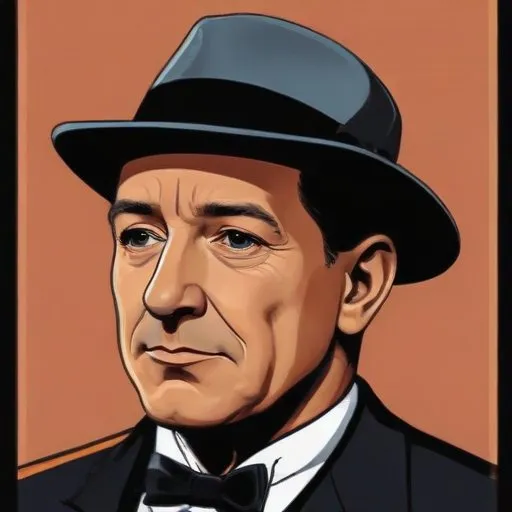
Developed the first implantable pacemaker, revolutionizing cardiac care, and dedicated his life to humanitarian work.
Wilson Greatbatch, an American engineer and inventor, left an indelible mark on the medical world with his pioneering work on the development of the first implantable cardiac pacemaker. Holding over 325 patents, he revolutionized the field of cardiology, saving countless lives and earning him a place in the National Inventors Hall of Fame.
Born on September 6, 1919, in Buffalo, New York, Greatbatch grew up with a natural curiosity and love for tinkering. He attended public grade school at West Seneca High School, where his fascination with objects and problem-solving laid the foundation for his future innovations.
Drafted into military service during World War II, Greatbatch served as an aviation chief radioman before receiving an honorable discharge in 1945. Utilizing the GI Bill, he attended Cornell University, graduating with a B.E.E. in electrical engineering in 1950. He later earned a master's degree from the University of Buffalo in 1957.
In the 1950s, Greatbatch collaborated with Dr. William Chardack to develop the first implantable cardiac pacemaker. This groundbreaking invention used Mallory mercuric oxide-zinc cells (mercury battery) as its energy source, driving a two-transistor, transformer-coupled blocking oscillator circuit. The pacemaker was encapsulated in epoxy resin and coupled to electrodes placed into the myocardium of the patient's heart.
This patented innovation led to Medtronic, a company based in Minneapolis, commencing the manufacture and further development of artificial cardiac pacemakers. The Chardack-Greatbatch pacemaker paved the way for modern pacemakers, which have become a lifesaving solution for millions worldwide.
In 1968, Greatbatch developed and patented a lithium battery cell (U.S. patent 4,049,890) in collaboration with Catalyst Research Corporation of Baltimore, Maryland. Although the cell had an internal impedance limiting its current load, it found a new purpose in the pacemaker industry, which could utilize high-impedance batteries.
Greatbatch's contributions to the field of cardiology were recognized with numerous awards and honors, including the Lemelson-MIT Prize and the National Medal of Technology and Innovation in 1990.
Wilson Greatbatch's pioneering work on the implantable cardiac pacemaker and lithium battery cell has left an indelible mark on the medical world. His innovative spirit, passion for problem-solving, and dedication to improving human lives have inspired generations of engineers, inventors, and medical professionals.
Through his remarkable contributions, Greatbatch has saved countless lives, earning himself a place among the most remarkable inventors of the 20th century.
Born in 1908
Pioneering cardiovascular surgeon and educator who developed numerous surgical procedures and medical devices, revolutionizing the field of cardiovascular medicine.
Born in 1920
Performed the first human heart transplant in the United States and developed numerous cardiothoracic surgical techniques. Known for his pioneering work in cardiac surgery.
Born in 1922
Performed the world's first human-to-human heart transplant, revolutionizing cardiac surgery and paving the way for modern organ transplants.
Born in 1908
Pioneering cardiovascular surgeon and educator who developed numerous surgical procedures and medical devices, revolutionizing the field of cardiovascular medicine.
Born in 1856
Performed the first successful open-heart surgery and developed several procedures for heart surgery, paving the way for modern cardiac care.
79 Years Old
A financier who revolutionized the bond market with junk bonds, and later became a prominent philanthropist, focusing on medical research and education.
