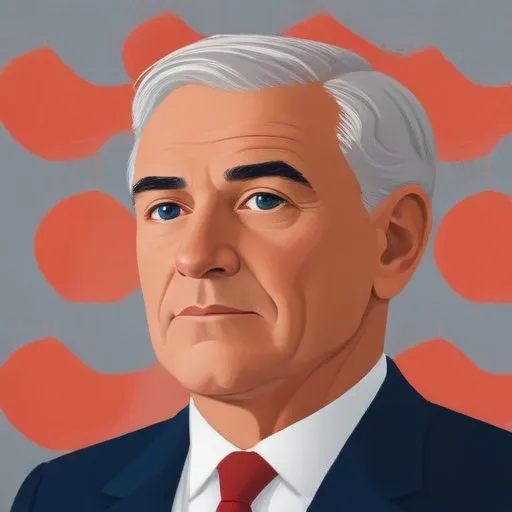
Winthrop M. Crane

Winthrop M. Crane

Winthrop M. Crane was born on April 23rd, 1853

Place of birth: Boston, Massachusetts
Occupation: Businessman, Politician
Nationality: American
Full name: Winthrop Murray Crane
Born: April 23, 1853
Died: October 2, 1920
Office: 40th Governor of Massachusetts
Term: 1900-1903

A Massachusetts governor and businessman who served from 1900 to 1903, known for his progressive policies and support for labor unions.

Written by: Thomas Blackwood Thomas Blackwood

Winthrop M. Crane: The Paper Baron and Republican Powerbroker

A Legacy in Paper and Politics

Winthrop Murray Crane, commonly referred to as W. Murray Crane, was a shrewd American businessman and Republican politician who left an indelible mark on the paper industry and Massachusetts politics. At the helm of Crane & Co., his family's paper manufacturing company, he secured a lucrative government contract in 1879 to supply paper for United States currency, a monopoly the company still holds today.

Early Life and Career

Born on April 23, 1853, in Dalton, Massachusetts, Crane was the son of Louise Fanny Laflin and Zenas Marshall Crane, owner of the Crane Paper Company. Growing up in a family steeped in the paper trade, Crane entered the business in 1870 and, alongside his brother Zenas Jr., oversaw a period of significant growth and expansion.

Rise to Political Prominence

Crane's foray into politics began in the 1890s, when he became increasingly active in state Republican politics. His influence and reputation grew, earning him the role of 37th lieutenant governor of Massachusetts in 1896 and, subsequently, the 40th governor of Massachusetts in 1899. During his governorship, Crane deftly navigated a Teamsters strike, impressing President Theodore Roosevelt, who later sought his counsel.

United States Senator and Presidential Adviser

In 1904, Crane was appointed to the United States Senate, where he served until 1913. During his tenure, he advised both Presidents Roosevelt and William Howard Taft. Crane's reluctance to engage in campaigning and public speaking notwithstanding, he remained a respected figure in Republican circles.

Mentor to a Future President

Toward the end of his career, Crane played a significant role as a political mentor to Calvin Coolidge, who would later become the 30th President of the United States. Coolidge was elected vice president just one month after Crane's passing in 1920.

Legacy and Impact

Winthrop M. Crane's legacy extends beyond his paper industry achievements and political accomplishments. He was a shrewd businessman, skilled politician, and dedicated public servant who played a significant role in shaping Massachusetts politics and national policy during the early 20th century. His influence on Calvin Coolidge and his counsel to two presidents cement his place as a pivotal figure in American history.

Trivia and Fun Facts

Timeline
1853
Birth in Massachusetts
Winthrop M. Crane was born in Dalton, Massachusetts on April 23, 1853.
1882
Businessman and Politician
Crane became a successful businessman and politician in Massachusetts, serving in the state legislature.
1897
Lieutenant Governor
Crane was elected as the Lieutenant Governor of Massachusetts in 1897.
1900
Governor of Massachusetts
Crane served as the 40th Governor of Massachusetts from 1900 to 1903.
1920
Death in Massachusetts
Winthrop M. Crane died on October 2, 1920, in Dalton, Massachusetts.
Winthrop M. Crane

Winthrop M. Crane Quiz

What was Winthrop M. Crane known for during his governorship?

Score: 0/5
FAQ
What was Winthrop M. Cranes role in Massachusetts politics?
Winthrop M. Crane was the 40th Governor of Massachusetts, serving from 1900 to 1903. He was a prominent Republican leader and businessman.
How did Winthrop M. Cranes business background influence his political career?
Cranes experience in the manufacturing industry informed his policies on labor and commerce, which aimed to promote economic growth in Massachusetts.
What were some of Winthrop M. Cranes notable accomplishments as Governor?
During his tenure, Crane oversaw the creation of the Massachusetts State Police and implemented reforms to the states education system.
How did Winthrop M. Cranes governorship impact the states infrastructure?
Crane invested heavily in infrastructure development, including the construction of roads, bridges, and public transportation systems.
What is Winthrop M. Cranes legacy in Massachusetts politics?
Today, Crane is remembered as a dedicated public servant who worked to improve the lives of Massachusetts citizens through pragmatic and effective governance.

Related People:

Calvin Coolidge

Born in 1872

The 30th President of the United States, a lawyer and politician, led the country through a period of economic prosperity and limited government intervention, earning the nickname "Silent Cal" for his frugal and humble nature. He's most known for his minimalist approach to governance and tax cuts.

Theodore Roosevelt

Born in 1858

A pioneering leader who championed progressive reforms, trust-busting, and conservation, earning a Nobel Peace Prize for mediating the Russo-Japanese War. He's also famous for his rugged outdoorsmanship and "big stick" diplomacy.

William Howard Taft

Born in 1857

The 27th President of the United States was a lawyer and jurist who served as the only person to hold the offices of President and Chief Justice of the United States. He's known for his significant contributions to the country's judicial system.

Warren G. Harding

Born in 1865

The 29th President of the United States, a journalist-turned-politician, led the country through a period of post-war prosperity and scandalous corruption. He's infamous for his administration's numerous scandals and his own extramarital affairs.

Herbert Hoover

Born in 1874

The 31st President of the United States was a humanitarian and politician who led the country through the Great Depression and is known for his humanitarian efforts and infrastructure development. He's also infamous for his inability to mitigate the economic crisis.

Franklin D. Roosevelt

Born in 1882

Led the United States through the Great Depression and World War II, implementing a series of reforms known as the New Deal and helping to establish the country as a global superpower.

Al Smith

Born in 1873

The 42nd Governor of New York was a prominent figure in American politics, known for being the first Catholic to run for President and a strong advocate for social justice and progressive reforms. He played a significant role in shaping the Democratic Party's platform during the 1920s and 1930s.

James Michael Curley

Born in 1874

A charismatic politician who dominated Massachusetts politics for decades, known for his folksy charm and controversial antics, including multiple stints in jail.