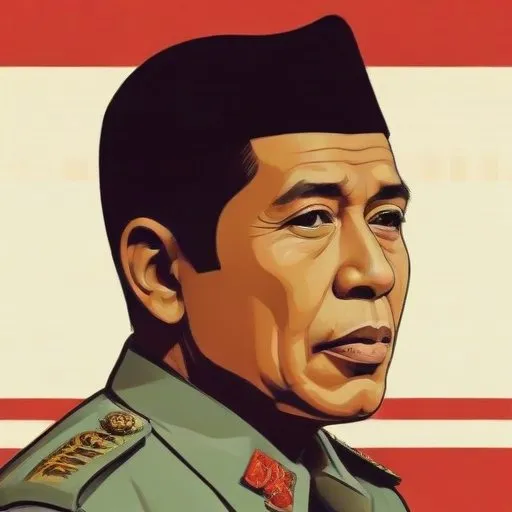
Wiranto

Wiranto

Wiranto was born on April 4th, 1947

Full Name: Wiranto
Place of Birth: Yogyakarta, Indonesia
Zodiac Sign: Virgo
Profession: General, politician
Notable Offices: Coordinating Minister of Politics, Law, and Security
Party: Hanura
Education: Indonesian Military Academy
Known For: Former Commander of the Indonesian Army

A former Indonesian military commander who played a key role in the country's transition to democracy and later served as a cabinet minister, known for his efforts to reform the military and promote human rights.

Written by: Emma Thompson Emma Thompson

A Career Marked by Contrasting Opinions

Wiranto is a household name in Indonesia, synonymous with the country's turbulent transition from authoritarian rule to democracy in the late 1990s. He is known for his role as the Commander of the Indonesian Armed Forces from February 1998 to October 1999, a period marked by both praise for his moderation and criticism for his alleged involvement in human rights violations.

The Early Years

Born on April 4, 1947, Wiranto grew up in a family with a strong military background. His father, Ramelan, was a member of the Indonesian military during the country's struggle for independence. Wiranto's early years were marked by a strong sense of discipline and a desire to follow in his father's footsteps. He attended the Indonesian Military Academy and graduated in 1970.

Rise to Power

Wiranto's military career was marked by rapid promotions, thanks in part to his strong connections with the ruling elite. In 1998, he became the Commander of the Indonesian Armed Forces, a position that gave him significant influence over the country's political landscape. During this period, he played a crucial role in facilitating the transition from authoritarian rule to democracy, earning praise from some for his moderation and willingness to allow civilian rule to develop.

Controversy and Allegations

However, Wiranto's tenure as Commander was also marked by allegations of human rights violations, particularly during Indonesia's withdrawal from East Timor in 1999. The international community, including the United Nations, has gathered evidence of severe human rights abuses, including forced displacement, torture, and killings, during this period. Wiranto has consistently denied any wrongdoing, but an Indonesian commission placed general responsibility for these injustices on him in 2000. In 2004, the United Nations-backed Special Panels of the Dili District Court indicted him for war crimes.

Political Ambitions

Despite the controversy surrounding his military career, Wiranto has pursued a career in politics. He ran unsuccessfully for President of Indonesia in 2004 and for the vice-presidency in 2009. In 2016, he was appointed Coordinating Minister for Political, Legal, and Security Affairs, replacing Luhut Binsar Panjaitan.

Legacy and Impact

Wiranto's legacy is complex and multifaceted. While some credit him with playing a moderating influence during Indonesia's transition to democracy, others condemn him for his alleged role in human rights violations. His impact on modern Indonesian politics has been significant, but his refusal to acknowledge his role in past abuses has sparked controversy and sparked heated debates about accountability and justice.

Personal Life and Milestones

Wiranto is married to Rugaiyah Sipan, and they have three children together. Throughout his career, he has received numerous awards and honors, including the Indonesian Military's highest honor, the Adhi Makayasa Medal.

Philosophical Contributions and Beliefs

Wiranto's philosophical contributions to Indonesian politics have been shaped by his military background and his experiences during the country's transition to democracy. He has spoken publicly about the need for a strong military to ensure national stability, but has also acknowledged the importance of civilian rule.

Influence on Modern Society

Wiranto's influence on modern Indonesian society has been significant, both as a military leader and a politician. His role in shaping the country's political landscape has sparked debate and controversy, but has also contributed to Indonesia's gradual transition towards democracy.

Quotes and Memorable Sayings

Historical Context and Legacy

Wiranto's legacy will be shaped by his complex and often contradictory role in Indonesian history. While he has made significant contributions to the country's transition to democracy, his alleged involvement in human rights abuses will continue to spark controversy and debate.

Comparative Analysis with Contemporaries

Wiranto's role in Indonesian politics has drawn comparisons with other influential figures, including former President Suharto and fellow military leader, Prabowo Subianto. While all three share a military background, their approaches to politics and governance have differed significantly.

Personal Relationships and Anecdotes

Wiranto has been known for his close relationships with members of the Indonesian elite, including Suharto and Prabowo Subianto. His personal relationships have been shaped by his military background and his experiences during Indonesia's transition to democracy.

Impact on Pop Culture

Wiranto's influence on Indonesian pop culture has been limited, but his role in shaping the country's political landscape has made him a household name.

Awards and Honors

Predictions and Speculations

Wiranto's future in Indonesian politics remains uncertain, but his influence on the country's political landscape will continue to be felt. As Indonesia continues to navigate its transition to democracy, Wiranto's legacy will remain a topic of debate and discussion.
Timeline
1947
Born in Indonesia
Wiranto was born on April 4, 1947, in Indonesia. He would go on to become a prominent general and politician.
1973
Joined Indonesian Army
Wiranto joined the Indonesian Army, where he rose through the ranks to become a high-ranking officer.
1999
Served as Coordinating Minister
Wiranto served as Coordinating Minister for Political and Security Affairs under President B.J. Habibies government.
2003
Ran for Vice President
Wiranto ran as a candidate for Vice President of Indonesia, but lost the election.
2014
Served as Coordinating Minister Again
Wiranto was reappointed as Coordinating Minister for Political, Legal, and Security Affairs under President Joko Widodos government.
Wiranto

Wiranto Quiz

What was Wiranto's key role in Indonesia's transition to democracy?

Score: 0/5
FAQ
What is Wirantos military background?
Wiranto is an Indonesian general and politician who has had a long and distinguished military career. He rose through the ranks of the Indonesian military, serving as Chief of the General Staff from 1998 to 1999.
What role did Wiranto play in Indonesian politics?
Wiranto played a key role in Indonesian politics, serving as Coordinating Minister for Political, Social, and Security Affairs from 1999 to 2000. He was also a candidate in the 2004 presidential election.
What are Wirantos views on democracy?
Wiranto has expressed support for democracy and human rights, and has worked to promote these values in Indonesia. He has also emphasized the importance of national unity and stability.
Has Wiranto been involved in any controversies?
Yes, Wiranto has been involved in several controversies, including allegations of human rights abuses during his time in the military. He has denied these allegations and has worked to promote reconciliation and accountability.
What is Wirantos current role?
Wiranto is currently active in Indonesian politics and continues to promote his vision for the countrys future. He remains a respected figure in Indonesian public life for his experience and leadership skills.

Related People:

Susilo Bambang Yudhoyono

76 Years Old

The first democratically elected President of Indonesia, serving from 2004 to 2014, known for maintaining stability and promoting economic growth during his tenure. He also played a key role in combating terrorism and separatist movements.

Megawati Sukarnoputri

79 Years Old

First female President of Indonesia, leading the country from 2001 to 2004 and playing a key role in its transition to democracy. She's a symbol of female empowerment in a predominantly Muslim country.

Abdurrahman Wahid

85 Years Old

A journalist and politician who served as the 4th President of Indonesia, known for promoting democracy and interfaith dialogue in a country with the world's largest Muslim population. He was a key figure in Indonesia's transition to democracy after decades of authoritarian rule.

Joko Widodo

64 Years Old

The first Indonesian president from a lower-middle-class background, known for his efforts to boost economic growth and infrastructure development, while also promoting tolerance and pluralism.

Suharto

Born in 1921

The authoritarian leader who ruled Indonesia for three decades, known for his iron-fisted governance and economic development, but also accused of human rights abuses and corruption.