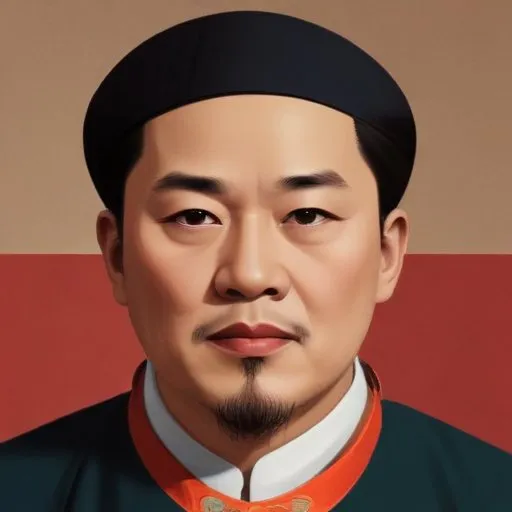
Xu Guangqi: The Renaissance Man of Ming Dynasty China
Astronomer, Mathematician, Agronomist, and Politician Extraordinaire
Xu Guangqi, a towering figure of the Ming dynasty, is renowned for his groundbreaking contributions to various fields, including astronomy, mathematics, agriculture, and politics. As a distinguished scholar and statesman, he was instrumental in introducing Western knowledge to China, earning him the esteemed title of "Servant of God" from the Roman Catholic Church.
Early Life and Education
Born on April 24, 1562, in Shanghai, Southern Zhili's Songjiang Prefecture, Xu Guangqi was raised in a family of scholars. His early education focused on classical Confucianism, but he soon became fascinated with Western knowledge, particularly mathematics and astronomy. This curiosity led him to collaborate with Italian Jesuits
Matteo Ricci and Sabatino de Ursis, with whom he would embark on a lifelong journey of intellectual exploration.
Pioneering Works in Astronomy and Mathematics
Xu Guangqi's most notable achievement in astronomy was his role as leader of the Shixian calendar reform, commissioned by the Chinese Emperor in 1629. Alongside the Jesuits, he adapted the Western solar calendar to create a more accurate and efficient system for China. This reform not only modernized China's calendar but also facilitated the introduction of Western astronomy to the country.
In mathematics, Xu Guangqi assisted in the translation of Euclid's Elements, a seminal work that laid the foundations for modern geometry. This collaboration marked a significant milestone in the transmission of Western mathematical knowledge to China.
Agronomist and Author
Xu Guangqi's
Nong Zheng Quan Shu, a comprehensive treatise on agriculture, is considered one of the most influential works in Chinese agricultural history. This magnum opus covers topics such as crop rotation, irrigation, and soil conservation, showcasing Xu's dedication to improving China's agricultural practices.
Political Career and Collaborations
Xu Guangqi's political career was marked by his appointment as the leader of the Shixian calendar reform and his role as a high-ranking official in the Ming court. His collaborations with the Jesuits, particularly Matteo Ricci, facilitated the introduction of Western knowledge to China and fostered a spirit of cultural exchange.
Legacy and Beatification
Xu Guangqi's contributions to Chinese society have been recognized by the Roman Catholic Church, which declared him a "Servant of God" in 2011. This honor is a testament to his tireless efforts to promote cultural understanding and his commitment to the values of faith, scholarship, and public service.
Today, Xu Guangqi is remembered as one of the "Three Pillars of Chinese Catholicism," a fitting tribute to his enduring legacy as a champion of intellectual curiosity, cultural exchange, and faith.
Quotes and Memorable Sayings
- "The pursuit of knowledge is a lifelong endeavor, and its rewards are immeasurable."
- "In the realms of science and faith, we find the harmony that binds humanity together."
Impact on Modern Society
Xu Guangqi's contributions continue to inspire scholars, scientists, and policymakers today. His work in astronomy, mathematics, and agriculture has left an indelible mark on China's development, while his commitment to cultural exchange and understanding serves as a beacon for international cooperation and mutual respect.
Historical Context and Legacy
In an era marked by cultural and intellectual exchange between East and West, Xu Guangqi's trailblazing achievements have secured his place as one of the most prominent figures of the Ming dynasty. His legacy serves as a testament to the power of human curiosity, collaboration, and the pursuit of knowledge.
FAQ
Who was Xu Guangqi, a Ming Dynasty Chinese politician?
Xu Guangqi was a prominent Chinese politician, scholar, and lay Catholic leader during the Ming Dynasty. He was a key figure in the introduction of Western knowledge and Christianity to China.
What was Xu Guangqis role in the introduction of Christianity to China?
Xu Guangqi was a convert to Catholicism and played a crucial role in the introduction of Christianity to China, working closely with Jesuit missionaries to translate Christian texts into Chinese.
What contributions did Xu Guangqi make to agriculture in China?
Xu Guangqi was a pioneer in introducing Western agricultural techniques to China, including the use of fertilizers and irrigation systems, which significantly improved agricultural productivity.
What was Xu Guangqis relationship with Matteo Ricci?
Xu Guangqi collaborated closely with the Jesuit missionary Matteo Ricci, who introduced him to Western knowledge and helped him translate Christian texts into Chinese.
What was Xu Guangqis legacy in China?
Xu Guangqis legacy in China is marked by his contributions to the introduction of Western knowledge and Christianity, as well as his efforts to modernize Chinese agriculture. He is remembered as a pioneering figure in Sino-Western cultural exchange.