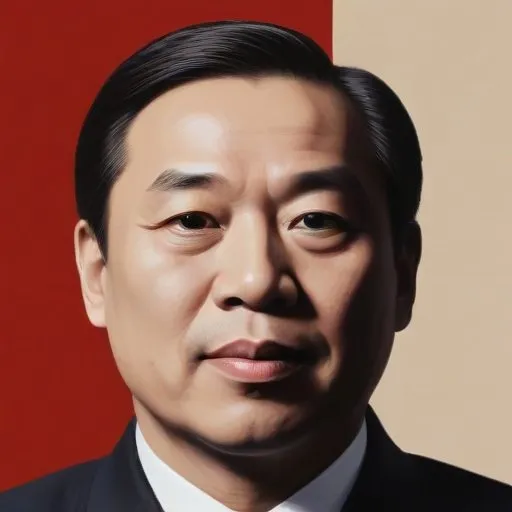
Yang Shangkun: The Architect of Modern China's Rise to Power
A Life of Service and Leadership
Yang Shangkun, born on August 3, 1907, was a Chinese Communist military and political leader, serving as the President of the People's Republic of China from 1988 to 1993. He was one of the Eight Elders, a group of influential leaders who dominated the Communist Party after Mao Zedong's death.
Rise to Prominence
Born into a wealthy landowning family, Yang studied politics at Shanghai University and Marxist philosophy and revolutionary tactics at Moscow Sun Yatsen University. This education laid the foundation for his involvement in Chinese politics and his eventual rise to prominence.
Bureaucratic Powerbroker
Yang held high office under both
Mao Zedong and
Deng Xiaoping, serving as Director of the General Office from 1945 to 1965 and Secretary-General of the Central Military Commission from 1945 to 1956. In these positions, he oversaw much of the day-to-day running of government and Party affairs, amassing significant bureaucratic power by controlling the flow of documents, record-keeping, and fund allocation.
Downfall and Redemption
Purged, arrested, and imprisoned during the Cultural Revolution, Yang spent 12 years in prison. However, he staged a remarkable comeback in 1978, becoming a key ally of Deng Xiaoping. He went on to serve as Mayor of Guangzhou from 1979 to 1981, and later returned to the Central Military Commission as Secretary-General and Vice Chairman from 1980 to 1989.
Presidency and Economic Reforms
As President, Yang justified China's economic reforms by referencing
Vladimir Lenin and the New Economic Policy. Although he opposed political reform, his support for economic liberalization was instrumental in China's rapid economic growth during the 1980s and 1990s.
Tiananmen Square Protests
Yang played a leading role in crushing the 1989 Tiananmen Square protests, planning and supervising the operations to clear the square and surrounding streets. This event marked a turning point in modern Chinese history, with Yang's actions having far-reaching consequences for the country's political landscape.
Legacy and Impact
Yang's downfall came in 1993, when he failed in his attempts to undermine the new leadership. Despite this, his legacy as a key figure in China's modernization and rise to global prominence remains. His influence on the Chinese military and government continues to be felt, with his half-brother, General Yang Baibing, controlling the People's Liberation Army (PLA) throughout the 1980s and early 1990s.
Personal Milestones and Key Life Events
- Studied politics at Shanghai University and Marxist philosophy and revolutionary tactics at Moscow Sun Yatsen University
- Held high office under both Mao Zedong and Deng Xiaoping
- Purged, arrested, and imprisoned during the Cultural Revolution
- Made a remarkable comeback in 1978, becoming a key ally of Deng Xiaoping
- Served as Mayor of Guangzhou from 1979 to 1981
- Became President of the People's Republic of China from 1988 to 1993
Influence on Modern Society
Yang Shangkun's legacy extends beyond his political career, shaping the very fabric of modern Chinese society. His support for economic reforms and his role in crushing the Tiananmen Square protests have had lasting impacts on China's economic and political development.
Philosophical Contributions and Beliefs
Yang's commitment to Marxist-Leninist ideology and his support for economic liberalization reflect his complex philosophical beliefs. Through his actions, he demonstrated a willingness to adapt to changing circumstances while remaining true to his core principles.
Visual Timeline and Milestones
- 1907: Born on August 3rd
- 1945-1965: Director of the General Office and Secretary-General of the Central Military Commission
- 1965: Purged, arrested, and imprisoned during the Cultural Revolution
- 1978: Made a remarkable comeback, becoming a key ally of Deng Xiaoping
- 1979-1981: Mayor of Guangzhou
- 1980-1989: Secretary-General and Vice Chairman of the Central Military Commission
- 1988-1993: President of the People's Republic of China
- 1993: Downfall and removal from power
- 1998: Passed away on September 14th
Yang Shangkun's life was a testament to the complexities of Chinese politics and the intrigue of its ruling elite. His legacy continues to shape modern China, serving as a reminder of the power struggles and ideological debates that have defined the country's history.
FAQ
What were Yang Shangkuns key roles in Chinese politics?
Yang Shangkun held various high-ranking positions in Chinese politics, including President of the Peoples Republic of China from 1988 to 1993, and played a crucial role in shaping Chinas domestic and foreign policy.
How did Yang Shangkuns experiences shape his political views?
Yang Shangkuns experiences during the Chinese Civil War and the Cultural Revolution deeply influenced his political views, leading him to advocate for economic reform and outward-looking policies.
What was Yang Shangkuns stance on economic reform?
Yang Shangkun was a strong supporter of economic reform, recognizing the need for China to open up to the world and adopt market-oriented policies to drive growth and development.
How did Yang Shangkuns presidency impact Chinas international relations?
Yang Shangkuns presidency saw significant improvements in Chinas international relations, as he sought to normalize ties with neighboring countries and engage with the global community.
What is Yang Shangkuns legacy in modern Chinese history?
Yang Shangkuns leadership played a critical role in Chinas transition from a planned economy to a market-oriented economy, and his presidency marked a significant turning point in modern Chinese history.