


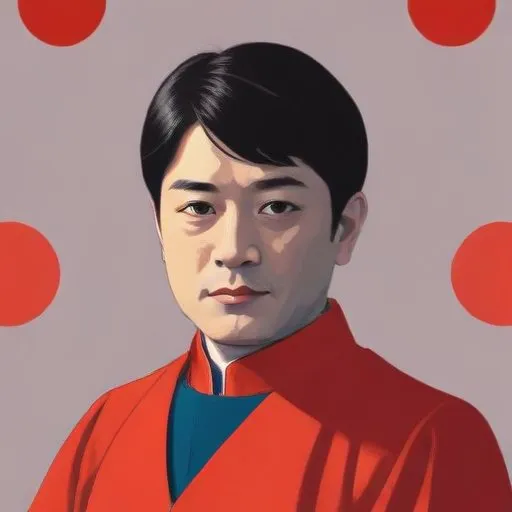
The younger brother of Emperor Hirohito, he was a Japanese prince and military officer who played a key role in Japan's military expansion during World War II, and later became a symbol of reconciliation. He was also an avid sportsman and supported the development of winter sports in Japan.
Known for his exceptional linguistic skills, particularly in English, Yasuhito, Prince Chichibu, was a revered member of the Imperial House of Japan, who played a significant role in fostering goodwill between Japan and the United Kingdom during a tumultuous period in history. As a prince, general, and patron, Prince Chichibu left an indelible mark on the world of sports, medicine, and international relations.
Born on June 25, 1902, at Aoyama Detached Palace in Tokyo, Prince Chichibu was the second son of Emperor Taisho and Empress Teimei. His early life was marked by separation from his parents and entrusted care under Count Sumiyoshi Kawamura, a respected ex-naval officer. After Kawamura's demise, Prince Chichibu rejoined his parents at the Togu Gosho Crown Prince's residence, where he began his education.
Prince Chichibu attended the esteemed Gakushuin Peers School, alongside his brother, Crown Prince Hirohito, and later enrolled in the Central Military Preparatory School in 1917. He then graduated from the Imperial Japanese Army Academy in 1922, solidifying his path as a career officer in the Imperial Japanese Army. On May 26, 1922, Emperor Taisho bestowed upon him the title Chichibu no miya, authorizing him to establish a new branch of the imperial family.
Prince Chichibu's exceptional fluency in English and deep appreciation for Western culture made him an ideal ambassador for Japan. He and his wife, Princess Chichibu, worked tirelessly to promote goodwill between Japan and the United Kingdom, fostering strong relationships with the British royal family. This unique bond enabled Prince Chichibu to play a vital role in post-World War II diplomacy.
As a patron, Prince Chichibu supported numerous organizations, including sporting, medical, and international exchange initiatives. His dedication to these causes reflected his commitment to the betterment of Japanese society and his role as a symbol of the imperial family's humanitarian endeavors.
Despite being exonerated from criminal prosecutions by Douglas MacArthur after World War II, Prince Chichibu's legacy transcends the complexities of his time. As a prince, general, and diplomat, he embodied the values of international cooperation, cultural understanding, and philanthropy. His unique blend of traditional Japanese heritage and Anglophile leanings continues to inspire generations, ensuring his place as an enduring symbol of Japan's imperial history.
Though few quotes from Prince Chichibu have been recorded, his actions and deeds continue to speak volumes about his character and dedication to international understanding and cooperation.
Born in 1901
The Japanese emperor who ruled from 1926 to 1989, leading the country through World War II and its post-war reconstruction, and is known for his symbolic role in Japanese politics and culture. He is also remembered for his rare public apology for Japan's wartime atrocities.
92 Years Old
The Japanese monarch who reigned from 1989 to 2019, known for his efforts to promote peace and reconciliation, particularly in regards to Japan's wartime past. He also played a key role in modernizing the monarchy.
