


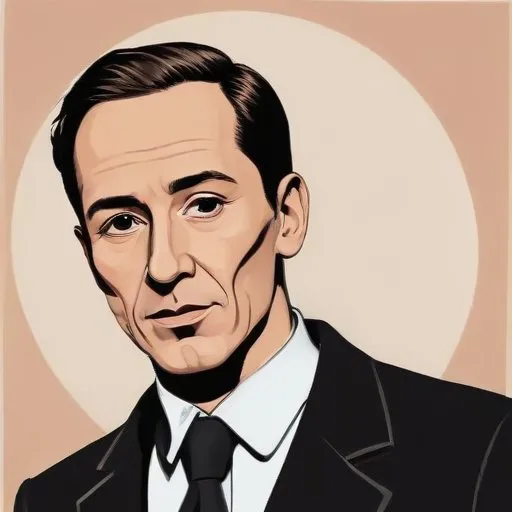
A Russian-Italian poet and philosopher who explored themes of love, nature, and the human condition, creating a unique blend of Romantic and Enlightenment ideals. His works are characterized by lyricism, depth, and philosophical insight.
Yevgeny Abramovich Baratynsky, hailed by Alexander Pushkin as the finest Russian elegiac poet, left an indelible mark on Russian literature with his thought-provoking poetry that explored the depths of human emotion. Born on February 19, 1800, Baratynsky's unique voice and style have captivated readers for centuries, earning him a reputation as a supreme poet of thought.
Baratynsky's early life was marked by turmoil and struggle. Expelled from the Page Corps at the age of 15 for stealing a snuffbox and five hundred roubles, he spent three years in the countryside, grappling with emotional turmoil. It was during this period that he discovered his passion for poetry, which became his solace and escape.
In 1820, Baratynsky met Anton Delvig, a poet and journalist who introduced him to the literary press. This chance encounter marked the beginning of Baratynsky's rise to fame. His first long poem, Eda, written during his time in Finland, established his reputation as a poet of note.
In 1826, Baratynsky married the daughter of Major-General Gregory G. Engelhardt, and through the interest of friends, he obtained leave from the Emperor to retire from the army. He settled in Muranovo, just north of Moscow, where he completed his longest work, The Gipsy, a poem written in the style of Pushkin.
Baratynsky's family life seemed happy, but a profound melancholy remained in the background of his mind and of his poetry. His poems, characterized by their introspection and emotional depth, were often praised by critics, but met with a lukewarm reception from the public.
As time went by, Baratynsky's mood progressed from pessimism to hopelessness, and elegy became his preferred form of expression. His poems, infused with a sense of longing and despair, captured the essence of human suffering, and spoke to the hearts of his readers.
Baratynsky's poetry, characterized by its thought-provoking nature and emotional depth, has had a profound impact on Russian literature. His influence can be seen in the works of Russian Symbolism poets, who rediscovered him as a supreme poet of thought.
Today, Baratynsky's poetry continues to captivate readers with its beauty and intensity. His legacy serves as a testament to the power of poetry to express the depths of human emotion, and to the enduring appeal of his works.
Baratynsky died on July 11, 1844, in Naples, where he had gone in pursuit of a milder climate. His untimely death was a tragic loss to the literary world, but his poetry continues to live on, inspiring generations of readers and writers.
Born in 1799
Russia's literary icon penned timeless tales of love, drama, and social commentary, leaving an indelible mark on the country's cultural heritage.
Born in 1814
A 19th-century Russian literary giant, known for his poignant poetry and novels that explored the human condition, particularly in the context of Russian society. His works are still widely read and studied today.
Born in 1783
A Russian literary giant who masterfully translated European classics into Russian, while also penning his own romantic poetry that captivated the nation's heart.
Born in 1803
A Russian poet and diplomat who wrote romantic and patriotic poetry that explored the human experience, and served as a diplomat in Germany and Italy.
Born in 1769
A renowned Russian literary figure, celebrated for his witty and insightful fables that continue to captivate readers of all ages with their timeless wisdom and humor.
