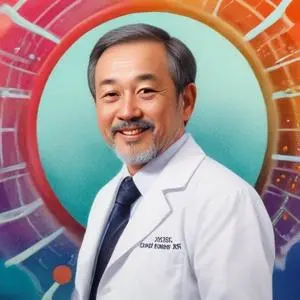
Yoshinori Ohsumi: The Trailblazing Cell Biologist Behind Autophagy
Uncovering the Secrets of Cellular Recycling
Yoshinori Ohsumi, a Japanese cell biologist, is renowned for his groundbreaking discoveries on autophagy, the process by which cells destroy and recycle their own components. Through his pioneering work, Ohsumi has shed light on the complex mechanisms of autophagy, earning him the 2016 Nobel Prize in Physiology or Medicine.
A Journey of Exploration and Discovery
Born on February 9, 1945, in Fukuoka, Japan, Ohsumi embarked on his academic journey at the University of Tokyo, where he earned his B.Sci. in 1967 and D.Sci. in 1974. A postdoctoral fellowship at the Rockefeller University in New York City (1974-1977) paved the way for his subsequent research endeavors.
Rising Through the Ranks
Ohsumi's academic trajectory is marked by a series of esteemed appointments:
- Research associate at the University of Tokyo (1977)
- Lecturer at the University of Tokyo (1986)
- Associate Professor at the University of Tokyo (1988)
- Professor at the National Institute for Basic Biology, Japan (1996)
- Professor at the Graduate University for Advanced Studies (2004-2009)
- Professor at the Advanced Research Organization, Integrated Research Institute, Tokyo Institute of Technology (2009)
- Emeritus Professor at the National Institute for Basic Biology and the Graduate University for Advanced Studies (2009)
- Currently, Head of the Cell Biology Research Unit, Institute of Innovative Research, Tokyo Institute of Technology
The Autophagy Breakthrough
Ohsumi's research focus on autophagy began in 1988, a time when the topic was relatively understudied. Through his work, he described the morphology of autophagy in yeast and performed mutational screening on yeast cells, identifying key genes involved in the process. This pioneering research sparked a wave of interest, with over 20 papers published annually on the subject by the 1990s.
Awards and Honors
Ohsumi's contributions to the field of cell biology have been recognized with several prestigious awards, including:
- Kyoto Prize for Basic Sciences (2012)
- Nobel Prize in Physiology or Medicine (2016)
- Breakthrough Prize in Life Sciences (2017)
Legacy and Impact
Yoshinori Ohsumi's work has far-reaching implications for our understanding of cellular processes, disease mechanisms, and potential therapeutic strategies. His discoveries have paved the way for further research into the intricacies of autophagy, inspiring a new generation of scientists to explore the vast possibilities of cellular biology.
FAQ
What is Yoshinori Ohsumis most notable scientific contribution?
Yoshinori Ohsumi was awarded the 2016 Nobel Prize in Physiology or Medicine for his discovery of the mechanisms of autophagy, a process by which cells recycle and remove damaged or excess cellular components. His work has shed light on the importance of autophagy in preventing diseases such as cancer and neurodegenerative disorders.
What is autophagy and how does it work?
Autophagy is a natural process by which cells break down and recycle damaged or excess cellular components, such as proteins and organelles. This process is essential for maintaining cellular health and preventing disease, and involves the formation of autophagosomes, which engulf and digest cellular waste.
What is Yoshinori Ohsumis research focus?
Yoshinori Ohsumis research focuses on the mechanisms of autophagy and its role in disease prevention. He has made significant contributions to our understanding of the molecular mechanisms underlying autophagy, and has explored its potential as a therapeutic target for various diseases.
What awards has Yoshinori Ohsumi won for his research?
In addition to the Nobel Prize, Yoshinori Ohsumi has won numerous awards for his research, including the Kyoto Prize in Basic Sciences, the Gairdner International Award, and the Louisa Gross Horwitz Prize from Columbia University.
What is Yoshinori Ohsumis current research focus?
Yoshinori Ohsumi continues to conduct research on the mechanisms of autophagy and its role in disease prevention. He is currently exploring the potential of autophagy as a therapeutic target for neurodegenerative disorders and cancer, and is working to develop new treatments and therapies based on his research.