


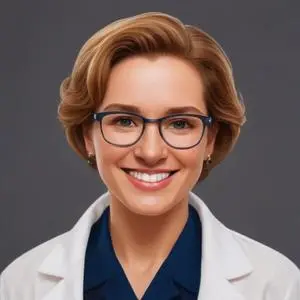
Pioneering biochemist and engineer who directed the design of new biological pathways and developed innovative methods for creating valuable chemicals and fuels. Her groundbreaking work has transformed the field of bioengineering.
Frances Arnold is a trailblazing American chemical engineer, renowned for her groundbreaking work in directed evolution, a method that has transformed the way enzymes are engineered. Her pioneering efforts in this field earned her the Nobel Prize in Chemistry in 2018, making her the fifth woman to receive the prestigious award.
Born on July 25, 1956, in Pittsburgh, Pennsylvania, Frances Arnold grew up in a family of scientists. Her father, William Howard Arnold, was a nuclear physicist, and her grandfather, Lieutenant General William Howard Arnold, was a prominent figure in the military. Despite her family's academic background, Arnold's early life was marked by independence and a thirst for adventure.
She attended Taylor Allderdice High School, where her absenteeism and low grades raised concerns. However, her exceptional performance in standardized tests and her determination to attend Princeton University, her father's alma mater, earned her a spot in the prestigious institution.
Arnold graduated in 1979 with a Bachelor of Science degree in mechanical and aerospace engineering from Princeton University. During her undergraduate years, she focused on solar energy research, which sparked her interest in engineering. Her motivation to study engineering was driven by the desire to attend Princeton, and she never looked back.
Arnold's early career was marked by her work at the California Institute of Technology (Caltech), where she earned her Ph.D. in chemical engineering in 1985. Her research focused on the rational design of proteins, which laid the foundation for her later work in directed evolution.
Frances Arnold's groundbreaking work in directed evolution involves the use of nature's own mechanisms to evolve enzymes with desired properties. This approach has far-reaching implications in fields such as biofuel production, chemical synthesis, and bioremediation.
In 2018, Arnold was awarded the Nobel Prize in Chemistry, alongside George P. Smith and Sir Gregory P. Winter, for her pioneering work in the directed evolution of enzymes. This recognition solidified her position as a leader in the field of chemical engineering.
In addition to her academic pursuits, Arnold has been an active contributor to public policy and scientific advisory boards. Since January 2021, she has served as an external co-chair of President Joe Biden's Council of Advisors on Science and Technology (PCAST).
Arnold's leadership extends to her role as the Linus Pauling Professor of Chemical Engineering, Bioengineering and Biochemistry at Caltech, where she continues to inspire and mentor the next generation of scientists and engineers.
Frances Arnold's work has revolutionized the field of enzyme design, opening up new avenues for sustainable biotechnology and chemical synthesis. Her contributions have far-reaching implications for the environment, energy, and human health.
As a trailblazer in her field, Arnold has paved the way for future generations of women in STEM, inspiring them to pursue careers in science and engineering. Her legacy continues to grow, as her work transforms industries and improves lives around the world.
Frances Arnold's remarkable journey, from her rebellious teenage years to her groundbreaking work in directed evolution, serves as a testament to her unwavering passion for science and her unrelenting drive to make a difference in the world.
80 Years Old
Pioneering geneticist who sequenced the human genome and created the first self-replicating synthetic cell, revolutionizing our understanding of life and its potential. 82
98 Years Old
Discovered the structure of DNA, revolutionizing our understanding of genetics and earning a Nobel Prize. Pioneering work in molecular biology has far-reaching implications for medicine and beyond.
Born in 1916
Pioneering scientist who discovered the structure of DNA, revolutionizing our understanding of genetics and life itself.
Born in 1920
A British scientist who contributed significantly to the discovery of the structure of DNA, providing high-quality X-ray crystallography images that helped James Watson and Francis Crick develop their famous model.
70 Years Old
First African American woman in space, trailblazing physician and educator who inspired generations of women and minorities in STEM fields.
75 Years Old
American physicist and astronaut who broke barriers as the first woman in space, inspiring generations of women in STEM fields. Founded a company to promote science education and literacy.
68 Years Old
Astrophysicist and science communicator who makes complex concepts accessible to the masses through engaging writing and hosting popular TV shows. He's a leading voice in promoting science education and critical thinking.
84 Years Old
A brilliant mind who unraveled the mysteries of black holes and the universe, making complex physics accessible to all through bestselling books.
