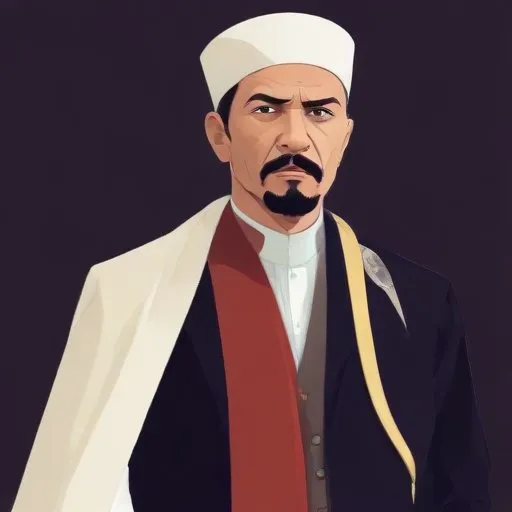
Yusuf Akura: The Visionary Ideologue of Pan-Turkism
A Champion of Turkish Nationalism
Yusuf Akura, a prominent Turkish politician, writer, and ideologue of ethnic Tatar origin, is renowned for his pioneering work in promoting Pan-Turkism during the early republican period. His influential writings and teachings played a significant role in shaping the modern Turkish identity, earning him a reputation as one of the leading university professors in Istanbul.
Early Life and Education
Born on December 2, 1876, in Simbirsk, Russian Empire, Akura spent his formative years in Constantinople, where he received primary and secondary education. He later enrolled in the prestigious Harbiye Mektebi Military College in 1895, followed by the Erkani Harbiye General Staff Course, a distinguished training program for the Ottoman military.
The Emergence of a Turkish Nationalist
In 1896, Akura was accused of being a member of the Young Turk movement, which led to his exile to Trablusgarb in Fezzan, Ottoman Libya. However, he escaped exile in 1899 and made his way to Paris, where he began to emerge as a staunch advocate of Turkish nationalism and Pan-Turkism. During this period, he contributed to Meveret, a periodical published by the exiled members of the Committee of Union and Progress.
A Literary Legacy
Akura's literary works played a crucial role in shaping the Turkish nationalist movement. His 1904 work,
Tarz Siyaset (Three Policies), originally printed in the Cairo-based magazine Trk, garnered significant attention. In this influential book, he encouraged the formation of an Ottoman nation with a citizenship based on Islam, drawing parallels with nations like Germany, Switzerland, and France, which had also emerged from diverse racial backgrounds. Furthermore, he advocated for abandoning the multi-ethnic concept of the Ottoman Empire and instead focusing on the assimilation of non-Turks.
Co-Founder of the Ittifaq al-Muslimin
Akura was one of the co-founders of the Ittifaq al-Muslimin, a Muslim party that aimed to unite Muslims under a single banner. This party played a significant role in shaping the political landscape of the region during the early 20th century.
Impact on Modern Society
Akura's ideas and writings had a profound impact on modern Turkish society. His advocacy for a unified Turkish identity helped shape the country's cultural and political trajectory. His work continues to influence Turkish politics and society to this day, making him a pivotal figure in the country's history.
Personal Life and Legacy
Yusuf Akura's personal life was marked by his unwavering commitment to the Turkish nationalist cause. He returned to Russia in 1903 and settled in Zyeba, beside Simbirsk, where he continued to write extensively on Pan-Turkism. Akura's legacy serves as a testament to the power of ideas in shaping the course of history. His work continues to inspire generations of Turkish scholars, politicians, and intellectuals.
- Notable Works: Tarz Siyaset (Three Policies)
- Co-Founder of: Ittifaq al-Muslimin (Muslim Party)
- Date of Birth: December 2, 1876
- Date of Death: March 11, 1935
- Place of Birth: Simbirsk, Russian Empire
FAQ
What was Yusuf Akçuras role in the Turanism movement?
Yusuf Akçura was a leading ideologue of Turanism, a political and cultural movement that sought to unite Turkic-speaking peoples across the world. He wrote extensively on the subject and helped to promote Turanist ideas.
What were Yusuf Akçuras views on Turkish identity?
Yusuf Akçura believed that Turkish identity was rooted in a shared cultural and linguistic heritage, rather than religion or geography. He argued that Turks should look to their Turkic roots rather than their Islamic or Ottoman heritage.
What was Yusuf Akçuras relationship with other Turanist thinkers?
Yusuf Akçura was part of a network of Turanist thinkers who were active in the early 20th century. He was influenced by thinkers such as Ziya Gökalp and was friends with other prominent Turanists.
How did Yusuf Akçuras ideas influence Turkish politics?
Yusuf Akçuras ideas about Turanism had a significant impact on Turkish politics, particularly in the early years of the Turkish Republic. His ideas about the importance of Turkish identity and the need for Turkish unity helped to shape the countrys political agenda.
What was Yusuf Akçuras legacy in modern Turkey?
Yusuf Akçuras legacy in modern Turkey is complex and contested. While some see him as a pioneering thinker who helped to shape Turkish identity, others criticize his ideas as being rooted in racism and xenophobia.