


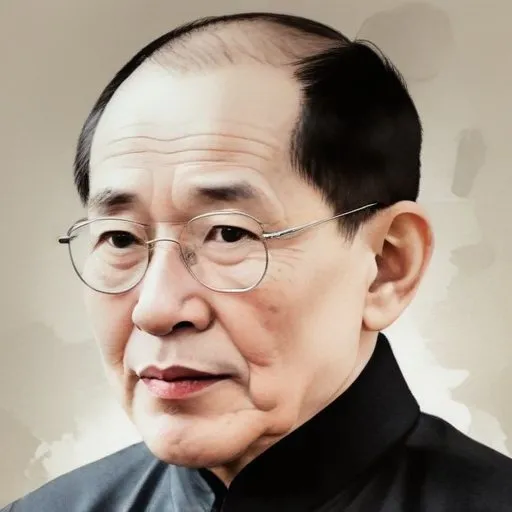
Creator of the Pinyin romanization system, which standardized Chinese language pronunciation for global communication and education.
Zhou Youguang, a renowned Chinese economist, banker, linguist, sinologist, Esperantist, publisher, and supercentenarian, is widely credited as the father of pinyin, the most popular romanization system for Chinese. Adopted by the People's Republic of China in 1958, the International Organization for Standardization in 1982, and the United Nations in 1986, pinyin has become an indispensable tool for learners and users of the Chinese language worldwide.
Zhou was born on January 13, 1906, in Changzhou, Jiangsu Province, China, to a Qing government official. He developed an interest in linguistics at a young age and pursued his passion by enrolling in St. John's University, Shanghai, where he majored in economics and took supplementary coursework in linguistics. Despite financial constraints, Zhou's friends and relatives supported him by raising 200 yuan for his admission fee and helping him pay for tuition.
Zhou was a strong advocate for language reform and believed that a standardized romanization system would facilitate global communication and cultural exchange. He also believed in the importance of preserving China's cultural heritage and promoting the use of standard Chinese as a national language.
Zhou's work on pinyin has had a profound impact on modern society, enabling millions of people around the world to learn Chinese and facilitating international communication and collaboration. Pinyin has also become an essential tool for businesses, diplomats, and travelers, facilitating trade, tourism, and cultural exchange between China and other countries.
Zhou married Zhang Yunhe in 1933, and the couple had two children, Zhou Xiaoping and Xiaohe. He celebrated his 100th birthday in 2006 and passed away on January 14, 2017, at the age of 111.
Zhou Youguang's legacy extends far beyond his contributions to language reform. He is remembered as a pioneering figure in China's linguistic and cultural development, and his work on pinyin has left an indelible mark on modern society. As a linguist, economist, and Esperantist, Zhou's dedication to promoting cross-cultural understanding and communication has inspired generations of scholars and language learners alike.
Born in 1893
Leader of the Chinese Communist Party who implemented radical social and economic reforms, including the Great Leap Forward and the Cultural Revolution, shaping modern China's politics and economy.
Born in 1904
A Chinese revolutionary and statesman who led the country's economic reforms, transforming it into a global superpower. He's credited with opening up China to the world and introducing capitalist principles.
Born in 1887
Led the Nationalist Party in China, fighting against the Communist Party and later establishing the government of Taiwan. He's known for his role in shaping modern Chinese history.
Born in 1009
A renowned poet and essayist of the Song Dynasty, known for his lyrical and expressive writings that explored themes of nature, politics, and human emotions.
