


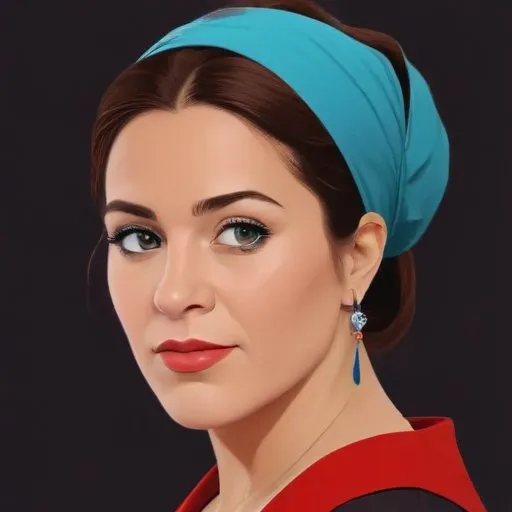
A renowned soprano and educator, celebrated for her powerful voice and iconic performances in operas like Verdi's "Aida" and Puccini's "Tosca".
Zinka Milanov, a renowned Croatian operatic soprano, left an indelible mark on the world of opera with her powerful voice and captivating stage presence. With a career spanning over four decades, Milanov was a fixture at the Metropolitan Opera in New York City, where she charmed audiences with her interpretations of iconic roles in Italian opera.
Born as Zinka Kunc on May 17, 1906, in Zagreb, Croatia, Milanov was drawn to music from a young age. She began her vocal studies with the Wagnerian soprano Milka Ternina and her assistant Marija Kostreni, later completing her training in Milan and Berlin.
On October 29, 1927, Milanov made her operatic debut as Leonora in Verdi's Il Trovatore in Ljubljana, Slovenia, at just 21 years old. Her talent and dedication earned her a place at the National Theatre in Zagreb, where she refined her craft and began to build a reputation as a rising star.
After an early debut in Dresden in 1928, Milanov continued to perform in Zagreb and Ljubljana, eventually becoming a member of the New German Theatre in Prague. It was there that she was discovered by conductor Bruno Walter, who recommended her to Arturo Toscanini for a performance of Verdi's Requiem in Salzburg.
In 1937, Milanov made her debut at the Metropolitan Opera, once again as Leonora in Il Trovatore. This marked the beginning of a long and fruitful association with the Met, where she would go on to sing many of the greatest roles in Italian opera, including Verdi's Aida, Puccini's Tosca, and Verdi's La Gioconda.
Throughout her career, Milanov performed alongside some of the greatest opera singers of the time, including sopranos like Maria Callas and Joan Sutherland, and conductors like Richard Strauss and Otto Klemperer. Her powerful voice, nuanced phrasing, and intense dramatic commitment earned her widespread critical acclaim.
In addition to her performing career, Milanov was a dedicated teacher and vocal coach. She taught at the Juilliard School, the Curtis Institute of Music, and the Manhattan School of Music, passing on her knowledge and experience to a new generation of singers.
Today, Zinka Milanov is remembered as one of the greatest sopranos of the 20th century, known for her unwavering dedication to her craft and her invaluable contributions to the world of opera. Her legacy continues to inspire and inspire young singers and opera enthusiasts alike.
Zinka Milanov was married twice, first to a Croatian lawyer and then to an actor, whose surname she adopted as her stage name. Her brother, Bojidar Kunc, was a composer and pianist.
Throughout her life, Milanov was known for her generosity and kindness, earning the affection and admiration of her colleagues and fans alike. She passed away on May 30, 1989, at the age of 83, leaving behind a legacy of beauty, passion, and dedication to the art of opera.
Zinka Milanov's remarkable life and career serve as a testament to the power of dedication, hard work, and a passion for music. Her contributions to the world of opera continue to inspire and delight audiences around the world, ensuring her place as one of the greatest sopranos of all time.
Born in 1923
A legendary soprano and actress renowned for her iconic opera performances and captivating stage presence, particularly in Verdi and Puccini roles.
Born in 1922
A renowned Italian opera singer and actress, celebrated for her powerful, expressive voice and iconic performances in Verdi and Puccini operas. Her legendary recordings remain widely admired today.
99 Years Old
Renowned for her powerful, expressive voice and iconic performances in operas like "Aida" and "Tosca", she is a trailblazing soprano who broke racial barriers in the opera world.
Born in 1914
Renowned soprano and educator, celebrated for her radiant voice and innovative teaching methods, leaving a lasting impact on the world of opera and vocal pedagogy.
Born in 1913
A celebrated soprano and actress, known for her iconic performances in opera and musical theater, particularly in the 1940s and 1950s.
