


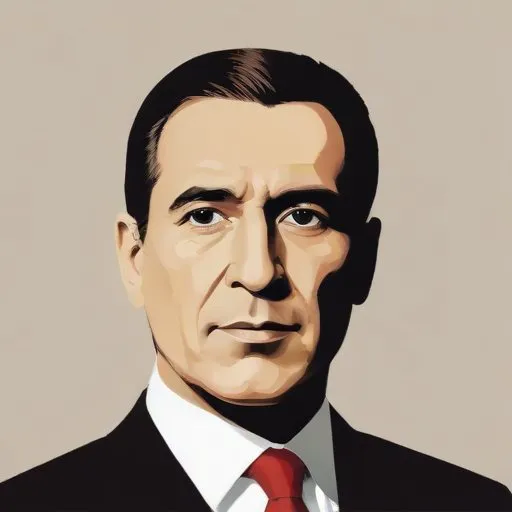
The 4th Prime Minister of the Federal Republic of Yugoslavia, who served during a tumultuous period in the country's history and played a significant role in shaping its political landscape. He's most known for his efforts to reform the Yugoslav economy and stabilize the region.
Zoran Žižić, a prominent Yugoslav and Montenegrin politician, is best known for serving as the first Prime Minister of the Federal Republic of Yugoslavia following the overthrow of Slobodan Milošević in 2000. During his tenure, he played a crucial role in shaping the country's political landscape, earning him a reputation as a champion of democracy and human rights.
Žižić was born on March 4, 1951, in Titograd (now Podgorica), Montenegro. His father, Ivko Žižić, was a World War II veteran and a member of the Communist Party of Yugoslavia, who later held various high-ranking positions in the government of Montenegro. Žižić's mother, Sonja Žižić (née Ivanović), was from the tribe of Kuci. After completing his elementary and high school education in his hometown, Žižić went on to graduate from the University of Belgrade Faculty of Law, where he earned a magister degree.
Žižić's entry into politics began during the Antibureaucratic Revolution in 1989. He soon became the head of the Main Board of the Democratic Party of Socialists (DPS) and an MP in the Federal Assembly of the Federal Republic of Yugoslavia. His first elected office was Deputy Prime Minister of Montenegro in the first two Đukanović cabinets from 1991 to 1996. During this period, he worked closely with Milo Đukanović, the incumbent Prime Minister of Montenegro.
In 2000, Žižić was appointed as the first Prime Minister of the Federal Republic of Yugoslavia, following the overthrow of Slobodan Milošević. However, he resigned from the position in June 2001, in protest over the extradition of Milošević to the International Criminal Tribunal for the former Yugoslavia (ICTY). This bold move earned him widespread recognition and respect for his commitment to democracy and human rights.
After his resignation as Prime Minister, Žižić continued to be an influential figure in Montenegrin politics. However, in 2005, he was expelled from the DPS due to disagreements with its moderate leader, Predrag Bulatović. This move marked a significant shift in Žižić's political career, as he began to distance himself from the moderate wing of the DPS.
Zoran Žižić's legacy is multifaceted. He played a crucial role in shaping the political landscape of Montenegro and Yugoslavia, and his commitment to democracy and human rights earned him international recognition. His resignation as Prime Minister in protest over Milošević's extradition set a powerful precedent for accountability in politics. Through his various roles, Žižić left an indelible mark on the history of Montenegro and the broader region.
"I will not be a part of a government that extradites its own people to a foreign court." - Žižić, during his resignation as Prime Minister in 2001.
Zoran Žižić passed away on January 4, 2013. Throughout his life, he remained committed to his principles and ideals, earning him a reputation as a champion of democracy and human rights. His legacy continues to inspire future generations of politicians and citizens alike.
85 Years Old
The first President of Serbia, a mastermind behind the Yugoslav Wars, and a key figure in the Kosovo conflict, known for his nationalist and authoritarian rule.
68 Years Old
A Serbian psychologist and politician who served as the 16th President of Serbia, known for his efforts to reform the country's education system and promote democratic values. He played a key role in Serbia's transition from a one-party to a multi-party system.
60 Years Old
A Serbian journalist and politician who served as the 95th Prime Minister of Serbia, known for his leadership during a tumultuous period in the country's history. He implemented economic reforms and navigated Serbia's path towards EU membership.
72 Years Old
A Serbian lawyer and politician who served as Deputy Prime Minister of Serbia, known for his nationalist and far-right views, as well as his involvement in the Yugoslav Wars.
