


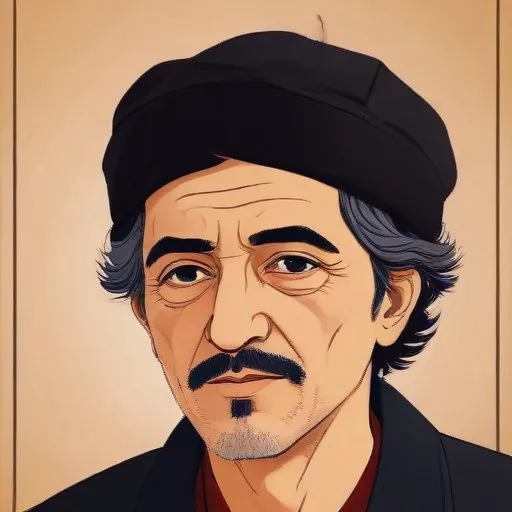
A renowned Turkish poet and songwriter, celebrated for his poignant lyrics and melodies that captured the essence of Turkish culture and folklore. His works continue to inspire generations of musicians and writers.
K Veysel Atroğlu is a household name in Turkey, synonymous with compelling storytelling and gripping performances on both stage and screen. As a renowned actor and director, Atroğlu has left an indelible mark on Turkish theatre and cinema, inspiring generations of artists and captivating audiences with his versatility and talent.
Born on July 1, 1945, in Erzincan, Turkey, Atroğlu grew up with a passion for the arts. He began his career in the 1960s, working as a stage actor in various state theatres across Turkey. His talent and dedication soon earned him recognition, and he transitioned to television and film, becoming a leading figure in Turkish cinema.
Atroğlu's impressive filmography spans over four decades, with iconic roles in films like Sürü (1972), Kaşık Düşmanı (1984), and Kurtuluş (1996). His directorial debut, Züğürt Ağa (1985), won critical acclaim and cemented his status as a respected filmmaker. Other notable works include Babam ve Ailesi (2006) and Aşk ve Ceza (2010), demonstrating his range and adaptability as a director.
Throughout his illustrious career, Atroğlu has received numerous awards and accolades, including the prestigious Altın Portakal (Golden Orange) Award for Best Actor and Best Director. He has also been honored with the T.C. Kültür Bakanlığı Devlet Sanatçısı (State Artist) title, recognizing his contributions to Turkish culture.
Atroğlu's impact on Turkish cinema is undeniable. He has inspired a new generation of actors and filmmakers, paving the way for a more diverse and vibrant film industry. His commitment to telling authentic, socially relevant stories has helped shape the country's cinematic identity.
Atroğlu's work often explores themes of social justice, freedom, and the human condition. Through his art, he has expressed a strong commitment to democracy, equality, and cultural preservation. His philosophical approach to storytelling has resonated with audiences, sparking important conversations about the world we live in.
In addition to his professional achievements, Atroğlu has been recognized for his humanitarian work. He has actively supported various charities and social causes, using his platform to raise awareness about pressing issues such as education, healthcare, and social inequality.
K Veysel Atroğlu's legacy extends far beyond his impressive body of work. He has left an indelible mark on Turkish culture, inspiring a new wave of artists, filmmakers, and social activists. As a champion of artistic expression and social responsibility, Atroğlu continues to inspire and captivate audiences, cementing his place as one of Turkey's most beloved and respected cultural icons.
Born in 1914
A leading figure in Turkish literature, known for his innovative and influential poetry that rejected traditional forms and explored modernist styles. His work had a significant impact on Turkish poetry and literature.
Born in 1873
A Turkish poet, academic, and politician who played a significant role in shaping the country's literary and political landscape, best known for writing the Turkish national anthem.
Born in 1898
A Turkish literary mastermind, celebrated for his poignant poetry, thought-provoking plays, and captivating novels that delve into the human experience. His works often explored themes of love, identity, and social justice.
Born in 1925
A prominent Turkish literary figure, known for his poetry, novels, and critiques that explored themes of love, freedom, and social justice. His works are considered a bridge between Turkish and Western literature.
Born in 1914
A Turkish soldier and poet who wrote influential works on patriotism and nationalism, inspiring a generation of Turkish writers and thinkers.
Born in 1901
A Turkish literary giant, renowned for his poetic and scholarly works that explored the intersection of Western and Eastern cultures, and his influence on modern Turkish literature.
