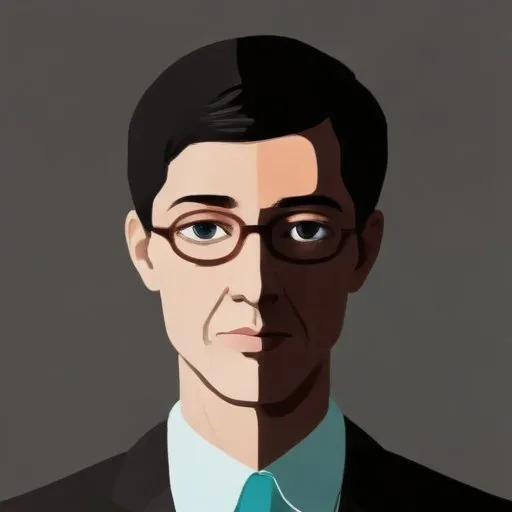
was born on February 1st, 1801

Full Name: mile Littr
Nationality: French
Profession: Lexicographer, Philosopher
Occupation: Academia
Place of Birth: France
Notable Works: Dictionnaire de la langue française
Influences: Enlightenment
Awards: None Known

A French lexicographer and philosopher who compiled a monumental dictionary of the French language, setting a new standard for linguistic scholarship. He's also known for his philosophical writings on positivism.

Timeline
1801
Birth in France
Émile Littré was born on February 1, 1801, in France. He would go on to become a French lexicographer and philosopher.
1822
Studies Medicine in Paris
Littré studied medicine at the University of Paris, although he would later shift his focus to lexicography and philosophy.
1839
Publishes Dictionnaire de la Langue Française
Littré published his notable work, Dictionnaire de la Langue Française, which became a standard reference for the French language.
1862
Elected to the French Academy
Littré was elected to the French Academy, recognizing his contributions to the fields of lexicography and philosophy.
1881
Death in Paris
Littré passed away on June 16, 1881, in Paris, France. He left behind a legacy in the fields of lexicography and philosophy.
�mile Littré

Quiz

What was Émile Littré's most notable achievement in the field of linguistics?

Score: 0/5
FAQ
What was Émile Littrés contribution to French lexicography?
Émile Littré was a renowned French lexicographer who made significant contributions to the field of French language and literature. His most notable work, the Dictionnaire de la Langue Française, is still considered one of the most authoritative dictionaries in French language.
What was Émile Littrés philosophical stance?
Émile Littré was a positivist philosopher who believed in the power of human reason and science. He advocated for a secular and rational approach to understanding the world, and his philosophical ideas had a significant impact on French intellectual circles.
What was Émile Littrés role in the French Revolution?
Émile Littré was a strong supporter of the French Revolution and its ideals of liberty, equality, and fraternity. He was a vocal critic of the monarchy and the Catholic Church, and his writings played a significant role in shaping public opinion during this period.
How did Émile Littrés work influence French language and literature?
Émile Littrés work had a profound impact on French language and literature. His dictionary helped standardize the French language, and his writings on literature and philosophy shaped the intellectual landscape of 19th-century France.
What was Émile Littrés legacy?
Émile Littrés legacy is that of a pioneering lexicographer, philosopher, and intellectual who played a significant role in shaping French language, literature, and culture. His work continues to be studied and revered in France and around the world.

Related People:

Victor Hugo

Born in 1802

Gustave Flaubert

Born in 1821

A pioneering realist novelist who crafted meticulous, psychologically nuanced portrayals of 19th-century French life, particularly in his iconic novel "Madame Bovary".

Born in 1840

A pioneering figure in naturalist literature, known for his influential novels that exposed social ills and championed reform, such as "Germinal" and "Nana".

Honoré de Balzac

Born in 1799

A prolific writer who created a vast array of characters and stories that explored the human condition, particularly in the context of post-Napoleonic France. His works are considered a cornerstone of French literature.

Jules Verne

Born in 1828

A visionary writer who pioneered the science fiction genre, crafting timeless tales of adventure and exploration that continue to inspire generations.

Alexandre Dumas

Born in 1802

Wrote iconic adventure novels like "The Count of Monte Cristo" and "The Three Musketeers", creating unforgettable characters and stories that have stood the test of time.

Stendhal

Born in 1783

A 19th-century literary mastermind, he penned psychologically complex novels that probed the human experience, influencing the development of realism and modernist fiction.

Alphonse Daudet

Born in 1840

A 19th-century literary mastermind, celebrated for his vivid depictions of French life and poignant short stories, particularly "The Last Lesson" and "Tartarin of Tarascon".