


In the early 20th century, Ireland was ablaze with resistance against British rule. One of the most pivotal and poignant events of this era was the 1920 Cork hunger strike, a dramatic protest that would claim the lives of three brave Irish Republicans, including the Lord Mayor of Cork, Terence MacSwiney. This selfless act of defiance would shake the foundations of British authority, igniting international outrage and solidifying the Irish struggle for independence.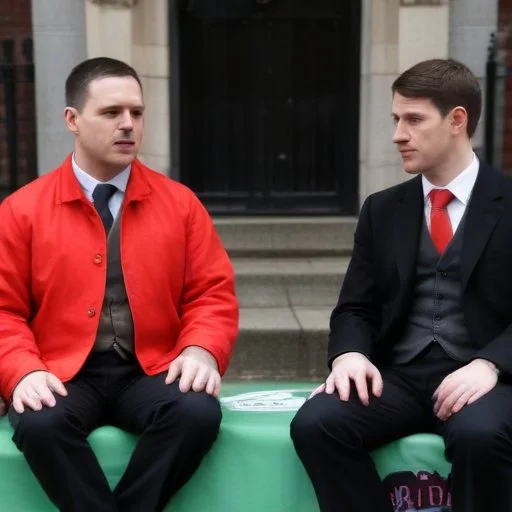
In the aftermath of World War I, Ireland's quest for self-determination gained momentum. The Anglo-Irish Treaty of 1921 had created a temporary government, but Irish Republicans continued to fight for full independence from Britain. The British response was brutal, with mass arrests and imprisonments of suspected rebels. It was against this backdrop of oppression that the 1920 Cork hunger strike began.
Terence MacSwiney, the Lord Mayor of Cork, was a charismatic leader and playwright who had been arrested in August 1920 for his alleged involvement in rebel activities. Joining him in the hunger strike were Michael Fitzgerald, a 24-year-old republican, and Joseph Murphy, a 27-year-old farmer and Irish Volunteer. These three men, driven by their passion for Irish independence, would become the face of the resistance movement.
The hunger strike began on August 11, 1920, as MacSwiney, Fitzgerald, and Murphy refused to eat in protest of their imprisonment. As the days turned into weeks, the trio's health began to deteriorate, sparking widespread international outcry. The British government, under intense pressure, remained resolute in their stance.
The ultimate sacrifice of MacSwiney, Fitzgerald, and Murphy sent shockwaves around the world, galvanizing international support for the Irish independence movement. Their bravery and selflessness inspired countless others to take up the fight, paving the way for Ireland's eventual independence.
"It is not those who can inflict the most, but those that can suffer the most who will conquer." - Terence MacSwiney
The 1920 Cork hunger strike would go on to inspire generations of Irish patriots, including leaders like Éamon de Valera and Michael Collins. The event also had a profound impact on the global struggle for independence, influencing movements from India to South Africa.
Did you know that Terence MacSwiney was a playwright and poet before becoming involved in politics? His play, "The Revolutionist," was performed in London just months before his arrest.
The 1920 Cork hunger strike is a testament to the power of human resolve and the unwavering commitment to a noble cause. As we reflect on this pivotal event, we are reminded of the profound impact that courage and conviction can have on shaping the course of history.
Terence MacSwiney was a multifaceted individual - a playwright, poet, and politician. Born on March 28, 1879, in Cork, Ireland, MacSwiney was drawn to the world of arts and literature from an early age. His play, The Revolutionist, showcased his creative prowess and hinted at his growing interest in Irish politics.
MacSwiney's political trajectory began when he joined the Gaelic League, an organization dedicated to promoting Irish culture and language. He soon became an active member of the Irish Republican Brotherhood, eventually rising to the position of Lord Mayor of Cork.

The 1920 Cork hunger strike took place against the backdrop of a tumultuous political climate in Ireland. The Anglo-Irish Treaty of 1921 had created a temporary government, but Irish Republicans continued to push for full independence from Britain.
The British government, led by Prime Minister David Lloyd George, responded to the growing unrest with force, implementing draconian measures such as martial law and internment without trial. This led to a surge in republican activity, with many Irishmen and women taking up arms against the British.
The 1920 Cork hunger strike had a profound impact on Irish culture, inspiring a new wave of artistic expression and galvanizing public opinion against British rule.
The event also resonated with other independence movements around the world, as evidenced by the outpouring of international support for the Irish cause. The hunger strike became a powerful symbol of resistance against oppression, transcending national boundaries and inspiring generations to come.
Historians have long debated the significance of the 1920 Cork hunger strike, with some viewing it as a pivotal moment in the Irish struggle for independence and others seeing it as a tragic but ultimately futile gesture.
According to historian and biographer, Francis M. Carroll, MacSwiney's sacrifice was a turning point in the Anglo-Irish conflict, as it forced the British government to re-evaluate its approach to dealing with Irish republicans.
The 1920 Cork hunger strike unfolded against the backdrop of a rapidly changing geopolitical landscape. The aftermath of World War I had created a power vacuum in Europe, with new nations and ideologies emerging to challenge the established order.
In this context, the Irish struggle for independence took on a broader significance, symbolizing the aspirations of colonized peoples around the world. The hunger strike became a beacon of hope for those fighting against imperial powers, inspiring movements from India to South Africa.