


"The important thing is not to stop questioning. Curiosity has its own reason for existence." - Albert EinsteinIn conclusion, the submission of "The Foundation of the General Theory of Relativity" was a pivotal moment in the history of science, marking a fundamental shift in our understanding of the universe. Einstein's legacy continues to inspire and fascinate us, reminding us of the power of human curiosity and the importance of pushing the boundaries of knowledge.
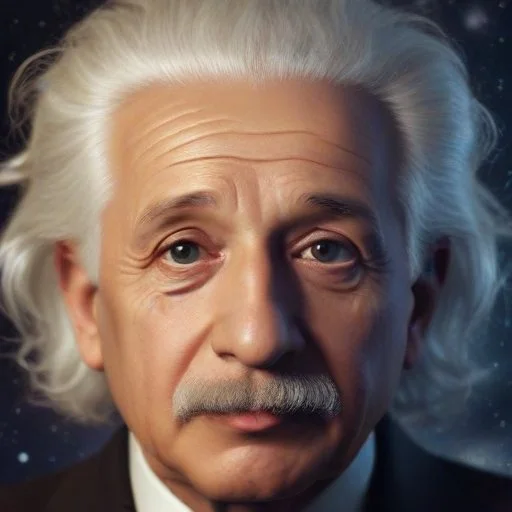
The impact of Einstein's general theory of relativity extended beyond the realm of physics, influencing cultural and philosophical discourses of the time. The theory's challenge to traditional notions of space and time resonated with the avant-garde movements in art and literature, inspiring new perspectives on the nature of reality.
In the world of literature, authors like James Joyce and Virginia Woolf were experimenting with non-linear narratives, blurring the lines between past, present, and future. Einstein's theory, with its concept of spacetime, seemed to validate these experimental approaches, encouraging writers to push the boundaries of literary expression.
The theory also had an impact on the development of modern art, influencing the works of artists like Salvador Dalí and René Magritte. The concept of spacetime curvature inspired new perspectives on the relationship between reality and perception, leading to the creation of innovative and thought-provoking artworks.

The historiography of Einstein's general theory of relativity is complex and multifaceted, with different historians offering varying interpretations of the theory's development and significance.
Some historians, like Gerald Holton, have emphasized the role of Einstein's predecessors, such as Carl Friedrich Gauss and Henri Poincaré, in shaping the intellectual landscape that led to the theory's development.
Others, like John Stachel, have highlighted the importance of Einstein's own philosophical and epistemological commitments, arguing that these played a crucial role in shaping the theory's distinctive features.
The scientific contributions of Einstein's general theory of relativity were profound, revolutionizing our understanding of gravity, space, and time.
The theory predicted phenomena like gravitational waves and black holes, which were later confirmed by observations and experiments.
It also led to the development of new areas of research, such as cosmology and astrophysics, which have greatly advanced our understanding of the universe.

The technological impact of Einstein's general theory of relativity has been significant, driving innovation in fields like GPS technology, nuclear power, and astronomy.
The theory's prediction of gravitational redshift, for example, has been used to develop more accurate GPS technology, enabling precise navigation and location services.
Its understanding of spacetime has also informed the development of nuclear power, allowing for more efficient and safe energy production.
Albert Einstein's personality and character played a significant role in the development of his general theory of relativity.
His curiosity and passion for understanding the mysteries of the universe drove him to challenge established theories and push the boundaries of human knowledge.
His determination and perseverance, despite facing skepticism and criticism, ultimately led to the theory's completion and publication.