


The Battle of Mullaitivu is remembered for being one of the bloodiest and most decisive battles in the Sri Lankan Civil War, where the Liberation Tigers of Tamil Eelam (LTTE) launched a surprise attack on the Sri Lankan Army's base, resulting in the deaths of over 1,200 soldiers.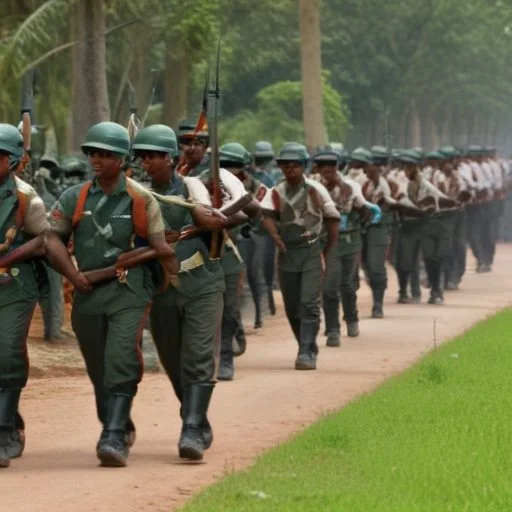
This brutal and pivotal battle took place on July 18, 1996, and marked a significant turning point in the conflict, cementing the LTTE's control over the northern region of Sri Lanka.
The Sri Lankan Civil War, which lasted from 1983 to 2009, was a brutal and complex conflict between the government of Sri Lanka and the LTTE, a separatist organization fighting for an independent Tamil state. The LTTE, led by Velupillai Prabhakaran, was known for its guerrilla tactics and had established a stronghold in the northern regions of Sri Lanka.
In the summer of 1996, the LTTE launched a series of surprise attacks on Sri Lankan Army bases, catching the government forces off guard. On July 18, 1996, the LTTE launched a major assault on the Sri Lankan Army's base in Mullaitivu, a strategic location in the northern region of Sri Lanka.
The battle was intense and brutal, with both sides suffering heavy casualties. The LTTE, however, emerged victorious, killing over 1,200 Sri Lankan soldiers and capturing the base. The victory was a significant blow to the Sri Lankan government and marked a turning point in the conflict.
The Battle of Mullaitivu had significant cultural and social implications for the people of Sri Lanka. The conflict had already led to widespread displacement, human rights abuses, and economic instability. The LTTE's victory in Mullaitivu further polarized the country, exacerbating ethnic tensions and deepening the divide between the Sinhalese and Tamil populations.
Survivors of the battle, including former soldiers and civilians, have shared harrowing accounts of the violence and brutality they witnessed. One former soldier recalled, "I saw my friends and comrades being killed, and I knew that we were no match for the LTTE's guerrilla tactics."
The Battle of Mullaitivu had far-reaching consequences for the future of the Sri Lankan Civil War. The LTTE's victory emboldened them to continue their fight for independence, while the Sri Lankan government was forced to re-evaluate its military strategy and seek international assistance.
The battle also led to increased international scrutiny of the conflict, with human rights organizations and diplomatic efforts calling for a peaceful resolution. In the years that followed, the conflict would continue to escalate, culminating in the eventual defeat of the LTTE in 2009.
The Battle of Mullaitivu was a pivotal moment in the Sri Lankan Civil War, marking a significant turning point in the conflict. The LTTE's victory was a testament to their guerrilla tactics and determination, while the Sri Lankan government was forced to confront its own weaknesses and vulnerabilities.
Today, the battle is remembered as a brutal and bloody chapter in Sri Lanka's history, a reminder of the devastating consequences of war and the importance of seeking peaceful solutions to conflict.
The Battle of Mullaitivu was not an isolated event, but rather part of a larger strategy employed by the LTTE to weaken the Sri Lankan government's grip on the northern region. In the months leading up to the battle, the LTTE had launched a series of surprise attacks on government forces, gradually pushing them back and expanding their territory.
The LTTE's tactics were designed to exploit the government's weaknesses, including poor intelligence gathering and inadequate military infrastructure. By targeting key military bases and disrupting supply lines, the LTTE was able to cripple the government's ability to respond effectively.
Despite their successes, the LTTE faced significant challenges in the aftermath of the battle. The government, backed by international pressure, launched a series of counter-attacks aimed at retaking lost territory. The LTTE was forced to adopt a more defensive posture, using guerrilla tactics to harass and disrupt government forces.

Velupillai Prabhakaran, the leader of the LTTE, was a mastermind of guerrilla warfare. Born in 1954, Prabhakaran was drawn to politics at an early age, eventually joining the Tamil New Tigers, a militant group fighting for Tamil independence.
Prabhakaran's rise to prominence was marked by his ruthless determination and strategic brilliance. He was known for his ability to inspire loyalty among his followers, and his willingness to use violence to achieve his goals.
Despite his controversial methods, Prabhakaran remains a revered figure among many Tamils, who see him as a hero and a champion of their cause. His legacy continues to be felt in Sri Lanka, where the scars of the civil war remain raw.
The Battle of Mullaitivu took place against a backdrop of growing international scrutiny of the Sri Lankan conflict. The United States, India, and other regional powers were increasingly concerned about the humanitarian crisis unfolding in Sri Lanka, and were pressuring both sides to negotiate a peaceful resolution.
The LTTE's victory at Mullaitivu was seen as a major setback for the government, and sparked renewed diplomatic efforts to end the conflict. The international community, led by Norway, brokered a series of peace talks, which ultimately collapsed in 2006.

The Battle of Mullaitivu had a profound impact on Sri Lankan culture, exacerbating the already deep divisions between the Sinhalese and Tamil populations. The conflict had already led to widespread displacement, human rights abuses, and economic instability.
The LTTE's victory further polarized the country, with many Sinhalese viewing the Tamil minority as a threat to their way of life. The conflict also had a devastating impact on Sri Lanka's economy, as foreign investment dried up and tourism declined.
The Sri Lankan government's response to the Battle of Mullaitivu was marked by confusion and incompetence. President Chandrika Kumaratunga was criticized for her handling of the crisis, with many calling for her resignation.
The government's failure to respond effectively to the LTTE's attacks was seen as a major weakness, and sparked widespread protests and demands for reform. The opposition, led by the United National Party, capitalized on the government's mistakes, using them to bolster their own political fortunes.