


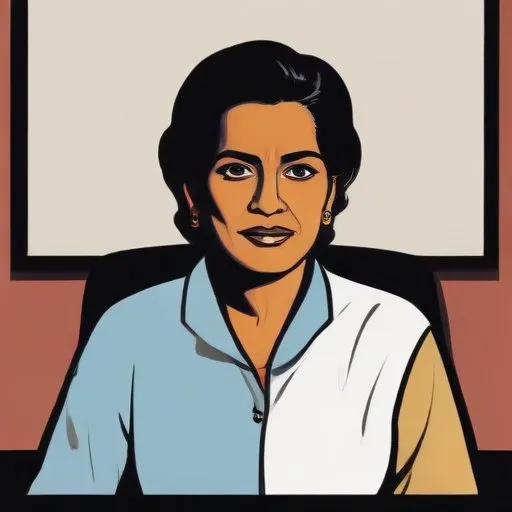
A pioneering female leader who served as Sri Lanka's first female President, known for her efforts to bring peace and reconciliation to the war-torn nation. She implemented policies to promote economic development and social welfare.
Chandrika Kumaratunga, fondly referred to as CBK, made history by becoming the first and only female President of Sri Lanka, serving from 1994 to 2005. Her remarkable tenure was marked by numerous milestones, including her landslide victory in the 1994 presidential election, where she secured 62% of the total votes cast, the largest margin in Sri Lankan history.
Chandrika was born on June 29, 1945, to Solomon West Ridgeway Dias Bandaranaike and Sirima Ratwatte Dias Bandaranaike in Colombo, Sri Lanka. Her father, a renowned politician, was an Oxford-educated barrister and the Minister of Local Administration at the time of her birth. Her mother, a prominent figure in her own right, was the daughter of Barnes Ratwatte Dissawa, Rate Mahatmaya of Balangoda during British colonial rule.
Chandrika's entry into politics was marked by her appointment as the Chief Minister of the Western Province in 1993. Her leadership skills and vision soon propelled her to the position of Prime Minister in August 1994. Just a few months later, she became the President of Sri Lanka, a position she held for an unprecedented 11 years.
During her presidency, Chandrika implemented numerous reforms aimed at promoting national reconciliation, economic development, and social justice. Her government introduced the 17th Amendment to the Constitution, which established the Constitutional Council, an independent body responsible for appointing key officials. She also launched the "Vision 2005" development program, which aimed to transform Sri Lanka into a modern, industrial economy.
Chandrika's presidency was not without its challenges. She faced criticism for her handling of the ethnic conflict, and her government was accused of human rights violations. The abduction and murder of journalist Lasantha Wickrematunge in 2009, allegedly by government-backed militia, remains a controversial stain on her legacy.
Despite the controversies, Chandrika's legacy as a trailblazer for women in politics and a champion of social justice remains unparalleled. She has been recognized for her contributions to democracy and human rights, receiving the Félix Houphouët-Boigny Peace Prize in 1999. Her presidency paved the way for future generations of women leaders, inspiring a new wave of female politicians in Sri Lanka.
Chandrika is known for her strong personality and determination. She has been quoted as saying, "I am not a token woman, I am a leader." Her love for literature and poetry has been well-documented, and she has been known to recite verses from her favorite poet, Pablo Neruda, in public gatherings.
Chandrika Kumaratunga's remarkable journey, marked by triumphs and challenges, serves as a testament to her unwavering dedication to the people of Sri Lanka. Her legacy continues to inspire generations, solidifying her place as one of the most influential leaders in Sri Lankan history.
Born in 1906
A Sri Lankan lawyer and politician who served as the 2nd President of Sri Lanka, known for introducing a new constitution and establishing a presidential system of government. He's also credited with opening up the country's economy and promoting market-oriented reforms.
Born in 1916
The world's first female prime minister, who broke gender barriers in politics and led her country through a tumultuous period of economic and social change. She paved the way for future generations of female leaders.
80 Years Old
A Sri Lankan lawyer and politician who served as the 6th President of Sri Lanka, known for his role in ending the country's 26-year civil war. He's also infamous for alleged human rights abuses during his tenure.
77 Years Old
The 8th president of Sri Lanka is a former military officer who led a crackdown on the Tamil Tigers, ending a decades-long civil war, and later became a populist leader. He's known for his strong nationalist stance and controversial human rights record.
