


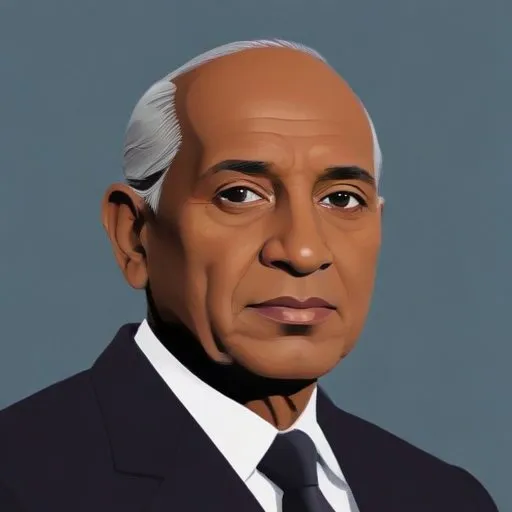
A Sri Lankan lawyer and politician who served as the 2nd President of Sri Lanka, known for introducing a new constitution and establishing a presidential system of government. He's also credited with opening up the country's economy and promoting market-oriented reforms.
J.R. Jayewardene, the second President of Sri Lanka, is best known for introducing the open economic system in 1978, which propelled the country out of economic turmoil. During his tenure as Prime Minister from 1977 to 1978 and as President from 1978 to 1989, Jayewardene implemented significant reforms that transformed the nation's economy and politics.
Born on September 17, 1906, in Colombo, Sri Lanka, Jayewardene was the eldest of twelve children in the prominent Jayewardene family, with a strong tradition of lawyers. His father, Hon. Justice Eugene Wilfred Jayewardene, was a prominent lawyer, and his mother, Agnes Helen Don Philip Wijewardena, was the daughter of a wealthy timber merchant.
Jayewardene received his primary education at Bishops College, Colombo, and was raised by an English nanny. He went on to study law at the University of Colombo and was called to the bar in 1932. His younger brothers, Hector Wilfred Jayewardene and Rolly Jayewardene, also became prominent figures in Sri Lankan politics and law.
Jayewardene's entry into politics began in the 1940s, when he joined the United National Party (UNP). He quickly rose through the ranks, becoming a member of the Colombo Municipal Council in 1940 and later, a member of the State Council in 1943.
In 1947, Jayewardene was appointed as the Minister of Finance in the first post-independence government of Ceylon (now Sri Lanka). He played a key role in shaping the country's economy, introducing various reforms and policies that laid the foundation for Sri Lanka's development.
In 1977, Jayewardene led the UNP to a landslide victory, becoming the Prime Minister of Sri Lanka. He implemented the open economic system, which liberalized trade and investment, stimulating economic growth and development.
In 1978, Jayewardene became the second President of Sri Lanka, a position he held until 1989. During his presidency, he introduced a new constitution, which established a presidential system of government and strengthened the executive branch.
Jayewardene's presidency was marked by controversy, particularly his response to the Black July riots of 1983, which led to widespread violence and human rights abuses against the Tamil minority. Critics accused him of contributing to the escalation of the Sri Lankan Civil War, which lasted from 1983 to 2009.
Despite these criticisms, Jayewardene's economic reforms and policies had a lasting impact on Sri Lanka's development. He is remembered as a visionary leader who transformed the country's economy and politics, laying the foundation for its modernization.
Jayewardene married Elena Attygalle in 1932, and the couple had one son, Ravi Jayewardene. He was known for his love of reading and was an avid collector of books.
Jayewardene was also a philanthropist, supporting various charitable causes and educational institutions throughout his life. He established the Jayewardene Memorial Foundation, which provides scholarships and grants to students and researchers in Sri Lanka.
J.R. Jayewardene's legacy is complex and multifaceted. While his economic reforms and policies had a significant impact on Sri Lanka's development, his presidency was also marked by controversy and human rights abuses.
Despite these contradictions, Jayewardene remains an important figure in Sri Lankan history, remembered for his vision and leadership in transforming the country's economy and politics. His legacy continues to shape the nation's development, and his impact will be felt for generations to come.
81 Years Old
A pioneering female leader who served as Sri Lanka's first female President, known for her efforts to bring peace and reconciliation to the war-torn nation. She implemented policies to promote economic development and social welfare.
80 Years Old
A Sri Lankan lawyer and politician who served as the 6th President of Sri Lanka, known for his role in ending the country's 26-year civil war. He's also infamous for alleged human rights abuses during his tenure.
77 Years Old
The 13th Prime Minister of Sri Lanka, a seasoned lawyer and politician, led the country through significant economic and political reforms, earning him a reputation as a champion of democracy and development.
Born in 1916
The world's first female prime minister, who broke gender barriers in politics and led her country through a tumultuous period of economic and social change. She paved the way for future generations of female leaders.
