


In the realm of international relations, few conflicts are as devastating as border disputes. The Cenepa War, a territorial clash between Peru and Ecuador, stands as a testament to the destructive potential of unresolved boundaries. After claiming dozens of lives and threatening regional stability, the war finally came to an end on February 17, 1995, with a ceasefire brokered by the United Nations.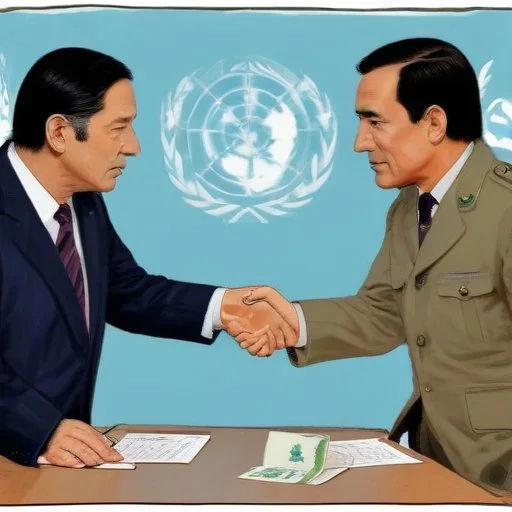
The seeds of the Cenepa War were sown in the early 20th century, when the borders between Peru and Ecuador were first drawn. The 1942 Rio de Janeiro Protocol, meant to settle the dispute, only fueled tensions as both nations interpreted the agreement differently. Decades of simmering resentment finally boiled over in 1995, as troops from both countries clashed in the disputed Cenepa Valley.
The UN-brokered ceasefire was made possible by the tireless efforts of several key figures. UN Secretary-General Boutros Boutros-Ghali played a crucial role in mediating the conflict, leveraging the international community's influence to bring the warring nations to the negotiating table. Peruvian President Alberto Fujimori and Ecuadorian President Sixto Durán Ballén demonstrated remarkable diplomacy in the face of intense pressure, ultimately agreeing to the ceasefire.
The Cenepa War ceasefire averted a full-blown conflict, preventing further loss of life and regional destabilization. While the agreement was a crucial step towards peace, it also underscored the need for continued diplomatic efforts to resolve the underlying border dispute. The war served as a catalyst for increased regional cooperation, paving the way for future collaborations and agreements.
The Cenepa War had far-reaching implications for the people of Peru and Ecuador. As news of the conflict spread, citizens from both nations came together in a show of solidarity, urging their governments to seek a peaceful resolution. The war served as a poignant reminder of the devastating consequences of unchecked nationalism, fostering a sense of regional unity and cooperation.
The Cenepa War was not without its controversies. Critics argued that the UN-brokered ceasefire did little to address the underlying issues driving the conflict, merely papering over the cracks. Despite these reservations, the agreement marked a crucial step towards peace, demonstrating the effectiveness of international cooperation in resolving complex disputes.
For those who lived through the Cenepa War, the conflict will forever be etched in their memories. One Ecuadorian soldier, Juan Carlos, recounted the harrowing experience of facing Peruvian troops in the Cenepa Valley: "We were just boys, fighting for a piece of land that didn't belong to us. The ceasefire was a blessing, but it came too late for many of my friends."
The Cenepa War ceasefire set a precedent for regional cooperation, paving the way for future agreements and collaborations. The Peruvian-Ecuadorian conflict served as a catalyst for increased diplomacy in the region, fostering a sense of unity and cooperation that continues to shape international relations in Latin America today.
In the aftermath of the Cenepa War, the people of Peru and Ecuador can take pride in their ability to come together in the face of adversity. As the region continues to navigate the complexities of international relations, the 1995 ceasefire stands as a testament to the power of diplomacy and cooperation.
The Cenepa War was not the first border dispute between Peru and Ecuador. In fact, the two nations had a long history of territorial tensions dating back to the early 19th century, when they gained independence from Spain. The 1829 Treaty of Gran Colombia, which established the borders of the newly formed nations, was ambiguous and open to interpretation, leading to numerous skirmishes and conflicts over the years.
The situation was further complicated by the fact that the border region was densely forested and largely unmapped, making it difficult to define clear boundaries. The 1942 Rio de Janeiro Protocol, which was intended to settle the dispute, only fueled the tensions as both nations interpreted the agreement differently.
Decades of simmering resentment finally boiled over in 1995, as troops from both countries clashed in the disputed Cenepa Valley. The war was a culmination of years of diplomatic failures and misunderstandings, and it would take a concerted effort by the international community to bring the warring nations to the negotiating table.

One of the key figures in the Cenepa War was UN Secretary-General Boutros Boutros-Ghali, who played a crucial role in mediating the conflict. Born in Egypt in 1922, Boutros-Ghali was a seasoned diplomat with a long history of international service. He was appointed Secretary-General of the United Nations in 1992, and quickly proved himself to be a skilled and effective mediator.
Boutros-Ghali's efforts in the Cenepa War were instrumental in bringing the warring nations to the negotiating table. He worked tirelessly behind the scenes, using his vast network of international contacts to apply pressure on Peru and Ecuador to reach a peaceful resolution.
Despite the challenges he faced, Boutros-Ghali remained committed to finding a solution to the conflict. His dedication and perseverance ultimately paid off, as Peru and Ecuador agreed to a ceasefire on February 17, 1995.
The Cenepa War had a profound impact on the people of Peru and Ecuador, particularly in the border regions. The conflict led to a surge in nationalism, as citizens from both nations rallied around their respective flags.
However, the war also had a profound human cost. Thousands of people were displaced, and many more were affected by the conflict. The war also led to a breakdown in trade and commerce, causing economic hardships for many families.
Despite the challenges, the Cenepa War also brought the people of Peru and Ecuador closer together. As news of the conflict spread, citizens from both nations came together in a show of solidarity, urging their governments to seek a peaceful resolution.
The Cenepa War was a complex and multifaceted conflict, driven by a range of political and diplomatic factors. One of the key factors was the rivalry between Peru and Ecuador, which dated back to the early 20th century.
The war was also driven by a desire for regional influence, as both nations sought to expand their economic and political reach in the region. The conflict was further complicated by the involvement of other regional powers, including the United States, which had its own interests in the region.
Despite the complexities of the conflict, the Cenepa War ultimately demonstrated the power of diplomacy and international cooperation in resolving disputes. The UN-brokered ceasefire marked a crucial turning point in the conflict, and paved the way for future agreements and collaborations.
The Cenepa War took place against a backdrop of shifting global politics. The end of the Cold War had created a power vacuum in the region, as the United States and the Soviet Union no longer had the same level of influence.
In this new geopolitical landscape, regional powers like Peru and Ecuador sought to assert their influence and expand their reach. The Cenepa War was, in part, a reflection of this new dynamic, as both nations sought to establish themselves as major players in the region.
The conflict also highlighted the importance of regional cooperation and diplomacy in resolving disputes. The involvement of the United Nations and other regional organizations demonstrated the need for collective action in maintaining regional stability.