


On June 12, 1987, the Central African Republic's former emperor, Jean-Bedel Bokassa, was sentenced to death for his egregious crimes committed during his 13-year rule. This notorious leader's brutal regime was marked by widespread human rights abuses, torture, and murder of political opponents, earning him the title of one of Africa's most ruthless dictators.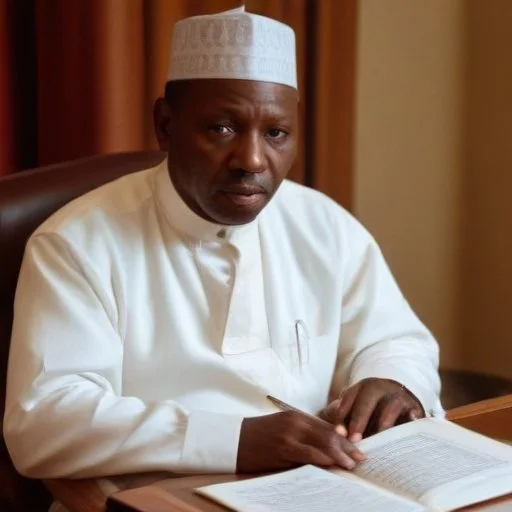
Bokassa's extravagant lifestyle was a stark contrast to the poverty and suffering of his people. He spent lavishly on himself, building opulent palaces, throwing extravagant parties, and amassing a collection of expensive cars. His love for luxury was only matched by his disdain for human life.
The list of Bokassa's atrocities is long and gruesome. He was found guilty of murder, cannibalism, and embezzlement, among other heinous crimes. His regime was marked by the disappearance of political opponents, the torture of innocent civilians, and the embezzlement of millions of dollars in public funds.
The trial of Jean-Bedel Bokassa was a landmark moment in the Central African Republic's history. For the first time, the country's former leader was held accountable for his crimes. The trial was a chance for the victims and their families to find some sense of closure, but it also served as a stark reminder of the horrors that had transpired during Bokassa's rule.
Bokassa's reign of terror left deep scars on the Central African Republic. His brutal regime had a profound impact on the country's politics, economy, and social fabric. The legacy of fear and oppression he left behind would take generations to overcome.
| Date | Event |
|---|---|
| 1966 | Bokassa overthrows President David Dacko in a military coup. |
| 1972 | Bokassa declares himself president for life. |
| 1977 | Bokassa crowns himself emperor in a lavish ceremony. |
| 1979 | A French-backed coup overthrows Bokassa's regime. |
| 1987 | Bokassa is sentenced to death for his crimes. |
The trial and sentencing of Jean-Bedel Bokassa sent a strong message to dictators across Africa that they would be held accountable for their crimes. The event marked a turning point in the Central African Republic's history, as the country began to rebuild and move towards democracy.
The Bokassa regime's atrocities also had a profound impact on the country's economy and social fabric. The regime's corruption and embezzlement had left the country impoverished, while the violence and fear had torn families and communities apart.
Bokassa's regime had a profound impact on the Central African Republic's culture and society. The regime's emphasis on grandeur and extravagance had led to a culture of corruption and excess. The violence and fear had also led to a breakdown in social cohesion, as families and communities were torn apart.
However, the trial and sentencing of Bokassa also marked a new chapter in the country's history. It was a chance for the Central African Republic to rebuild and move towards a more democratic and just society.
The rise of Jean-Bedel Bokassa to power was a result of a series of events that began in the early 1960s. As a young military officer, Bokassa became disillusioned with the government of President David Dacko, who he saw as corrupt and ineffective. Bokassa seized power in 1966, promising to bring stability and prosperity to the Central African Republic. However, his regime quickly descended into brutality and corruption.
One of the key factors that contributed to Bokassa's rise to power was his relationship with France, the former colonial power. France saw Bokassa as a reliable ally and provided him with significant financial and military support. This support enabled Bokassa to consolidate his power and crush opposition to his rule.

David Dacko, the president of the Central African Republic, was a complex figure who played a significant role in the rise and fall of Jean-Bedel Bokassa. Dacko was a skilled politician who had managed to maintain power in the face of opposition from various factions. However, he was also seen as corrupt and ineffective, which created an opening for Bokassa to seize power.
Despite his flaws, Dacko remains an important figure in the history of the Central African Republic. He was a key player in the country's transition to independence from France and served as a symbol of national unity.
The Bokassa regime had a profound impact on the culture and society of the Central African Republic. The regime's emphasis on grandeur and extravagance led to the development of a culture of corruption and excess. This culture was characterized by lavish spending on luxuries, while the majority of the population lived in poverty.
The regime's emphasis on grandeur also led to the development of a vibrant cultural scene, with a focus on music, art, and dance. However, this cultural scene was tightly controlled by the regime, and any form of dissent or criticism was brutally suppressed.

The Bokassa regime's economic policies were marked by corruption and mismanagement. The regime embezzled millions of dollars in public funds, which were used to finance lavish spending on luxuries and grand projects. This led to a significant decline in the country's economy, with high inflation and widespread poverty.
The regime's economic policies also had a devastating impact on the country's infrastructure. The lack of investment in key sectors such as healthcare, education, and transportation meant that the country's infrastructure was in a state of disrepair.
The trial of Jean-Bedel Bokassa marked a significant turning point in the political history of the Central African Republic. The trial was a chance for the country to confront the atrocities committed by the regime and to hold those responsible accountable.
The trial also had significant implications for the development of democracy in the Central African Republic. It marked a shift towards greater accountability and transparency in government, and paved the way for the country's transition to democratic rule.