


In February 1972, President Richard Nixon embarked on a groundbreaking visit to the People's Republic of China, marking a significant turning point in the Cold War era. The culmination of this historic trip was the agreement to establish liaison offices between the two nations, bridging the gap between the world's two superpowers.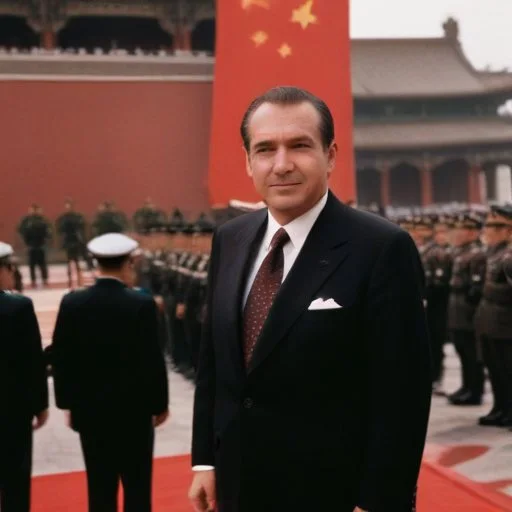
The 1960s were marked by heightened tensions between the United States and China, with the two countries engaging in a war of ideologies. The Chinese Communist Party, led by Mao Zedong, viewed the United States as a capitalist threat, while the US saw China as a communist menace. The Taiwan Strait Crisis, the Korean War, and the Vietnam War further exacerbated the divide.
President Nixon, accompanied by his National Security Adviser Henry Kissinger, was determined to shift the dynamics of the Cold War. Premier Zhou Enlai, China's chief diplomat, was instrumental in facilitating the rapprochement. The trio's diplomatic efforts were crucial in navigating the complexities of international relations.
The establishment of liaison offices signaled a significant thaw in the Cold War, facilitating communication and cooperation between the two nations. This newfound diplomacy paved the way for increased trade, cultural exchange, and a shift in global politics.
Nixon's visit marked a cultural watershed, as the two nations began to engage in people-to-people diplomacy. The introduction of Chinese ping-pong players to the US, followed by American basketball players visiting China, symbolized the growing bridges between the two nations.
The establishment of liaison offices sparked controversy among conservative circles in the US, who saw the move as a betrayal of Taiwan. However, the majority of Americans viewed the development as a positive step towards reducing tensions and increasing cooperation.
"This is the week that changed the world." – President Richard Nixon, upon his departure from China
The establishment of liaison offices between the US and China served as a model for future diplomatic engagements, demonstrating the potential for cooperation between former adversaries. This rapprochement paved the way for improved relations between the US and the Soviet Union, marked by the signing of the Strategic Arms Limitation Talks (SALT) treaty in 1972.
Diplomat and historian Margaret MacMillan recounts that during a private dinner, Premier Zhou Enlai surprised President Nixon by revealing his fondness for the American musical "The Sound of Music." This lighthearted moment humanized the leaders and underscored the possibilities for cultural exchange.
The establishment of liaison offices set a precedent for future diplomatic breakthroughs, including the Camp David Accords (1978) and the Iran-US hostage crisis negotiations (1981). This new era of diplomacy continues to shape international relations today.
 President Nixon and Premier Zhou Enlai during a private dinner
 The signed Shanghai Communiqué
 The inaugural liaison office in Beijing
The establishment of liaison offices between the US and China foreshadowed a shift in global politics, as the two nations began to cooperate on issues such as trade, security, and climate change. This new era of diplomacy continues to shape the contours of international relations today.
The Nixon administration's decision to establish liaison offices in Beijing and Washington, D.C. marked a significant departure from traditional Cold War diplomacy. Historians have interpreted this move as a calculated attempt to create a new framework for international relations, one that prioritized pragmatism over ideology.
In the context of the Cold War, the United States and China had long been locked in a bitter struggle for global influence. The establishment of liaison offices signaled a willingness to engage in nuanced diplomacy, where national interests were acknowledged and compromises were possible.
Historians have also noted the significance of Nixon's visit in challenging the prevailing wisdom of the time. By engaging with the Chinese Communist Party, Nixon effectively undermined the dominant narrative of the Cold War, which posited the Soviet Union as the primary antagonist.
Nixon's diplomatic gambit not only reshaped the dynamics of the Cold War but also paved the way for future diplomatic breakthroughs.
Premier Zhou Enlai, the chief architect of China's foreign policy, played a crucial role in facilitating the rapprochement with the United States. Zhou's diplomatic expertise and mastery of international relations helped to navigate the complexities of the Cold War.
Zhou's persona was characterized by his intellectualism, pragmatism, and willingness to compromise. These traits allowed him to build a rapport with Nixon, despite their ideological differences.
Historians have praised Zhou's ability to balance China's national interests with the need for international cooperation. His leadership played a pivotal role in shaping China's foreign policy, setting the stage for the country's emergence as a global player.
The establishment of liaison offices between the United States and China serves as a compelling case study in the art of diplomacy. By comparing this event to other diplomatic breakthroughs, such as the Camp David Accords or the Iran-US hostage crisis negotiations, we can identify key patterns and strategies that contributed to its success.
One notable comparison can be drawn between Nixon's visit and the Reagan-Gorbachev summit of 1985. Both events marked a significant shift in the Cold War narrative, as former adversaries engaged in meaningful dialogue.
Further analysis reveals that the establishment of liaison offices shares commonalities with other instances of successful diplomacy, including the importance of secret negotiations, the role of trusted intermediaries, and the need for a shared vision of international relations.
The comparative analysis of Nixon's visit highlights the enduring importance of diplomacy in shaping international relations.
The establishment of liaison offices between the United States and China had a profound impact on cultural exchange between the two nations. The introduction of Chinese ping-pong players to the US, followed by American basketball players visiting China, symbolized the growing bridges between the two nations.
This cultural thaw paved the way for increased tourism, educational exchanges, and artistic collaborations. The Nixon administration's decision to relax travel restrictions and allow American journalists to visit China further accelerated this process.
The cultural impact of Nixon's visit was not limited to the United States and China. The event inspired a new wave of interest in international cultural exchange, as nations around the world sought to emulate the success of the Sino-American rapprochement.
The cultural legacy of Nixon's visit continues to shape international relations today, as nations recognize the power of cultural exchange in fostering global understanding.
The establishment of liaison offices between the United States and China marked a significant turning point in the economic relationship between the two nations. The Shanghai Communiqué, signed during Nixon's visit, outlined the principles for establishing diplomatic relations, including the normalization of trade.
The agreement paved the way for increased economic cooperation, as the United States and China began to engage in bilateral trade. The subsequent growth in trade and investment has been substantial, with China emerging as one of the United States' largest trading partners.
The economic impact of Nixon's visit extends beyond the bilateral relationship, as the event helped to reshape the global economic landscape. The establishment of liaison offices signaled a new era of international economic cooperation, marked by increased trade liberalization and economic interdependence.
The economic legacy of Nixon's visit continues to shape international trade and investment today, as nations around the world seek to capitalize on the benefits of economic cooperation.