


The coronation of Franz Joseph as King of Hungary on June 8, 1867, marked a pivotal moment in European history, signaling the end of Hungary's 18-year struggle for independence and the dawn of a new era of cooperation between Austria and Hungary. This grand event, steeped in pageantry and significance, cemented the Austro-Hungarian Compromise, establishing the dual monarchy of Austria-Hungary.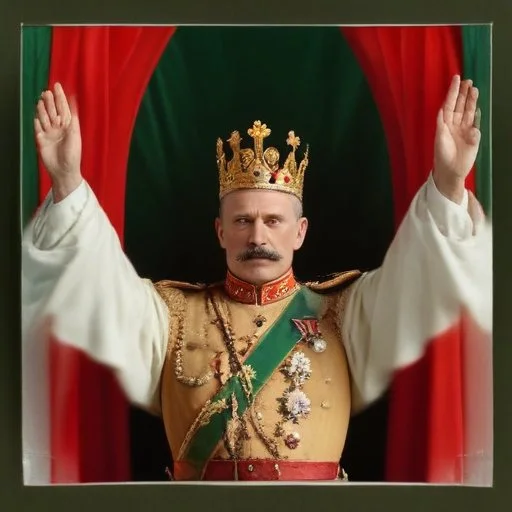
In the aftermath of the Austrian Empire's defeat in the Austro-Prussian War, Hungary's desire for autonomy and equality within the empire gained momentum. The Hungarian Revolution of 1848, led by Lajos Kossuth, had failed to achieve its goals, but the movement's legacy continued to simmer. Meanwhile, Austria's weakened position created an opportunity for Hungary to negotiate a more favorable arrangement.
The grand coronation ceremony, held in Budapest's Matthias Church, was a testament to the newfound harmony between Austria and Hungary. Franz Joseph, resplendent in his coronation robes, was crowned King of Hungary by the Hungarian Primate, János Simor. The ceremony was attended by dignitaries from both nations, symbolizing the unity and cooperation that the Compromise embodied.
The coronation of Franz Joseph as King of Hungary had far-reaching consequences, solidifying the Austro-Hungarian Compromise and establishing a more equal partnership between the two nations. The dual monarchy would endure for over five decades, until the outbreak of World War I.
The coronation ceremony, with its rich pageantry and symbolism, helped to foster a sense of shared identity and nationhood among Hungarians. The event also marked a cultural resurgence in Hungary, with a renewed emphasis on Hungarian language, literature, and art.
"The Compromise is not a victory for one party or the other, but a triumph of reason and the spirit of conciliation." – Ferenc Deák
The coronation of Franz Joseph as King of Hungary remains a pivotal moment in European history, marking the birth of the dual monarchy of Austria-Hungary and cementing the Austro-Hungarian Compromise. This historic event continues to inspire and educate, serving as a testament to the power of cooperation and diplomacy in shaping the course of nations.
In the decades leading up to the Austro-Hungarian Compromise, Hungary's desire for independence and self-governance grew increasingly fervent. The Hungarian Revolution of 1848, although ultimately unsuccessful, laid the groundwork for future attempts at autonomy. The compromise was the culmination of years of negotiation and diplomacy between Hungarian leaders and the Austrian government.
Franz Joseph's coronation as King of Hungary marked a significant turning point in this struggle, as it recognized Hungary's autonomy and established a dual monarchy.
Ferenc Deák, a Hungarian statesman and lawyer, played a pivotal role in negotiating the Austro-Hungarian Compromise. Deák's vision for a unified yet autonomous Hungary drove the compromise, and his diplomatic skills facilitated its realization.
Deák's leadership and strategic thinking earned him the respect of both Austrian and Hungarian leaders, making him an instrumental figure in the compromise.
The coronation of Franz Joseph as King of Hungary marked a cultural resurgence in Hungary, as the country experienced a renewed emphasis on Hungarian language, literature, and art.
This cultural renaissance was largely fueled by the compromise, which allowed Hungary to express its unique identity and culture within the dual monarchy.
The coronation ceremony itself was a testament to this cultural awakening, featuring traditional Hungarian music, dance, and attire.
The Austro-Hungarian Compromise was set against the backdrop of a rapidly changing European landscape. The rise of nationalism, the decline of the Ottoman Empire, and the unification of Italy and Germany all influenced the compromise.
The compromise was, in part, a response to these shifting tides, as Austria and Hungary sought to strengthen their alliance and maintain stability in the region.
The Austro-Hungarian Compromise was underpinned by a profound ideology of unity and cooperation. This ideology was reflected in the compromise's emphasis on mutual respect, shared sovereignty, and cooperation between Austria and Hungary.
The coronation ceremony, with its symbolism of unity and shared identity, embodied this ideology, inspiring hope for a more harmonious future between the two nations.