


The Crimean War, fought from 1853 to 1856, is known for being the first major conflict to be documented through modern media, courtesy of pioneering war correspondent William Howard Russell, and for its far-reaching consequences on the global balance of power.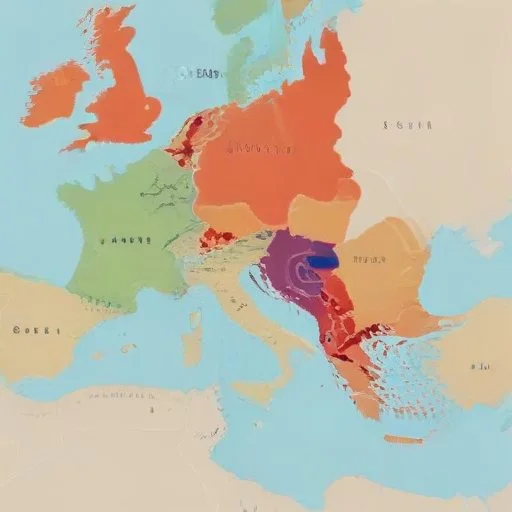
This devastating conflict began on October 4, 1853, when the Ottoman Empire declared war on the Russian Empire, citing concerns over Russian expansion in the Black Sea region.
In the early 19th century, the Ottoman Empire, once a dominant force in Eastern Europe and the Middle East, was facing decline, while the Russian Empire was steadily expanding its territories.
This led to a complex web of alliances and rivalries among European powers, with Britain and France eager to prevent Russian dominance in the region.
The war began on October 4, 1853, with the Ottoman declaration of war, followed by a series of bloody battles, including the infamous Charge of the Light Brigade at Balaclava in 1854.
The war turned in favor of the Allies in 1855, with the fall of Sevastopol, the Russian naval base, and the eventual signing of the Treaty of Paris in 1856, which marked the end of the conflict.
The Crimean War led to a significant shift in the global balance of power, with the Ottoman Empire ceding control of the Crimean Peninsula to Russia, and Britain and France emerging as major players in the region.
The war also led to the modernization of warfare, with the introduction of new technologies, such as the telegraph and steam-powered ships, which revolutionized communication and transportation.
The Crimean War had a profound impact on literature and art, with writers such as Alfred, Lord Tennyson, and Leo Tolstoy drawing inspiration from the conflict.
Florence Nightingale's pioneering work in the field of nursing during the war also led to significant reforms in healthcare and sanitation.
The war was marred by controversy, with allegations of incompetence and mismanagement among military leaders, particularly Lord Raglan, who was criticized for his handling of the war effort.
"Into the jaws of Death, / Into the mouth of Hell" - Alfred, Lord Tennyson, "The Charge of the Light Brigade"
"No warm, no cheerful light, / Will glow around my burial" - Leo Tolstoy, "Sevastopol Sketches"
Florence Nightingale's letters from the front lines, which were published in The Times, offered a powerful and moving account of the war's human cost.
One of the most enduring images of the war is that of the British troops, stranded in the frozen Crimean landscape, awaiting the arrival of desperately needed supplies.
The Crimean War set the stage for the modernization of warfare, with the development of new technologies and tactics that would later be employed in World War I.
The war also led to a re-evaluation of military strategy, with the rise of professional armies and the development of more mobile, flexible forces.
The Crimean War marked a significant shift in the balance of power among European nations, with the decline of the Ottoman Empire and the rise of Russia, Britain, and France.
One of the key features of the war was the complex web of alliances and rivalries that emerged, with Britain and France forming an unlikely alliance to counter Russian expansion.
This realignment of powers had far-reaching consequences, setting the stage for future conflicts, including World War I, and shaping the modern political landscape of Europe.
Florence Nightingale: The Lady with the Lamp
Florence Nightingale, a British nurse and social reformer, is often referred to as the "Lady with the Lamp" due to her tireless efforts to improve sanitation and healthcare during the Crimean War.
Nightingale's work at the Scutari Hospital in Constantinople reduced mortality rates dramatically, earning her widespread recognition and admiration. Her pioneering work laid the foundation for modern nursing and sanitary practices.
The Crimean War was fought in the context of a rapidly changing European landscape, with the decline of the Ottoman Empire and the rise of nationalism and imperialism.
The war marked a turning point in the struggle for influence in the Balkans, with Russia, Britain, and France vying for control over the region.
The war also highlighted the importance of the Black Sea region as a strategic trade route, further fueling rivalries between the European powers.
The Crimean War had a profound impact on literature and art, inspiring some of the most iconic works of the era.
Alfred, Lord Tennyson's poem "The Charge of the Light Brigade" is a classic example of war literature, capturing the drama and tragedy of the conflict.
Leo Tolstoy's "Sevastopol Sketches", a series of short stories and essays, provides a gripping account of the war from the Russian perspective, offering a nuanced exploration of the human cost of conflict.
The Crimean War witnessed significant advances in military technology, including the use of steam-powered ships, telegraphs, and rifled artillery.
The war saw the first widespread use of the telegraph, which revolutionized communication and coordination between military leaders and governments.
The introduction of rifled artillery, which allowed for more accurate and longer-range firing, transformed the nature of warfare, making traditional fortifications and tactics obsolete.