


The Cuban Missile Crisis, a 13-day standoff that brought the world to the brink of nuclear war, began when an American U-2 reconnaissance aircraft captured startling photographs of Soviet ballistic missiles being installed in Cuba. This precarious situation, unfolding in October 1962, pitted the United States against the Soviet Union, leaving the world holding its collective breath.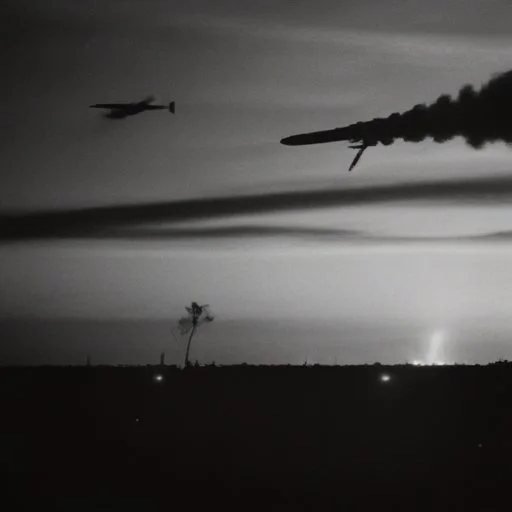
The stage was set for a global crisis when Soviet Premier Nikita Khrushchev, determined to counterbalance the United States' nuclear superiority, decided to deploy intermediate-range ballistic missiles (IRBMs) in Cuba. This covert operation, codenamed "Anadyr," was designed to safeguard the communist regime in Cuba and negate the threat of a U.S. invasion.
On October 14, 1962, a U-2 reconnaissance aircraft, piloted by Major Richard S. Heyser, took off from Edwards Air Force Base in California. The mission was routine, but the photographs captured that day would change the course of history. The grainy black-and-white images revealed the unmistakable silhouettes of Soviet ballistic missiles, sparking a chain reaction of events that would bring humanity to the edge of nuclear catastrophe.
The following days were a whirlwind of diplomatic pressure, military mobilization, and high-stakes negotiations:
The Cuban Missile Crisis ended with a sigh of relief, but its impact on world politics was profound:
The Cuban Missile Crisis serves as a chilling reminder of the dangers of unchecked nuclear proliferation and the importance of diplomacy in preventing global catastrophes. As we reflect on this pivotal moment in history, we are reminded of the words spoken by John F. Kennedy during the crisis: "Let every nation know, whether it wishes us well or ill, that we shall pay any price, bear any burden, meet any hardship, support any friend, oppose any foe to assure the survival and the success of liberty."
The Cuban Missile Crisis was not the first time the United States and the Soviet Union had engaged in a high-stakes game of nuclear chicken. In the early 1960s, the two superpowers had already faced off in several tense confrontations, including the Berlin Crisis of 1961 and the Bay of Pigs invasion. However, the discovery of Soviet missile sites in Cuba marked a critical turning point in the Cold War, as it brought the threat of nuclear war directly to America's doorstep.
The crisis was also a culmination of the Soviet Union's efforts to counterbalance the United States' nuclear superiority. Since the launch of Sputnik in 1957, the Soviets had been working to close the "missile gap" between the two nations. The deployment of IRBMs in Cuba was meant to not only protect the communist regime but also to demonstrate the Soviet Union's ability to project power beyond its borders.
In the years leading up to the crisis, the United States had been conducting a series of nuclear tests in the Pacific, which had led to increased tensions between the two nations. The Soviets, in turn, had been secretly building up their nuclear arsenal, including the development of intercontinental ballistic missiles (ICBMs). The discovery of the missile sites in Cuba was, in many ways, the culmination of this nuclear arms race.

Nikita Khrushchev, the Soviet Premier, was a complex figure known for his contradictory personality traits. On one hand, he was a ruthless leader who had ordered the construction of the Berlin Wall and had crushed the Hungarian Revolution of 1956. On the other hand, he was a charismatic leader who had introduced reforms aimed at decentralizing the Soviet economy and promoting cultural exchange with the West.
Khrushchev's decision to deploy missiles in Cuba was motivated by a desire to protect the communist regime and to demonstrate Soviet power. However, his actions were also driven by a deep-seated fear of the United States and a desire to gain an advantage in the nuclear arms race. Throughout the crisis, Khrushchev's behavior was marked by a mix of bravado and caution, as he sought to outmaneuver the Kennedy administration while avoiding a direct confrontation.
The Cuban Missile Crisis marked a significant shift in the balance of power between the United States and the Soviet Union. The crisis demonstrated the limits of nuclear deterrence and highlighted the need for new approaches to conflict resolution. In the aftermath of the crisis, both nations began to reevaluate their nuclear strategies, leading to a series of disarmament agreements and diplomatic initiatives.
The crisis also had a profound impact on the relationship between the United States and its allies. The Kennedy administration's decision to impose a naval quarantine on Cuba was seen as a unilateral action, which sparked concerns among European leaders about the reliability of American commitments. In response, the United States began to reengage with its allies and to pursue more collaborative approaches to crisis management.
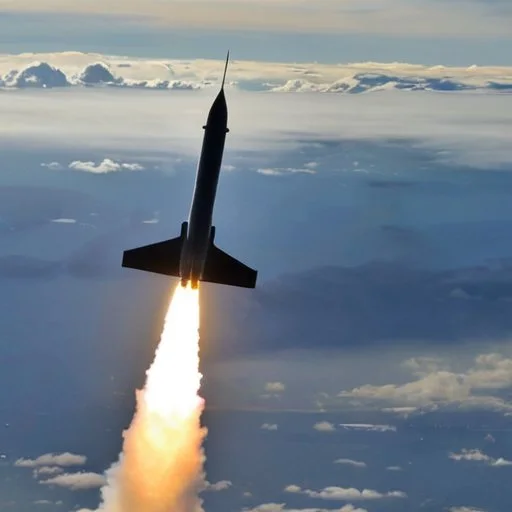
The Cuban Missile Crisis shared many parallels with the Berlin Crisis of 1961, which had brought the two superpowers to the brink of war. In both cases, the Soviets sought to challenge the United States' authority and to expand their sphere of influence. However, while the Berlin Crisis was largely a European affair, the Cuban Missile Crisis was a direct threat to American national security.
In terms of crisis management, the Cuban Missile Crisis was notable for its use of "brinksmanship," where both sides escalated tensions to the point of near-conflict before backing down. This approach was heavily criticized at the time, but it ultimately led to a peaceful resolution. In contrast, the Berlin Crisis had been resolved through a series of diplomatic negotiations, which had avoided the use of force.
The Cuban Missile Crisis was set against the backdrop of a rapidly changing global landscape. The decolonization of Africa and Asia had created new opportunities for Soviet expansion, while the emergence of the People's Republic of China had further complicated the Cold War equation.
In this context, the crisis was not just a bilateral dispute between the United States and the Soviet Union but also a reflection of broader geopolitical tensions. The Cuban Missile Crisis highlighted the vulnerability of the Western Hemisphere to Soviet influence, while also demonstrating the United States' commitment to containing communism in the region.