


The Cuban Revolution, led by Fidel Castro's government, took a drastic step in 1960 by nationalizing over $1 billion worth of American and foreign-owned properties, including sugar plantations, oil refineries, and utility companies. This move marked a significant shift towards socialism, sending shockwaves through Washington and further straining the already tense relations between the two nations.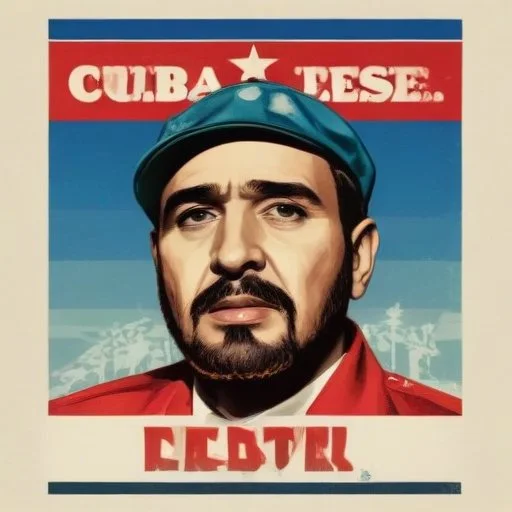
The Cuban Revolution was a culmination of decades of political unrest, economic instability, and social inequality. Following the 1952 coup, Fulgencio Batista's authoritarian regime had created an environment ripe for revolution. The July 26 Movement, led by Fidel Castro, Che Guevara, and the Cuban Communist Party, sought to overthrow the corrupt government and establish a socialist system.
Fidel Castro, the charismatic leader of the revolution, was instrumental in rallying the Cuban people behind the nationalization effort. Other key figures included Che Guevara, who played a crucial role in shaping the country's economic policy, and Raúl Castro, Fidel's brother and a key strategist.
The nationalization of American and foreign-owned properties marked a significant shift towards socialism in Cuba. The move:
The Cuban Revolution and subsequent nationalization of properties had a profound impact on the country's culture and society. The revolution:
The nationalization of American and foreign-owned properties in Cuba was met with widespread condemnation from the United States and its allies. The move was seen as a:
However, the move was hailed as a triumph for socialism and anti-imperialism by many in the developing world, particularly in Latin America and Africa.
The Cuban Revolution's nationalization of American and foreign-owned properties marked a bold statement of defiance against imperialism and a commitment to socialism. The move continues to shape Cuba's identity and inform its relations with the world, serving as a testament to the power of revolutionary spirit and the unwavering commitment to a people's right to self-determination.
Fidel Castro, the commander-in-chief of the Cuban Revolution, was a complex figure with a unique blend of charisma, ideology, and strategic thinking. Born in 1926, Castro was raised in a middle-class family and was educated at the University of Havana, where he developed a strong interest in politics and socialism.
Castro's leadership style was marked by his ability to inspire and mobilize the Cuban people, often through impassioned speeches and public appearances. He was a skilled orator, able to articulate a compelling vision for a socialist Cuba that resonated with many Cubans.
Despite his authoritarian tendencies, Castro remained a popular figure in Cuba, with many Cubans regarding him as a hero and a symbol of national pride.
The nationalization of American and foreign-owned properties in Cuba had significant economic costs for both Cuba and the United States. The immediate impact was a decline in foreign investment and a loss of revenue for the Cuban government.
The trade embargo imposed by the United States in response to nationalization further exacerbated the economic downturn, leading to widespread shortages and rationing of essential goods.
However, the Cuban government was able to mitigate some of the economic costs through its alliance with the Soviet Union, which provided significant economic aid and assistance.
The Cuban Revolution had a profound impact on Cuban culture, as the new socialist government actively promoted a distinct national identity and cultural expression.
The revolution inspired a new wave of Cuban art, literature, and music, often with a strong socialist and anti-imperialist flavor. The government also invested heavily in education and cultural institutions, seeking to promote a more egalitarian and inclusive cultural landscape.
The cultural reforms implemented by the revolution also aimed to eliminate the perceived cultural imperialism of the United States, promoting a more authentic Cuban identity.
Historians have interpreted the Cuban Revolution and nationalization of American and foreign-owned properties in various ways, reflecting different theoretical and ideological perspectives.
Some historians have viewed the revolution as a classic example of Marxist-Leninist theory in practice, with the Cuban Communist Party leading the working class and peasantry in a struggle against imperialism and capitalism.
Others have seen the revolution as a more nuanced and complex phenomenon, driven by a unique blend of nationalism, socialism, and anti-imperialism.
The Cuban Revolution took place within a highly charged geopolitical context, with the Cold War rivalry between the United States and the Soviet Union dominating international relations.
The revolution's alignment with the Soviet Union and its adoption of socialism further fueled tensions between Cuba and the United States, leading to a series of intense diplomatic and military confrontations.
The Cuban Revolution also had significant implications for the global South, as many newly independent nations saw Cuba as a beacon of anti-imperialism and a model for socialist development.