


Fidel Castro's bold declaration of war against Cuban President Fulgencio Batista in 1958 marked the beginning of the Cuban Revolution, a pivotal moment in Cuban history that would shape the country's future and leave a lasting impact on the world.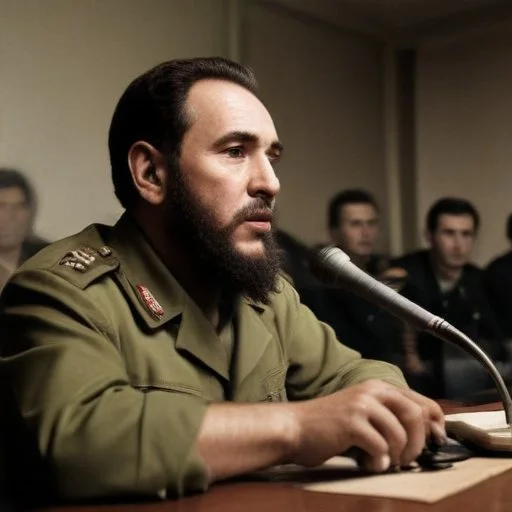
In the late 1950s, Cuba was a nation in crisis. Corruption and injustice had become rampant under Batista's authoritarian rule, with the poor and marginalized bearing the brunt of the regime's brutality. The country was ripe for change, and Castro's declaration of war against Batista's government was the spark that ignited the flames of revolution.
July 26, 1953: Fidel Castro and his brother Raúl lead a failed armed uprising against Batista's government at the Moncada Barracks in Santiago de Cuba. The event marks the beginning of Castro's revolutionary movement.
1955: Castro forms the 26th of July Movement, a revolutionary organization dedicated to overthrowing Batista's regime.
December 2, 1956: Castro and his followers, including Che Guevara, establish a guerrilla base in the Sierra Maestra mountains, marking the beginning of the Cuban Revolution.
1958: Castro declares war against Batista's government, sparking widespread rebellion and armed conflict across the country.
The Cuban Revolution was a complex and multifaceted conflict that involved not only military battles but also a deep-seated desire for social justice and equality. Castro's declaration of war against Batista's regime was a call to arms for Cubans from all walks of life, who were inspired by his vision of a more just and equitable society.
The Revolution was marked by fierce battles, including the Battle of Santa Clara, which saw Castro's forces defeat Batista's army and capture the city. The victory marked a turning point in the Revolution, and on January 1, 1959, Batista fled the country, leaving Castro's government in power.
The Cuban Revolution had far-reaching consequences, both within Cuba and beyond its borders. The Revolution established a socialist government, which would go on to shape Cuban politics, economy, and society for decades to come.
The Revolution also inspired similar movements across the world, particularly in Latin America, where it became a beacon of hope for those seeking social justice and independence.
"Men do not shape destiny, destiny produces the man for the occasion."
Fidel Castro
The Cuban Revolution's impact on Cuban society was profound, with significant advances in education, healthcare, and social welfare. The Revolution also left a lasting impact on international relations, with Cuba becoming a key player in global politics and a symbol of resistance against imperialism.
Today, the Cuban Revolution remains a powerful symbol of the human spirit's capacity for change and transformation, inspiring generations of activists, revolutionaries, and social justice advocates around the world.
Fidel Castro was born on August 13, 1926, in Birán, Cuba, to a wealthy landowner family. His early life was marked by a strong sense of justice and a desire to fight against inequality.
Castro's education at the Jesuit Colegio de Dolores in Santiago de Cuba and later at the University of Havana, where he studied law, instilled in him a strong sense of morality and a commitment to social justice.
His early influences, including the works of José Martí and Karl Marx, shaped his ideological beliefs and laid the foundation for his future revolutionary activities.
The Cuban Revolution did not occur in isolation. The post-World War II era was marked by a global struggle between capitalism and communism, with the United States and the Soviet Union vying for influence.
In this context, the Cuban Revolution was seen as a key battleground in the fight against imperialism and a symbol of resistance against US hegemony.
The Revolution's success inspired similar movements across the world, particularly in Latin America, where it became a beacon of hope for those seeking social justice and independence.
The Cuban Revolution had a profound impact on Cuban culture, inspiring a new wave of artistic and literary expression.
The Revolution's emphasis on social justice and equality led to a flourishing of Afro-Cuban cultural traditions, which had previously been marginalized.
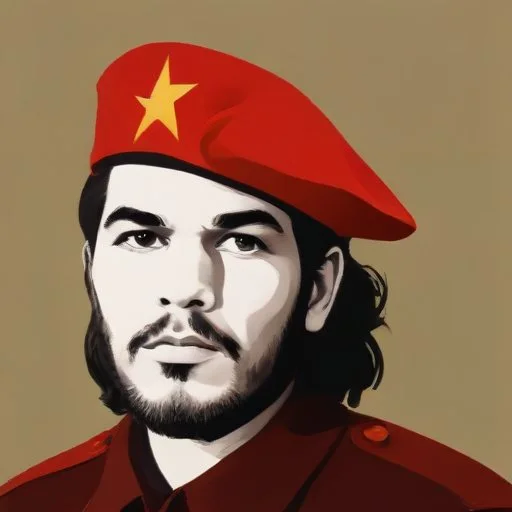
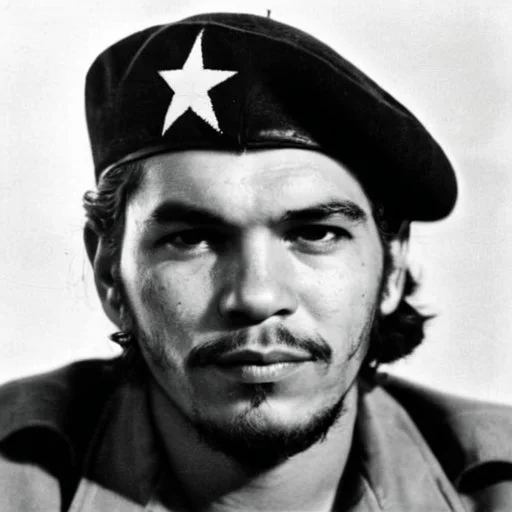
The iconic image of Che Guevara, with his beret and cigar, became a symbol of revolution and resistance, inspiring countless works of art, literature, and music.
Fidel Castro's ideology was shaped by a unique blend of Marxism-Leninism and Latin American nationalism.
The Cuban Revolution's emphasis on social justice, equality, and national sovereignty was a reaction against the authoritarianism and corruption of the Batista regime.
Castro's leadership style, which combined charisma and pragmatism, was instrumental in mobilizing popular support for the Revolution and establishing a new socialist government.
The Cuban Revolution had a profound impact on the country's economy, with the nationalization of key industries, such as sugar and tobacco.
The Revolution's emphasis on social welfare and equality led to significant advances in education, healthcare, and social services.
The US trade embargo, imposed in response to the Revolution, had a devastating impact on the Cuban economy, forcing the country to rely on Soviet aid and leading to a period of economic stagnation.