


On a fateful day in Oxford, Thomas Cranmer, the former Archbishop of Canterbury, took a bold stance that would etch his name in the annals of history. As he stood at the stake, awaiting his execution, Cranmer deviated from the scripted sermon, renouncing his previous recantations and launching a scathing attack on the Pope, calling him "Christ's enemy and Antichrist."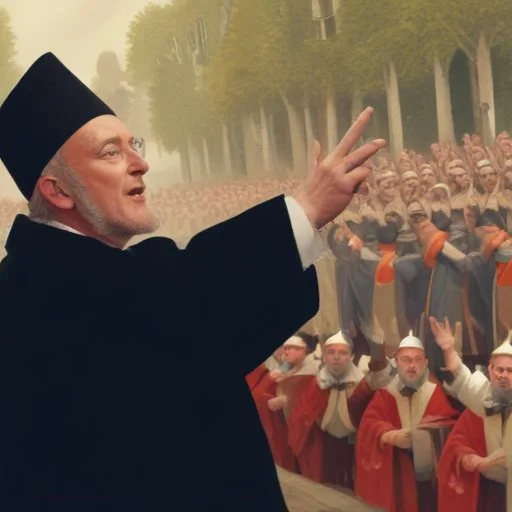
Thomas Cranmer was no stranger to controversy. As a prominent figure in the English Reformation, he played a crucial role in shaping the Church of England. Cranmer's elevation to Archbishop of Canterbury in 1533 was largely due to his support for King Henry VIII's desire to annul his marriage to Catherine of Aragon. However, his later attempts to reform the Church and introduce Protestant elements led to his downfall under the reign of Queen Mary I, also known as Bloody Mary.
In 1553, Cranmer was arrested and charged with heresy and treason. Despite being subjected to intense pressure and torture, he initially agreed to recant his Protestant views, signing multiple documents to that effect. However, as the day of his execution drew near, Cranmer's conscience began to wrestle with the compromises he had made.
On March 21, 1556, Cranmer stood at the stake, ready to face his fate. In a dramatic turn of events, he deviated from the scripted sermon, retracting his previous recantations and launching a stinging attack on the Pope. His words, though spoken in the shadow of death, sent shockwaves throughout the realm and beyond.
Cranmer's final stand has had a lasting impact on the Church of England and Protestantism as a whole. His bravery in the face of certain death serves as a powerful testament to the power of conviction and the importance of standing up for one's beliefs. Today, Cranmer is revered as a martyr and a champion of reform, his legacy inspiring generations of Christians around the world.
Cranmer's defiance and martyrdom played a significant role in shaping the Church of England and Protestantism. His legacy inspired reformers and theologians, influencing the development of Anglicanism and beyond.
Thomas Cranmer's final stand remains an enduring testament to the power of conviction and the importance of standing up for one's beliefs, even in the face of adversity. His legacy continues to inspire and motivate people around the world.
The Historical Significance of Cranmer's Martyrdom
Thomas Cranmer's execution on March 21, 1556, marked a pivotal moment in the English Reformation. His defiance in the face of death sent a powerful message to the Catholic Church and the English monarchy, inspiring a new wave of Protestant reformers. Historians have long debated the motivations behind Cranmer's actions, with some arguing that he was driven by a desire for personal redemption, while others see his martyrdom as a calculated move to galvanize the Protestant cause.

The Complex Character of Thomas Cranmer
Thomas Cranmer's life was marked by contradictions. On the one hand, he was a passionate advocate for reform, willing to challenge the authority of the Pope and the English monarchy. On the other hand, he was a compromiser, willing to make concessions to maintain his position of power. This complexity has made Cranmer a fascinating figure for historians and biographers, who have struggled to reconcile his contradictory impulses.
Despite his flaws, Cranmer's bravery in the face of death has cemented his place as a martyr and a hero of the Protestant Reformation.
Geopolitical Context: The European Reformation
The English Reformation, of which Cranmer was a key figure, was part of a broader European movement that sought to challenge the authority of the Catholic Church. From Luther's 95 Theses to the Swiss Reformation, Protestantism was spreading rapidly across the continent. Cranmer's execution occurred against the backdrop of this tumultuous period, as European powers vied for influence and control.
In this context, Cranmer's defiance took on a broader significance, symbolizing the growing resistance to Catholic authority and the emergence of new Protestant powers.

The Ideological Implications of Cranmer's Martyrdom
Thomas Cranmer's execution raised fundamental questions about the nature of authority, obedience, and resistance. By refusing to recant his Protestant views, Cranmer asserted the individual's right to conscientious objection, challenging the Catholic Church's claim to absolute authority. This act of defiance had far-reaching implications for the development of Protestant theology, influencing thinkers such as John Calvin and Martin Luther.
The Book of Common Prayer: A Window into Cranmer's Thought
Thomas Cranmer's most enduring legacy is the Book of Common Prayer, a liturgical text that has shaped the Church of England for centuries. Written during Cranmer's tenure as Archbishop of Canterbury, the Book of Common Prayer reflects his commitment to reform and his desire to create a more inclusive, Protestant liturgy.
Analysis of the Book of Common Prayer provides valuable insights into Cranmer's theological views, revealing a complex thinker who was both deeply rooted in tradition and eager to innovate.