


On September 27, 1821, the Declaration of Independence of the Mexican Empire was publicly proclaimed, marking the end of Spanish rule and the beginning of a new era for the Mexican people. This historic event, the culmination of months of negotiations and careful planning, signaled the start of Mexico's independence and its emergence as a sovereign nation.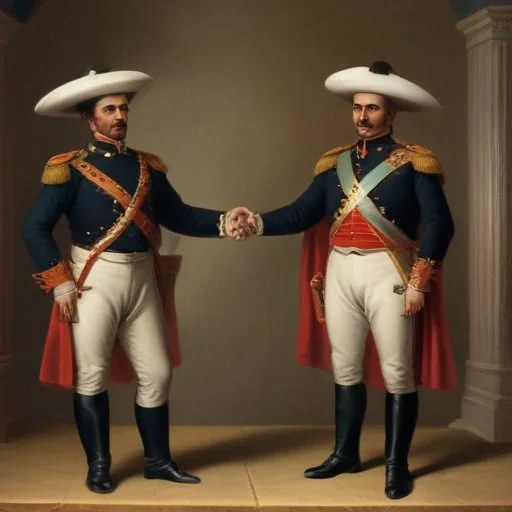
The Mexican War of Independence, which began in 1810, had been ongoing for over a decade, with various factions vying for power and independence from Spain. The struggle for independence was complex, with different regions and factions having their own agendas and allegiances. It was against this backdrop that Agustín de Iturbide, a Mexican-born criollo and former Spanish officer, and Vicente Guerrero, a prominent insurgent leader, hatched a plan to unite the warring factions and forge an alliance that would ultimately lead to independence.
In February 1821, Iturbide and Guerrero met in the town of Iguala, where they drafted the Plan of Iguala, a comprehensive document outlining the terms of independence and the establishment of a new government. The plan called for the creation of a constitutional monarchy, with a Mexican emperor as head of state, and guaranteed the rights and privileges of the Roman Catholic Church. The plan also provided for the establishment of a new national army, comprising both insurgent and royalist forces, which would be led by Iturbide.
In August 1821, Iturbide and Spanish Viceroy Juan de O'Donojú signed the Treaty of Córdoba, which formally recognized Mexican independence from Spain. The treaty ratified the terms of the Plan of Iguala and acknowledged Iturbide as the commander-in-chief of the new Mexican army. The treaty marked a significant turning point in Mexican history, as it signaled the end of Spanish rule and the beginning of a new era of independence.
On September 27, 1821, Iturbide, flanked by Guerrero and other dignitaries, publicly proclaimed the Declaration of Independence of the Mexican Empire in the town of Dolores, Guanajuato. The declaration, which echoed the sentiments of the Plan of Iguala, formally established the Mexican Empire as a sovereign state, with Iturbide as its first emperor.
The Declaration of Independence of the Mexican Empire had a profound impact on Mexican culture and society. The event marked a turning point in the country's history, as it signaled the beginning of a new era of independence and self-determination. The creation of a new national government and the establishment of a constitutional monarchy helped to promote a sense of national identity and unity, which had been lacking during the colonial period.
The Declaration of Independence of the Mexican Empire is remembered as a pivotal moment in Mexican history, marking the end of Spanish rule and the beginning of a new era of independence. The event has been commemorated in various ways, including the construction of monuments and the declaration of September 27 as a national holiday. Today, the declaration of independence remains an important symbol of Mexican national pride and identity.
The road to independence was paved with the struggles of many unsung heroes, including the likes of Miguel Hidalgo y Costilla, José María Morelos, and Emilio Ramos. These brave individuals, driven by a desire for freedom and self-determination, fought tirelessly against the Spanish forces, often facing brutal repression and execution. Despite these challenges, they continued to inspire and mobilize the Mexican people, laying the groundwork for the eventual declaration of independence.
The journey to independence was also marked by the emergence of regional factions, each with their own agendas and allegiances. The north, led by the criollo elite, favored a gradual transition to independence, while the south, dominated by the mestizo and indigenous populations, pushed for a more radical break with Spain. Iturbide's Plan of Iguala skillfully navigated these regional differences, forging a fragile consensus that ultimately paved the way for independence.
Agustín de Iturbide: A Complex and Enigmatic Leader
Iturbide's rise to power was nothing short of meteoric. From a humble background as a criollo officer in the Spanish army, he became the architect of Mexico's independence. A shrewd politician and skilled military strategist, Iturbide navigated the treacherous landscape of rival factions and regional interests with ease, emerging as the consensus candidate for emperor.
Yet, Iturbide's legacy is also marked by controversy and mystery. Critics have accused him of authoritarianism and cronyism, while his later years were marred by exile and personal struggle. Despite these contradictions, Iturbide remains an enigmatic figure, whose complex personality and motivations continue to fascinate historians to this day.
The Declaration of Independence had a profound impact on Mexican culture, as the country began to forge a new identity and sense of self. The event marked a break with the colonial past, as Mexicans rejected the cultural and linguistic dominance of Spain.
In the arts, this newfound independence manifested in a flourishing of nationalist sentiment, as artists and writers celebrated the country's rich heritage and folklore. The country's iconic symbols, such as the Virgin of Guadalupe and the Aztec eagle, took on new significance, serving as powerful emblems of national pride and identity.
The economic implications of independence were far-reaching and complex. On one hand, the new government inherited a bankrupt treasury and a shattered economy, ravaged by years of war and instability.
On the other hand, independence opened up new opportunities for trade and commerce, as Mexico began to forge its own economic destiny. The country's vast natural resources, including silver and copper, became a vital source of revenue, as Mexico began to assert its independence in the global economy.
The Plan of Iguala and the Treaty of Córdoba represented a pragmatic response to the complex political landscape of Mexico, as Iturbide and Guerrero navigated the rival factions and regional interests.
Yet, the declaration of independence also reflected a deeper ideological commitment to the principles of liberalism and democracy, which had been shaping Mexican politics since the Enlightenment. The new government's emphasis on constitutional monarchy and representative government reflected a broader shift towards modernity and democracy, as Mexico began to take its place among the nations of the world.