Dumbarton Oaks Conference lays foundation for United Nations
In the midst of World War II, a secret meeting of diplomats and scholars took place at Dumbarton Oaks, a lavish estate in Washington D.C. The gathering, led by the United States, Great Britain, and the Soviet Union, brought together some of the brightest minds to discuss the creation of a new international organization. Over seven weeks, they hammered out the details for what would become the United Nations, an institution dedicated to promoting global peace, security, and cooperation. This pivotal conference marked a major milestone on the path to the UN's creation, setting the stage for a new era of international diplomacy.
The Dumbarton Oaks Conference: A Crucial Step Towards Global Cooperation
The Dumbarton Oaks Conference, held in 1944, was a groundbreaking meeting of diplomats and scholars that laid the foundation for the creation of the United Nations, an international organization dedicated to promoting peace, security, and cooperation. This pivotal gathering, spearheaded by the United States, Great Britain, and the Soviet Union, brought together some of the brightest minds to shape the future of global diplomacy.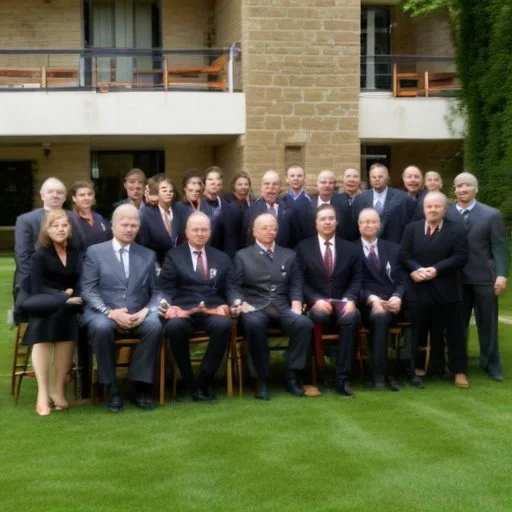
A Gathering of Visionaries
The conference was held at the prestigious Dumbarton Oaks estate in Washington D.C., a lavish setting that facilitated open and candid discussions among the participants. The attendees included prominent figures such as:
- Edward R. Stettinius Jr., the United States Secretary of State
- Andrei Gromyko, the Soviet Union's Ambassador to the United States
- Alexander Cadogan, the United Kingdom's Permanent Under-Secretary for Foreign Affairs
- Ralph Bunche, an American diplomat and Nobel laureate
- Other esteemed scholars and diplomats from around the world
These visionaries came together to address the pressing need for a new international organization, one that could prevent future global conflicts and foster cooperation among nations.
A Timeline of Key Events
The conference was divided into two phases, with the first phase taking place from August 21 to September 28, 1944, and the second phase from September 29 to October 7, 1944. During this period, the attendees:
- Discussed the structure and purpose of the proposed international organization
- Outlined the principles and goals of the organization
- Established the framework for the organization's charter
- Addressed issues related to membership, decision-making, and enforcement
Major Outcomes and Impacts
The Dumbarton Oaks Conference produced several significant outcomes, including:
- The formulation of the United Nations Charter, which served as the foundation for the UN's creation
- The establishment of the UN's governing structure, including the General Assembly and the Security Council
- The creation of the Economic and Social Council (ECOSOC) to address global economic and social issues
- The development of the concept of collective security, where nations would work together to prevent aggression and promote peace
The conference's outcomes had far-reaching implications, paving the way for the creation of the United Nations in 1945 and shaping the course of international diplomacy for decades to come.
A Lasting Legacy
The Dumbarton Oaks Conference marked a significant turning point in the history of international relations, demonstrating the power of collaboration and cooperation in shaping a more peaceful and secure world. As Ralph Bunche, a key participant in the conference, once said:
"The Dumbarton Oaks Conference was a major step forward in the development of a new international order. It marked a recognition that the old ways of conducting international relations were no longer sufficient and that a new type of international organization was needed to meet the challenges of the modern world."
The conference's legacy continues to inspire and shape global diplomacy, serving as a testament to the power of vision, collaboration, and determination in creating a better world for all.
Thorough Historical Narrative
The Dumbarton Oaks Conference was a culmination of efforts by the Allied Powers to establish a new international order. In the midst of World War II, the need for a collective security regime became increasingly apparent. The Moscow Conference of 1943, where the foreign ministers of the United States, Great Britain, and the Soviet Union met to discuss post-war reconstruction, laid the groundwork for the Dumbarton Oaks Conference.
The conference was preceded by a series of bilateral talks between the United States and the Soviet Union, which helped to establish a common understanding on key issues. The Anglo-American talks, held in Ottawa in 1943, also played a crucial role in shaping the agenda for the Dumbarton Oaks Conference.
The conference's timing was critical, as it coincided with the Soviet Union's push into Eastern Europe and the Allied Powers' advance on the Western Front. The outcome of the conference would have far-reaching implications for the post-war world order.

Comprehensive Character Portrait
Ralph Bunche, an American diplomat and Nobel laureate, played a vital role in shaping the outcome of the Dumbarton Oaks Conference. As a member of the United States delegation, Bunche brought his expertise in international relations and his passion for peace to the negotiating table.
Bunche's background in academia and his experience in the State Department made him an invaluable asset to the delegation. He worked closely with Edward R. Stettinius Jr., the United States Secretary of State, to draft the United Nations Charter.
Bunche's commitment to the principles of collective security and international cooperation was instrumental in ensuring that the conference produced a meaningful outcome.
Geopolitical Analysis
The Dumbarton Oaks Conference took place against the backdrop of a rapidly changing global landscape. The war in Europe was drawing to a close, and the Allied Powers were turning their attention to post-war reconstruction.
The Soviet Union's interests in Eastern Europe and the Middle East were a major concern for the Western Powers, and the conference provided a platform for negotiating these differences.
The conference's outcome would have significant implications for the balance of power in the post-war world, and would set the tone for the Cold War era.

Detailed Political Report
The Dumbarton Oaks Conference marked a significant shift in the balance of power in international relations. The United States, Great Britain, and the Soviet Union emerged as the dominant powers, and their collective presence would shape the course of international diplomacy for decades to come.
The conference's outcome was a compromise between the interests of the three main delegations. The United States pushed for a more decentralized system, while the Soviet Union advocated for a stronger security council.
The resulting United Nations Charter reflected a delicate balance between these competing interests.
Detailed Historiographical Study
The Dumbarton Oaks Conference has been the subject of much historical debate and interpretation. Some historians have viewed the conference as a critical step towards the creation of the United Nations, while others have seen it as a means for the great powers to consolidate their dominance over the international system.
The conference's legacy continues to be felt in the modern era, with many regarding it as a pioneering effort in international cooperation.
Historians have also debated the extent to which the conference reflected a genuine commitment to collective security, or simply served as a means for the great powers to maintain their influence.


