


On March 26, 1971, East Pakistan took a bold step towards freedom, declaring its independence from Pakistan to form Bangladesh, a nation born out of struggle and sacrifice. This pivotal moment marked the beginning of the Bangladesh Liberation War, a brutal nine-month conflict that would test the fabric of the region and forever change the course of history.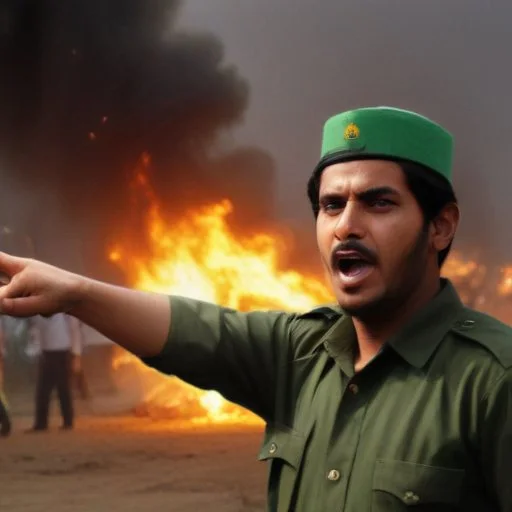
The roots of the conflict lay in the creation of Pakistan in 1947, when the British Indian Empire was divided along religious lines. The new country consisted of two wings: West Pakistan, located near present-day Iran and Afghanistan, and East Pakistan, situated in the eastern part of the Indian subcontinent. Despite sharing a common faith, the two regions had distinct languages, cultures, and economies, setting the stage for a tumultuous relationship.
Over time, East Pakistan grew increasingly frustrated with the West Pakistani government's disregard for its needs and aspirations. The central government, dominated by West Pakistanis, siphoned off the region's resources, suppressing the Bengali language and culture. The Awami League, led by Sheikh Mujibur Rahman, emerged as a powerful force demanding greater autonomy and recognition for the Bengali people.
The 1970 Bhola cyclone, which ravaged East Pakistan, exposed the callousness of the central government, which failed to provide adequate relief efforts. This perceived neglect ignited widespread protests, culminating in the historic 1970 general elections, in which the Awami League secured a landslide victory. However, the Pakistani military, fearing loss of power, refused to transfer authority to the newly elected government, sparking a chain reaction of events that would lead to the declaration of independence.
The war that followed was characterized by brutal atrocities, human rights violations, and unprecedented suffering. The Pakistani army, aided by Islamist militias, unleashed a campaign of terror against Bengalis, targeting intellectuals, minority groups, and civilians. The Bengali resistance, comprised of students, farmers, and workers, fought back with guerilla warfare, seeking support from India and the international community.
The conflict took a devastating toll on the region, with estimates suggesting that between 1 and 3 million people lost their lives, and millions more displaced. The world watched in horror as refugees poured into neighboring India, and the global community condemned Pakistan's actions.
On December 16, 1971, the Pakistani army surrendered to the joint forces of the Indian army and the Bengali resistance, marking the end of the war and the birth of Bangladesh. The new nation, founded on the principles of democracy, secularism, and Bengali nationalism, would face numerous challenges in the years to come, but its people had earned the right to self-determination.
The Bangladesh Liberation War had far-reaching consequences, leading to the emergence of Bangladesh as an independent nation, the reorientation of South Asian geopolitics, and a renewed focus on human rights and international humanitarian law. The war also left an indelible mark on the global consciousness, inspiring anti-colonial and nationalist movements worldwide.
The creation of Bangladesh paved the way for the country to forge its own path, free from the shackles of colonialism and regional dominance. As the nation celebrates its 50th anniversary, its people continue to draw strength from the sacrifices of their forebears, striving to build a more just and equitable society.
"The struggle now is the struggle for our freedom. There will be no more need for negotiations. The people have spoken."
— Sheikh Mujibur Rahman, March 7, 1971
"I want to tell them that they will not be able to keep us in chains. We will be a free nation, and we will be a proud nation."
— Tajuddin Ahmad, 1971
The Bangladesh Liberation War was a testament to the indomitable human spirit, which, against all odds, can achieve the impossible. As we reflect on this pivotal moment in history, we are reminded of the power of collective action, the importance of human rights, and the resilience of the human heart.
Today, as Bangladesh looks to the future, its people stand proud, knowing that their nation was forged in the crucible of struggle and sacrifice. They celebrate their independence with joy, their freedom with gratitude, and their heritage with pride.
The Bangladesh Liberation War was fought against the backdrop of a complex and volatile geopolitical landscape. The Cold War was at its peak, with the United States and the Soviet Union vying for influence in the region. India, a close ally of the Soviet Union, saw an opportunity to weaken its arch-rival Pakistan, which was closely tied to the United States.
In this context, the Indian government, led by Prime Minister Indira Gandhi, provided significant support to the Bengali resistance, including military aid and diplomatic backing. This strategic decision not only helped to tip the balance of power in favor of the Bengalis but also cemented India's position as a regional powerhouse.
The war also had far-reaching implications for the global order, as it marked a significant shift in the balance of power in South Asia. The emergence of Bangladesh as an independent nation challenged the traditional dominance of Pakistan and created a new dynamic in the region, with India emerging as a key player.
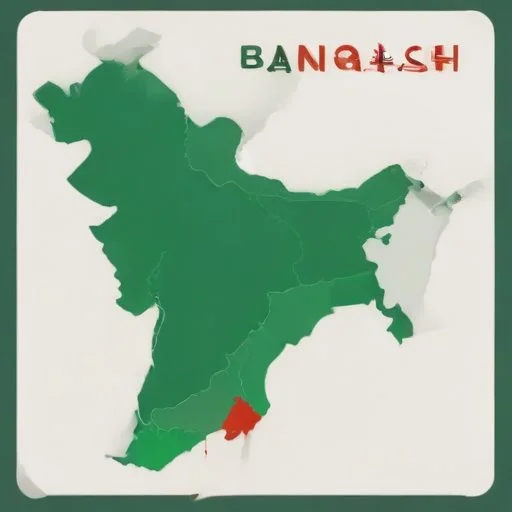
The historiography of the Bangladesh Liberation War is a complex and contested field, with different narratives and interpretations emerging over time. While the dominant narrative in Bangladesh portrays the war as a heroic struggle for independence and self-determination, Pakistani historians have traditionally viewed the conflict as a civil war or a struggle against separatism.
More recent scholarship has sought to nuance this narrative, highlighting the role of imperialism, nationalism, and Cold War geopolitics in shaping the conflict. This new historiography has also sought to give voice to marginalized groups, including women, minorities, and workers, who played a crucial role in the war effort.
The Six-Point Demand, a set of autonomy proposals put forward by the Awami League in 1966, is a key document in understanding the lead-up to the Bangladesh Liberation War. The demand, which called for greater autonomy for East Pakistan, was rejected by the Pakistani government, leading to widespread unrest and protest.
The Proclamation of Independence, issued on March 26, 1971, is another crucial document, marking the formal declaration of Bangladesh's independence from Pakistan. The document, signed by Sheikh Mujibur Rahman, is a powerful symbol of the Bengali people's struggle for self-determination.
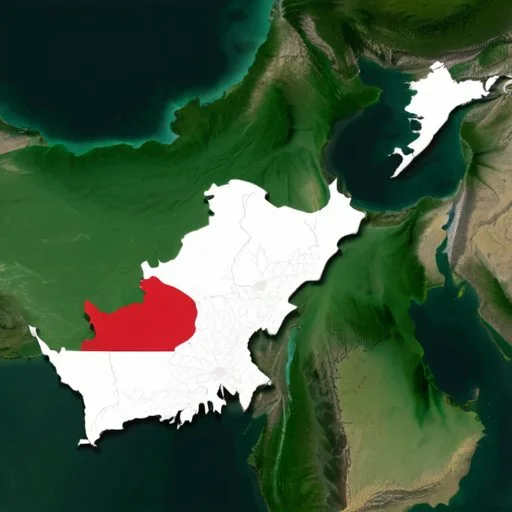
The Cultural Impact of the Bangladesh Liberation War
The Bangladesh Liberation War had a profound impact on Bengali culture, shaping the nation's identity, language, and literature. The war inspired a new generation of writers, artists, and musicians, who sought to capture the spirit of the liberation struggle.
The war also led to a resurgence of Bengali nationalism, with the Bengali language and culture emerging as a dominant force in the new nation. The war inspired a new sense of pride and identity among Bengalis, who saw themselves as a distinct nation with a unique history and culture.
The Bangladesh Liberation War had a devastating impact on the economy of East Pakistan, with widespread destruction of infrastructure, industry, and agriculture. The war disrupted trade and commerce, leading to food shortages, inflation, and widespread poverty.
The new nation of Bangladesh faced significant economic challenges, including a lack of resources, infrastructure, and institutions. However, the country was able to secure significant international aid and support, which helped to rebuild the economy and lay the foundations for future growth.