Queen Victoria's 63-year reign had cemented her position as a beloved and iconic monarch. However, her passing in 1901 left a void that needed to be filled. Edward VII, her eldest son, was well-equipped to take on the role, having spent years preparing for the position. His ascension to the throne marked a significant shift in the British monarchy, as he brought a more relaxed and modern approach to the role.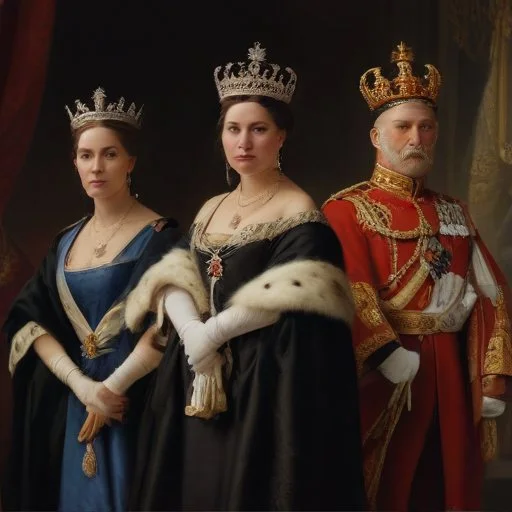
On January 22, 1901, Queen Victoria passed away at Osborne House on the Isle of Wight. Edward VII was immediately proclaimed king, with his coronation ceremony taking place on August 9, 1902. The event was a grand affair, attended by dignitaries from across the globe. It marked the beginning of a new era for the British monarchy, with Edward VII at the helm.
Edward VII's reign was marked by significant changes, including the modernization of the British monarchy and the country's foreign policy. He played a crucial role in shaping the country's relationships with Europe, particularly with France and Russia. His diplomatic efforts helped to establish the Triple Entente, a precursor to the Allied Powers in World War I.
Edward VII's love of luxury and fine living had a profound impact on British culture. He popularized the concept of luxury travel, and his love of fashion led to the establishment of the "Edwardian style," characterized by opulence and extravagance. His influence extended to the arts, with his patronage of artists such as Claude Monet and Edward Elgar.
Edward VII's personal life was often shrouded in controversy, with rumors of infidelity and extravagance. However, he remained popular with the public, who saw him as a charismatic and modernizing force. His reputation was further solidified by his role in shaping British foreign policy and his efforts to promote peace in Europe.
"I have two duties: to my country and to my family. I will do my best to fulfill both." - Edward VII
Edward VII's reign paved the way for his son, George V, who would go on to play a crucial role in navigating Britain through the tumultuous years of World War I. His diplomatic efforts also laid the groundwork for the country's involvement in World War II.
Edward VII's story serves as a testament to the power of adaptability and modernity. His willingness to break with tradition and forge his own path inspired a generation of Britons, who saw him as a symbol of progress and change.
Edward VII was a dedicated philanthropist, supporting a range of causes, including the Imperial College of Science and Technology and the Royal College of Art. His charitable efforts helped to establish him as a compassionate and caring monarch.
1901: Queen Victoria passes away, and Edward VII ascends to the throne.
1902: Edward VII's coronation ceremony takes place.
1903: Edward VII becomes the first British monarch to visit the continent in over 200 years, traveling to France.
1910: Edward VII passes away, leaving behind a legacy of modernity and elegance.
Queen Alexandra, the wife of Edward VII, played a crucial role in supporting her husband and navigating the complexities of royal life. Born in Denmark, she was known for her beauty, fashion sense, and strong character. As queen consort, she was a devoted mother to their six children and a patron of various charitable organizations, particularly those benefiting women and children.
Despite her popularity, Alexandra faced challenges as a foreign-born queen. She struggled to adapt to the strict protocol of the British court and often found herself at odds with her mother-in-law, Queen Victoria. However, her strong sense of duty and loyalty to her husband and family earned her the respect and admiration of the British people.
Her Majesty's Philanthropic EffortsAlexandra was a dedicated philanthropist, supporting causes such as healthcare, education, and the arts. She was particularly devoted to the Queen's Jubilee Institute for Nurses, which provided training and support to nurses across the country.