


Anwar Sadat, the Nobel Peace Prize winner and former President of Egypt, was brutally assassinated by a group of rogue Egyptian soldiers during a military parade in Cairo on October 6, 1981. This heinous act sent shockwaves around the world, dealing a devastating blow to the Middle East peace process and leaving a lasting impact on global politics.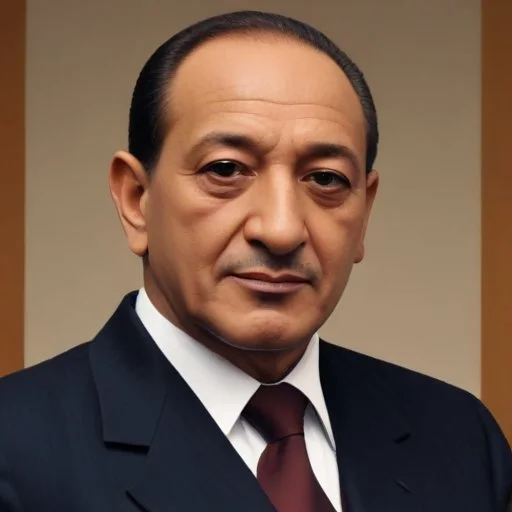
On October 6, 1981, Sadat was reviewing a military parade in Cairo when a group of Islamic extremists, led by Lieutenant Khalid Islambouli, infiltrated the ceremony. Islambouli and his accomplices, who were dressed in military uniforms, opened fire on Sadat and his entourage.
Sadat, who was shot multiple times, was rushed to the hospital but succumbed to his injuries shortly thereafter. Vice President Hosni Mubarak, who was seated near Sadat during the parade, narrowly escaped injury.
The international community was quick to condemn the heinous act, with world leaders expressing shock and outrage. The United States, Israel, and other nations issued stern statements, decrying the senseless violence.
As news of Sadat's assassination spread, Egypt was plunged into mourning. Thousands of Egyptians took to the streets, paying tribute to their fallen leader and expressing grief and anger.
Hosni Mubarak, who succeeded Sadat as President, vowed to continue the peace process, reaffirming Egypt's commitment to the Camp David Accords.
Sadat's death marked a significant shift in the Middle East political landscape, with the region entering a period of heightened tensions and uncertainty.
Anwar Sadat's extraordinary life and legacy continue to inspire generations of Egyptians and people around the world. His courageous pursuit of peace and his ultimate sacrifice serve as a beacon of hope in the face of adversity.
In 1993, the Anwar El-Sadat Museum was inaugurated in Cairo, dedicated to preserving the life and legacy of the former President.
"I am not a man of hatred. I am a man of peace, and I want peace for my country and for the world."
— Anwar Sadat, in a 1978 interview with the New York Times
Sadat's remarkable journey, marked by both triumph and tragedy, serves as a powerful reminder of the enduring importance of peace and reconciliation in a world torn apart by conflict and division.
One of the most significant political implications of Sadat's assassination was the impact on regional dynamics. The sudden loss of a key player in the Middle East peace process created a power vacuum, allowing other countries to fill the void.
The United States, in particular, saw an opportunity to increase its influence in the region, leveraging its close relationship with Egypt and Israel to broker further peace agreements.
This new era of US involvement would shape the region's politics for decades to come, with the US becoming a de facto mediator in Middle East conflicts.

Geopolitically, Sadat's assassination marked a turning point in the Cold War era, as the Soviet Union, which had been critical of Sadat's normalized relations with Israel, saw an opportunity to reassert its influence in the region.
Meanwhile, the United States, which had been backing Sadat's peace initiatives, worked to maintain its alliances with Egypt and Israel, fearing a potential Soviet expansion in the region.
This complex web of geopolitical alliances would have far-reaching consequences, shaping the trajectory of global politics for years to come.
Comparing Sadat's assassination to other high-profile political assassinations in history reveals striking similarities.
Like the murder of Archduke Franz Ferdinand in 1914, Sadat's killing had far-reaching consequences, sparking a chain reaction of events that reshaped global politics.
Similarly, the shock and outrage following Sadat's death were reminiscent of the global response to the assassination of John F. Kennedy, highlighting the profound impact that the sudden loss of a leader can have on the world.

Sadat's assassination had a profound impact on Egyptian culture, with his death symbolizing the end of an era of hope and optimism.
The outpouring of grief that followed Sadat's death was unprecedented, with Egyptians from all walks of life mourning the loss of their leader.
In the years that followed, Sadat's legacy would be cemented in Egyptian popular culture, with his image and ideals becoming synonymous with peace, justice, and democracy.
Historians have long debated the significance of Sadat's assassination, with some viewing it as a tragic aberration, while others see it as a turning point in modern Egyptian history.
Some have argued that Sadat's death marked the beginning of a new era of authoritarianism in Egypt, while others contend that it was a necessary step towards greater democracy and stability.
Regardless, Sadat's assassination remains a pivotal moment in the country's history, a testament to the enduring power of courage and conviction in the face of adversity.