


The English Restoration, a pivotal event in British history, marked the end of the republican Commonwealth and the triumphant return of Charles II to the throne of England, Scotland, and Ireland in 1660. This significant restoration of monarchical rule brought an end to the tumultuous period of Oliver Cromwell's regime and ushered in a new era of peace, stability, and cultural flowering.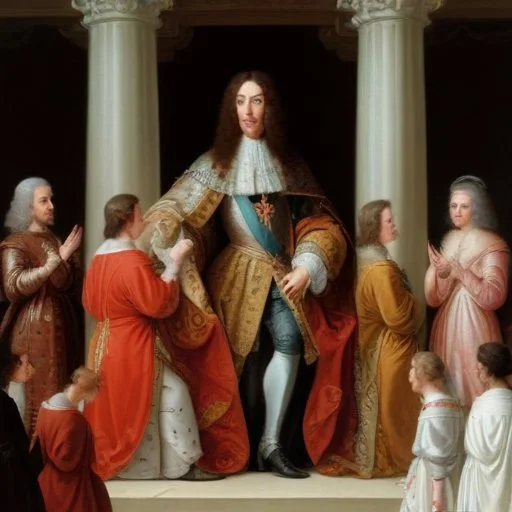
The English Civil War, which had ravaged the country since 1642, finally came to an end with the defeat of the parliamentary forces and the execution of King Charles I in 1649. Oliver Cromwell, the Lord Protector of the Commonwealth, ruled England with an iron fist, imposing strict Puritanical values and suppressing artistic expression. However, with Cromwell's death in 1658, the Commonwealth began to crumble, and the English people yearned for a return to monarchical rule.
General George Monck, a seasoned military leader, seized the opportunity to restore the monarchy and invited Charles II to return from his exile in France. On May 25, 1660, Charles II set foot on English soil at Dover, Kent, marking the beginning of a new era. The road to restoration was paved with the Declaration of Breda, a set of conciliatory treaties that ensured the monarch's commitment to religious tolerance, parliamentary authority, and the protection of individual rights.
The English Restoration was characterized by a vibrant cultural explosion, as the arts, literature, and architecture flourished under the patronage of the restored monarchy. The Theatre Royal, Drury Lane, was established in 1663, and notable playwrights such as John Dryden and William Wycherley wrote works that reflected the era's wit, humor, and satire. The Royal Society, founded in 1660, promoted scientific inquiry and intellectual curiosity.
Charles II, known for his affable nature and charm, proved to be a clever politician, adept at navigating the complexities of court politics and parliamentary intrigue. His coronation on April 23, 1661, was a grand affair, marked by lavish processions, feasts, and festivities. The King's wit and humor earned him the nickname "The Merry Monarch," and his reign was marked by a sense of joie de vivre and revelry.
The English Restoration had far-reaching consequences for British politics, culture, and society. The Glorious Revolution of 1688, which saw the overthrow of James II and the accession of William III and Mary II, was a direct consequence of the Restoration's establishment of monarchical rule. The era's cultural achievements, including the works of Dryden, Wycherley, and other notable writers, continue to influence English literature to this day.
"We have been in a state of war with one another; now let us unite in a state of peace, and forget all that is past."—Charles II, upon his restoration to the throne
The English Restoration marked a significant turning point in the development of English opera. The return of Charles II to the throne brought an end to the Puritanical restrictions on theatrical performances, and opera began to flourish. The King's Theatre, established in 1662, became a hub for opera performances, featuring works by composers such as John Blow and Henry Cooke.
The Restoration period also saw the rise of masques, a form of musical entertainment that combined music, dance, and theater. These extravagant productions, often featuring elaborate sets and costumes, were hugely popular among the aristocracy and upper classes.
The influence of opera and masques extended beyond the theater, with their music and themes being incorporated into other forms of art and literature. The Restoration's cultural flowering, which was characterized by a fascination with classical antiquity, was reflected in the works of poets such as John Dryden, who drew inspiration from ancient Greek and Roman mythology.

General George Monck, a seasoned military leader, played a pivotal role in the English Restoration. Following Oliver Cromwell's death, Monck seized the opportunity to restore the monarchy and invited Charles II to return from exile.
Monck's decision to support the Restoration was not motivated by personal gain or ambition, but rather by a desire to bring stability and peace to a war-torn nation. His actions were instrumental in paving the way for Charles II's triumphant return to the throne.
Despite his crucial role in the Restoration, Monck remains a relatively unknown figure in English history. His humility and lack of ambition, however, make him a fascinating and complex character, worthy of further exploration and study.
The Convention Parliament, which met in April 1660, played a crucial role in paving the way for the English Restoration. This body, consisting of members of Parliament and the House of Lords, was tasked with resolving the crisis of authority that followed Oliver Cromwell's death.
The Convention Parliament's deliberations were marked by a desire to find a peaceful resolution to the conflict, and to avoid a return to the tumultuous era of the Civil War. After much debate and negotiation, the Parliament agreed to invite Charles II to return from exile, setting the stage for the Restoration.
The Convention Parliament's actions were instrumental in shaping the course of English history, and its legacy can still be seen in the country's system of government today.

The English Restoration marked a significant shift in the balance of power in English politics. The return of Charles II to the throne restored the monarchy's authority, but it also established a new relationship between the crown and Parliament.
The Declaration of Breda, a set of conciliatory treaties signed by Charles II, guaranteed Parliament's authority and protected individual rights. This marked a significant departure from the absolute monarchy of the pre-Civil War era, and established a system of government that was more accountable to the people.
The Restoration's impact on the balance of power can still be seen in English politics today, with the monarchy and Parliament continuing to play important roles in the country's system of government.
The English Restoration marked a significant turning point in English social history. The return of Charles II to the throne brought an end to the Puritanical restrictions of the Commonwealth era, and paved the way for a more liberal and tolerant society.
The Restoration's cultural flowering, which was characterized by a fascination with classical antiquity, led to a renewed interest in the arts and literature. This, in turn, helped to foster a more cosmopolitan and sophisticated society, where intellectual and cultural pursuits were valued.
The Restoration's impact on social change can still be seen in English society today, with the era's emphasis on cultural and intellectual pursuits continuing to shape the country's cultural identity.