


The dawn of space exploration was marked by a groundbreaking achievement on June 20, 1944, when the experimental MW 18014 V2 rocket pierced the veil of outer space, reaching an unprecedented altitude of 176 kilometers. This remarkable feat cemented its place in history as the first manmade object to venture into the vast expanse beyond Earth's atmosphere.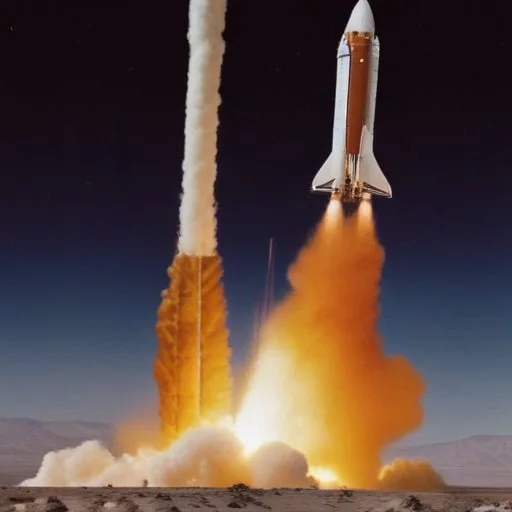
In the tumultuous years leading up to World War II, a group of German scientists, under the visionary leadership of Wernher von Braun, embarked on a clandestine project to develop a revolutionary rocket technology. This audacious endeavor was driven by the pursuit of military superiority, yet it would inadvertently sow the seeds for humanity's most extraordinary achievements in space exploration.
| Year | Event |
|---|---|
| 1930s | Wernher von Braun begins researching and developing liquid-fueled rockets. |
| 1936 | The German military commissions von Braun's team to develop a long-range rocket. |
| 1942 | The first successful test launch of the V2 rocket takes place. |
| June 20, 1944 | The MW 18014 V2 rocket reaches an altitude of 176 kilometers, becoming the first manmade object to reach outer space. |
The MW 18014 V2 rocket's remarkable achievement sparked a chain reaction of innovation, propelling humanity into the Space Age. This groundbreaking feat demonstrated the feasibility of space travel, inspiring generations of scientists, engineers, and explorers to push the boundaries of what was thought possible.
The V2 rocket's pioneering achievement transcended the realm of science and technology, capturing the imagination of people worldwide. This iconic milestone has inspired countless works of literature, art, and film, solidifying its place in the collective consciousness of humanity.
In the annals of space exploration, the MW 18014 V2 rocket's achievement stands as a testament to human ingenuity and perseverance. This remarkable feat eclipsed the previous altitude records, marking a significant shift in the paradigm of space travel and paving the way for future milestones, such as the moon landing and beyond.
Wernher von Braun's infectious enthusiasm and relentless drive inspired a generation of scientists and engineers to strive for greatness. His famous quote, "The rocket will free mankind from its earthly bounds," embodies the unbridled passion and vision that define the space exploration community.
As the MW 18014 V2 rocket blazed a trail into the unknown, it sparked a wave of speculation and curiosity about the vast expanse of space. This groundbreaking achievement has fueled humanity's insatiable desire to explore, to discover, and to push the boundaries of what is possible.
The pioneering spirit of Wernher von Braun and his team has inspired countless charitable initiatives and social programs, fostering a culture of innovation and exploration that continues to benefit humanity to this day.
The MW 18014 V2 rocket's historic achievement on June 20, 1944, marked the beginning of humanity's extraordinary journey into the vast expanse of space. This remarkable feat continues to inspire generations of scientists, engineers, and explorers, fueling our collective passion to venture further, to discover more, and to reach for the stars.
The development of the V2 rocket was not without its challenges. Despite the team's best efforts, the project was plagued by delays, technical issues, and funding problems. However, von Braun's unwavering dedication and leadership kept the project on track, and the team's perseverance paid off in the end.
One of the most significant obstacles the team faced was the development of a reliable guidance system. The rocket's accuracy depended on its ability to stay on course, and the team struggled to perfect the system. It wasn't until Kurt Debus joined the project that the guidance system began to take shape, and his contributions were instrumental in the rocket's eventual success.
In addition to technical challenges, the V2 rocket project was also shrouded in secrecy. The German military was determined to keep the project under wraps, and von Braun's team was forced to work in a clandestine environment. This added an extra layer of complexity to the project, as the team had to be careful not to reveal too much about their work.
Kurt Debus was a skilled engineer and a vital member of von Braun's team. Born in 1901 in Germany, Debus was a brilliant mathematician and physicist who brought a unique set of skills to the project. His expertise in guidance systems was instrumental in the development of the V2 rocket, and his contributions were crucial to the project's success.
Early Life and EducationDebus was born into a family of modest means and was forced to work from a young age to support his family. Despite these challenges, he was an exceptional student and went on to study physics and mathematics at the University of Berlin. After completing his degree, Debus worked as an engineer before joining von Braun's team in the 1930s.
The V2 rocket's impact on the development of modern rocketry cannot be overstated. The technology developed during the project paved the way for future breakthroughs in space exploration, and the rocket's guidance system became a benchmark for future designs.
Influence on Modern RocketryThe V2 rocket's innovative design and guidance system influenced the development of subsequent rockets, including the Jupiter-C and the Saturn V. The rocket's ability to reach high altitudes and travel long distances also opened up new possibilities for space exploration, and the project's success paved the way for future manned missions.
The V2 rocket's achievement had a profound impact on popular culture, capturing the imagination of people around the world. The rocket's success inspired a new generation of scientists and engineers, and its influence can be seen in literature, art, and film.
Inspiring a GenerationThe V2 rocket's achievement sparked a wave of interest in science and technology, and its influence can be seen in the work of authors such as Arthur C. Clarke and Ray Bradbury. The rocket's iconic status also inspired a range of films, from classic sci-fi movies to documentaries about the space race.
The V2 rocket's design was influenced by earlier rocket designs, including the liquid-fueled rockets developed by Robert Goddard in the 1920s and 1930s. Von Braun's team drew on this earlier research, incorporating innovative materials and designs into their own project.
The Influence of Earlier DesignsThe V2 rocket's unique design was shaped by a range of factors, including the team's experience with earlier rocket projects and the availability of resources. The rocket's fuselage, for example, was made from a special alloy that was both strong and lightweight, and its guidance system was influenced by the team's earlier work on radio-controlled aircraft.