


On January 1, 1959, Fidel Castro, the enigmatic leader of the 26th of July Movement, stepped into the power vacuum left by the overthrow of Cuban dictator Fulgencio Batista, marking the beginning of a new era for the island nation. This historic event cemented Castro's position as the Premier of Cuba, paving the way for radical social and economic reforms that would shape the country's future.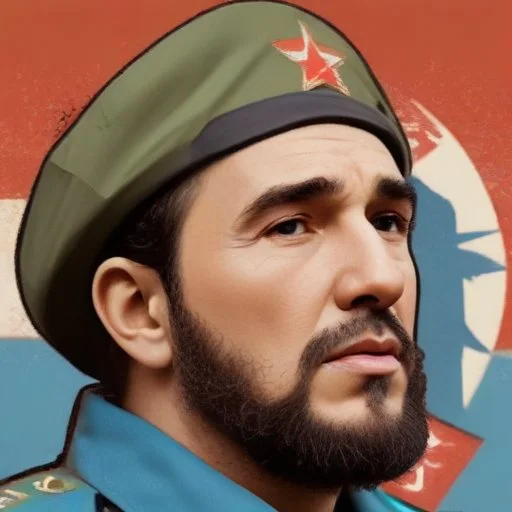
In the years leading up to Batista's downfall, Cuba was plagued by corruption, poverty, and political upheaval. Fulgencio Batista, who had ruled Cuba since 1940, had become increasingly authoritarian, suppressing opposition and amassing wealth at the expense of the Cuban people. In response, a guerrilla movement led by Fidel Castro, his brother Raúl, and Argentine revolutionary Che Guevara, began to organize in the Sierra Maestra mountains.
Castro's rise to power marked a significant shift in Cuba's political landscape, with the new government implementing sweeping reforms aimed at reducing poverty, increasing education and healthcare, and nationalizing key industries. The event also had far-reaching implications for global politics, as Cuba became a key player in the Cold War, aligning itself with the Soviet Union and sparking tensions with the United States.
“Revolution is not a bed of roses. Revolution is a struggle between the future and the past.” - Fidel Castro
The Cuban Revolution had a profound impact on the country's cultural and social fabric, inspiring a sense of national pride and unity. The event also influenced artistic and literary movements, with many Cuban writers, musicians, and artists drawing inspiration from the revolution and its ideals.
Fidel Castro's rise to power was met with widespread international criticism, particularly from the United States, which had long supported Batista's regime. Castro's communist ideology and alleged human rights abuses sparked controversy, leading to decades of diplomatic tensions and economic sanctions.
The Cuban Revolution served as a catalyst for socialist and communist movements around the world, inspiring similar uprisings in countries such as Nicaragua and Venezuela. The event also had significant implications for global politics, contributing to the escalation of the Cold War and shaping US-Cuba relations for decades to come.
Fidel Castro's rise to power is a testament to the power of determination and conviction. Despite facing numerous setbacks and challenges, Castro remained committed to his ideals, inspiring countless Cubans to join the revolution and fight for a better future.
Born in 1901, Fulgencio Batista y Zaldívar was a Cuban politician and military officer who ruled Cuba from 1940 to 1944 and again from 1952 to 1959. Batista's rise to power was marked by a series of military coups, and his regime was characterized by corruption, nepotism, and authoritarianism.
Dubbed the "Cuban strongman," Batista's rule was marked by a brutal suppression of opposition, with his secret police force, known as the Sindicato de los Obreros de la Construcción, responsible for the torture and murder of hundreds of political dissidents.

The Cuban Revolution had a profound impact on the country's cultural landscape, inspiring a new generation of artists, musicians, and writers. The event sparked a cultural renaissance, with many Cubans embracing the revolutionary ideals of social justice and equality.
The Revolution also led to the establishment of the Instituto Cubano del Arte e Industria Cinematográficos, a film institute that produced some of the most influential films of the 1960s and 1970s, including Memorias del Subdesarrollo and Días de noviembre.
The Cuban Revolution took place against the backdrop of the Cold War, with the United States and the Soviet Union vying for influence in the Western Hemisphere. The event marked a significant shift in the global balance of power, with Cuba becoming a key player in the socialist bloc.
The Revolution also led to a deterioration in US-Cuba relations, with the Eisenhower administration imposing economic sanctions on the island nation in 1960. The subsequent Bay of Pigs invasion and the Cuban Missile Crisis would further strain relations between the two nations.

The Cuban Revolution occurred at a critical juncture in global politics, with the United States and the Soviet Union engaged in a bitter struggle for ideological supremacy. The event marked a significant challenge to US hegemony in the Western Hemisphere, with Cuba becoming the first socialist state in the Americas.
The Revolution also led to a reconfiguration of the global geopolitical landscape, with Cuba playing a key role in the Non-Aligned Movement and the Organization of Solidarity with the People of Asia, Africa and Latin America.
Historians have long debated the significance and impact of the Cuban Revolution, with some viewing the event as awatershed moment in the struggle for social justice and equality, while others have criticized the regime's human rights abuses and authoritarian tendencies.
Recent historiographical scholarship has sought to nuance our understanding of the Revolution, highlighting the agency and experiences of ordinary Cubans, as well as the complex intersections between politics, culture, and identity in the revolutionary era.