


In 1979, Rhodesia, a country in southern Africa, witnessed a seismic shift in its political landscape when Bishop Abel Muzorewa, a Methodist bishop, became the first black prime minister in the country's 90-year history. This watershed moment marked the end of white minority rule and paved the way for a more inclusive government, ultimately leading to the country's independence as Zimbabwe.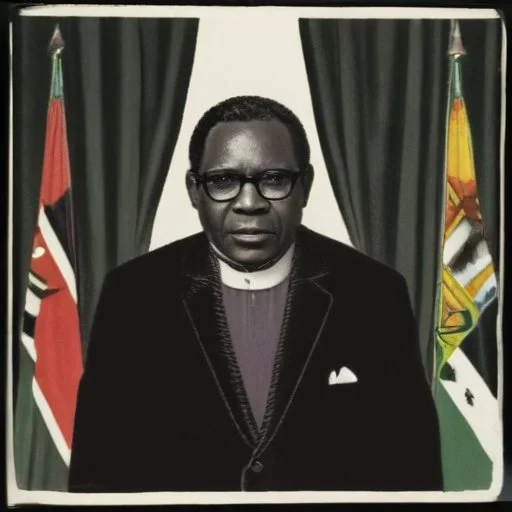
Rhodesia, named after British businessman and politician Cecil Rhodes, was a British colony established in the late 19th century. For nearly a century, the country was governed by a white minority, with the black majority population relegated to second-class citizens. This era of oppression was marked by forced labor, land seizures, and violent suppression of dissent.
The 1960s and 1970s saw a surge in anti-colonial resistance, led by nationalist groups such as the Zimbabwe African National Union (ZANU) and the Zimbabwe African People's Union (ZAPU). The Rhodesian Bush War, a 15-year conflict between the government and these nationalist forces, ultimately led to international pressure and diplomatic efforts to bring about a peaceful resolution.
Bishop Abel Muzorewa, a respected religious leader and politician, emerged as a key figure in the transition to black majority rule. His commitment to non-violent resistance and his ability to unite disparate factions earned him widespread respect and recognition. In 1979, he became the first black prime minister of Rhodesia, heading a transitional government tasked with rebuilding the country and addressing its deep-seated social and economic problems.
The change in government had a profound impact on Zimbabwean culture and society. The country's newfound independence and black majority rule led to a resurgence of African cultural expression, including music, art, and literature. The government also prioritized education and healthcare, leading to significant improvements in the country's human development indicators.
The transition to black majority rule was not without its challenges and controversies. Some critics argued that the new government was too conciliatory towards the white minority, while others felt that the pace of reform was too slow. Despite these challenges, the government's commitment to reconciliation and nation-building helped to foster a sense of national unity and purpose.
In an interview, Bishop Muzorewa recalled the sense of pride and responsibility he felt upon becoming the first black prime minister of Rhodesia. He noted that the experience was both exhilarating and daunting, given the enormity of the task ahead. Despite the challenges he faced, Muzorewa remained committed to his vision of a united and prosperous Zimbabwe.
The transition to black majority rule in Zimbabwe had significant implications for the region and the world. It marked a turning point in the struggle against colonialism and apartheid, inspiring similar movements across Africa. The event also highlighted the importance of diplomacy and international cooperation in resolving conflicts and promoting peaceful change.
Bishop Abel Muzorewa's rise to prominence was not without its challenges. Born in 1925 in Southern Rhodesia, Muzorewa was educated at a Methodist mission school and later trained as a teacher. His entry into politics was sparked by his involvement in the African nationalist movement, which aimed to end white minority rule in Rhodesia.
Muzorewa's leadership skills and commitment to non-violent resistance earned him recognition and respect from both black and white Rhodesians. His ability to unite disparate factions and bring people together was instrumental in the country's transition to black majority rule.

The transition to black majority rule in Zimbabwe had a profound impact on the country's cultural landscape. The new government actively promoted African cultural expression, including music, art, and literature. This resurgence of African culture was evident in the works of famous Zimbabwean authors such as Dambudzo Marechera and Yvonne Vera.
The government also prioritized education and healthcare, leading to significant improvements in the country's human development indicators. These investments in human capital paved the way for a more prosperous and equitable society.
The transition to black majority rule in Zimbabwe was a significant political milestone in the country's history. The new government, led by Bishop Abel Muzorewa, was tasked with rebuilding the country and addressing its deep-seated social and economic problems.
The government's agenda focused on promoting national unity, addressing the contentious land reform issue, and rebuilding the economy. These efforts were crucial in establishing a stable and prosperous Zimbabwe.

The transition to black majority rule in Zimbabwe had significant economic implications. The new government inherited a struggling economy, which had been weakened by years of international sanctions and civil war.
Despite these challenges, the government implemented policies aimed at promoting economic growth and development. These efforts included investing in infrastructure, promoting tourism, and diversifying the economy.
The transition to black majority rule in Zimbabwe occurred against the backdrop of a rapidly changing global political landscape. The Cold War was ending, and the international community was increasingly focused on promoting democracy and human rights.
The event also highlighted the significance of regional and international diplomacy in resolving conflicts and promoting peaceful change. The involvement of organizations such as the Organization of African Unity and the Commonwealth played a crucial role in facilitating the transition to black majority rule in Zimbabwe.