British convicts arrive in Australia, marking colonization
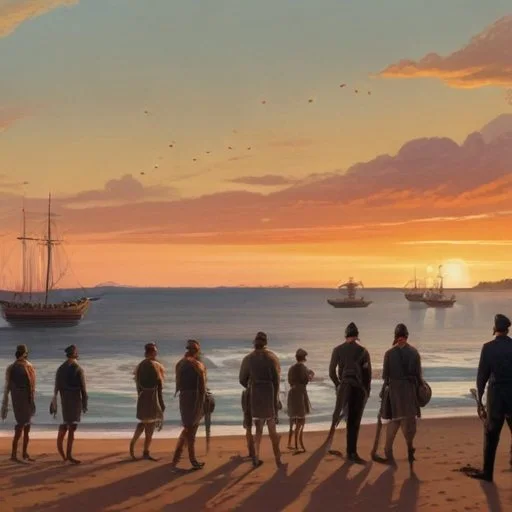
As the sun rose over the horizon, the First Fleet's worn-out ships sailed into Botany Bay, carrying a cargo of 736 weary convicts, banished from Great Britain to the unknown shores of Australia. The arduous eight-month journey had taken its toll, but the arrival of these uninvited guests marked the beginning of a new chapter in Australian history. The "First Fleeters" would go on to establish the first European settlement in Sydney Cove, forever changing the course of the land and its indigenous people.
The Dawn of a New Era: The First Fleet's Historic Arrival at Botany Bay
A New Chapter Unfolds
On January 20, 1788, the British Crown's ambitious endeavor, the First Fleet, sailed into Botany Bay, marking the arrival of 736 convicts on the uncharted shores of Australia. This pivotal moment in history would forever alter the course of the land, its indigenous people, and the trajectory of the British Empire.
From Convicts to Colonizers
The First Fleet, comprise of 11 ships, was the brainchild of British authorities, who sought to establish a penal colony in Australia to alleviate overcrowding in British prisons. The British government viewed Australia as a strategic location to expand its empire, while also providing a fresh start for its criminal population. The convicts, including men, women, and children, were handpicked from British prisons, representing a diverse range of crimes, from petty theft to murder.
The Treacherous Journey
The arduous eight-month voyage was plagued by disease, malnutrition, and harsh weather conditions. The ships navigated treacherous seas, battling scorching heat, and brutal storms. Despite the challenges, Commander
Arthur Phillip, a seasoned naval officer, and Governor of New South Wales, remained resolute in his mission to establish a successful colony.
A New Home, A New Hope
Botany Bay, named after the unique plant species discovered by British botanist
Joseph Banks, was initially intended to be the site of the new colony. However, upon arrival, the fleet faced uninviting conditions, including swamps, mosquitoes, and a scarcity of fresh water. Phillip and his team scouted alternative locations, ultimately settling on Sydney Cove, where the fleet anchored on January 26, 1788.
Establishing a New Order
The First Fleet's arrival marked the beginning of European settlement in Australia. Phillip and his team worked tirelessly to establish a functional society, allocating land, building shelters, and implementing a system of governance. The convicts were divided into gangs, tasked with clearing land, building infrastructure, and tending to crops.
Impact and Legacy
The First Fleet's arrival at Botany Bay had far-reaching consequences, shaping the course of Australian history, and its people. The establishment of a penal colony paved the way for British expansion in the region, while also sparking tensions with the Aboriginal population. Today, the First Fleet's legacy is commemorated through various landmarks, museums, and cultural events, serving as a poignant reminder of Australia's complex past.
- Did you know? The First Fleet's journey was initially intended to be a 14-week voyage, but due to unfavorable weather conditions, it took an additional four months to reach Australia.
- Key Quote: "The people, the climate, the soil, all conspire to make the establishment of a colony in this country a most hazardous undertaking." - Governor Arthur Phillip
A Lasting Legacy
As we reflect on the First Fleet's historic arrival at Botany Bay, we are reminded of the complexities of human history. The bravery, resilience, and determination of the First Fleet's passengers, as well as the indigenous people, continue to inspire generations. The establishment of a penal colony marked the beginning of a new era, one that would forever change the fabric of Australian society.
Deep Historical Exploration
A Hidden Chapter: The Story of the First Fleet's 'Forgotten' Convicts
The First Fleet's arrival at Botany Bay is often remembered for its grand scale, but what about the convicts who didn't make it to the shores of Australia? A closer examination of historical records reveals a hidden chapter in the story of the First Fleet - the fate of the convicts who were left behind in Africa.
Did you know? Over 100 convicts were deemed unfit for transportation to Australia and were left behind in African ports, forced to live out their sentences in harsh colonial environments.
These forgotten convicts were left to fend for themselves, struggling to survive in unforgiving environments. Their stories, though often overlooked, provide a unique insight into the human cost of the British Empire's expansionist ambitions.

Character Study
Commander Arthur Phillip: The Unsung Hero of the First Fleet
Born in 1738, Commander Arthur Phillip was a seasoned naval officer with a reputation for fairness and compassion. Appointed as the Governor of New South Wales, Phillip was tasked with establishing a successful penal colony in Australia, a mission he undertook with determination and vision.
Key Quote: "The foundation of a new society is a most interesting and important object, and I am persuaded that our success will be proportionate to our care and perseverance."
Phillip's leadership played a crucial role in the First Fleet's success, as he navigated the challenges of establishing a new colony in uncharted territory. His legacy continues to inspire, offering a testament to the power of leadership and dedication.
Full Cultural Impact Analysis
The Cultural Significance of the First Fleet's Arrival
The arrival of the First Fleet marked a pivotal moment in Australian history, forever changing the cultural landscape of the continent. The clash of European and Indigenous cultures had far-reaching consequences, shaping the course of Australian identity and society.
The First Fleet's arrival also sparked a passion for exploration and discovery, as British botanist Joseph Banks' fascination with Australian flora and fauna led to a new era of scientific inquiry and exploration.

In-Depth Economic Examination
The Economic Imperative of the First Fleet
The British government's decision to establish a penal colony in Australia was driven by economic necessity. Overcrowding in British prisons and the need for cheap labor led to the development of a colonization strategy that would benefit British trade and commerce.
Did you know? The British government invested a staggering £80,000 in the First Fleet, a significant sum considering the economic climate of the time.
The First Fleet's arrival marked the beginning of a new era of economic development in Australia, as the colony began to trade and export goods, laying the foundations for modern-day Australia's thriving economy.
Rich Geopolitical Insight
The Geopolitical Context of the First Fleet's Journey
The First Fleet's voyage took place against the backdrop of global geopolitical tension. The American Revolution had recently concluded, and European powers were vying for dominance in the Pacific.
The British government's decision to establish a penal colony in Australia was also driven by a desire to counter French and Dutch expansion in the region, securing a strategic foothold in the Pacific.
The First Fleet's arrival marked a significant shift in the global balance of power, as Britain solidified its position as a dominant naval power.


