


The brutal murder of Patrice Lumumba, the first Prime Minister of the Democratic Republic of Congo, sent shockwaves across the globe, exposing the dark underbelly of international politics and colonialist interests. Lumumba's assassination on January 17, 1961, in the Katanga region, was a stark reminder of the devastating consequences of power struggles and ideological conflicts.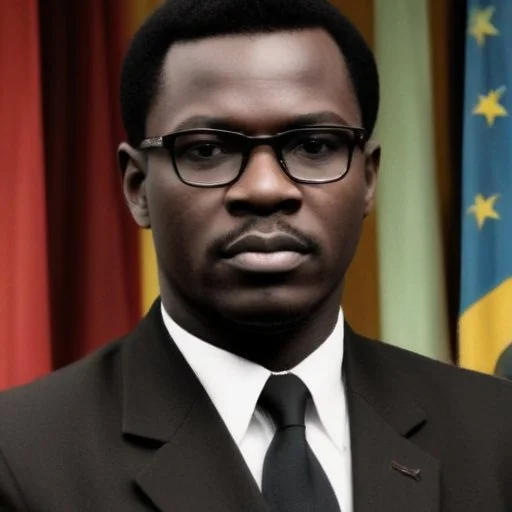
Patrice Lumumba was a force to be reckoned with. A passionate advocate for independence and self-determination, he rose to prominence in the tumultuous years following World War II. As the leader of the Mouvement National Congolais, Lumumba spearheaded the country's struggle for independence from Belgium, a colonial power that had exploited Congo's rich natural resources for decades.
The Congo crisis unfolded against the backdrop of the Cold War, with the United States and the Soviet Union engaged in a proxy battle for global influence. Lumumba's leftist leanings and his acceptance of Soviet aid made him a thorn in the side of Western powers. The CIA, concerned about the spread of communism in Africa, covertly backed Lumumba's political rivals, further destabilizing the already fragile Congo.
In September 1960, a mere five months after Congo gained independence, Lumumba was ousted from power in a coup orchestrated by Colonel Joseph Mobutu, his former ally. Imprisoned and later transferred to the Katanga region, Lumumba was subjected to brutal treatment and eventually executed by a firing squad.
The trail of evidence points to the complicity of the Belgian and US governments in Lumumba's assassination. The Belgian government, still reeling from the loss of its colonial empire, saw Lumumba as a threat to its economic interests. The CIA, meanwhile, had been secretly backing Lumumba's opponents, providing financial and logistical support to the coup plotters.
Patrice Lumumba's tragic fate serves as a powerful symbol of resistance against colonialism and imperialism. His murder, however, also highlights the vulnerabilities of democratic leaders who dare to challenge the status quo. As we reflect on Lumumba's courageous struggle, we are reminded of the enduring power of courage in the face of oppression, and the need for vigilance in the pursuit of justice and human rights.
"The fate of Lumumba is a tragedy for the Congo, for Africa, and for the entire world." - Kwame Nkrumah, Ghanaian President
The city of Kisangani, where Lumumba was born, has a university named after him, and his image appears on the Congolese 50-franc banknote, a testament to his enduring legacy.
Patrice Lumumba's assassination was a pivotal moment in the Cold War, marking a shift in the global balance of power. The event reinforced the notion that the United States and the Soviet Union would stop at nothing to maintain their ideological influence, even if it meant supporting authoritarian regimes. This proxy war mentality would continue to shape international relations for decades to come.
In the aftermath of Lumumba's death, the CIA's involvement in the coup was revealed, sparking widespread outrage and condemnation. This event further eroded trust in the United States' commitment to democracy and human rights, particularly among Third World nations.

Historians have long debated the role of external actors in shaping the course of the Congo crisis. While some argue that Lumumba's assassination was a direct result of Belgian and American intervention, others contend that internal factors, such as tribal rivalries and political instability, played a more significant role. This historiographical debate highlights the complexities of interpreting historical events and the challenges of assigning blame.
Recent archival research has shed new light on the events leading up to Lumumba's assassination, revealing a complex web of intrigue and deception. These findings have sparked a reevaluation of the Congo crisis, with many historians now acknowledging the critical role of external actors in Lumumba's demise.
Patrice Lumumba's legacy extends far beyond the realm of politics, with his image and ideology inspiring artistic expression across the African diaspora. From the poetry of Sékou Touré to the music of Fela Kuti, Lumumba's defiance in the face of oppression resonated deeply with artists and intellectuals.
In the Congo, Lumumba's image has been immortalized in popular culture, with his likeness adorning murals, slogans, and even currency. This cultural significance is a testament to the enduring power of Lumumba's message, which continues to inspire generations of Africans and people of African descent.

The Congo crisis unfolded against the backdrop of a rapidly decolonizing Africa, with nationalist movements sweeping across the continent. This era of rapid change created a complex geopolitical landscape, with emerging nations like the Congo struggling to assert their independence.
In this context, Lumumba's assassination served as a stark reminder of the limitations of African agency in the face of external powers. The event highlighted the need for African nations to devise new strategies for maintaining their sovereignty, a challenge that would continue to shape the continent's development for decades to come.
Patrice Lumumba's life was marked by a profound sense of purpose and conviction. Born into a family of farmers, Lumumba's early life was shaped by the harsh realities of colonialism, which instilled in him a deep desire for independence and self-determination.
Throughout his political career, Lumumba remained committed to his core principles, refusing to compromise on his vision for a free and independent Congo. This unwavering dedication to his ideals earned him both admiration and enemies, ultimately contributing to his tragic demise.