Napoleon III Captured by Prussian Forces at Sedan
In a stunning debacle, France's mighty army, led by the once-formidable Napoleon III, stumbled into a catastrophic trap at Sedan, where a massive force of 100,000 soldiers found themselves surrounded and outmaneuvered by the relentless Prussian forces. As the noose tightened, Napoleon III was forced to surrender, marking a humiliating end to the Second Empire and France's brief reign as Europe's dominant power.
The Battle of Sedan: A Crushing Defeat for Napoleon III and the French Army
A Day of Infamy: September 1, 1870
The Battle of Sedan is remembered as one of the most catastrophic defeats in French military history, a day that marked the downfall of
Napoleon III's Second Empire and France's brief reign as Europe's dominant power. On September 1, 1870, the French army, once considered invincible, surrendered en masse to the Prussian forces, with Napoleon III himself being taken prisoner alongside 100,000 of his soldiers.
The Road to Sedan
In the summer of 1870, tensions between France and Prussia had been escalating over the disputed territories of Luxembourg and Belgium. The Franco-Prussian War was sparked when Prussia, under the leadership of
Otto von Bismarck, seized the opportunity to unify Germany under its leadership. France, confident in its military prowess, declared war on Prussia on July 19, 1870.
A Series of Missteps
Napoleon III, known for his military genius during the Crimean War, had grown complacent and out of touch with the realities of modern warfare. He underestimated the strength and organization of the Prussian army, led by Helmuth von Moltke. A series of strategic mistakes and miscommunications led to the French army being trapped in Sedan, a fortified city in northeastern France.
The Battle Rages On
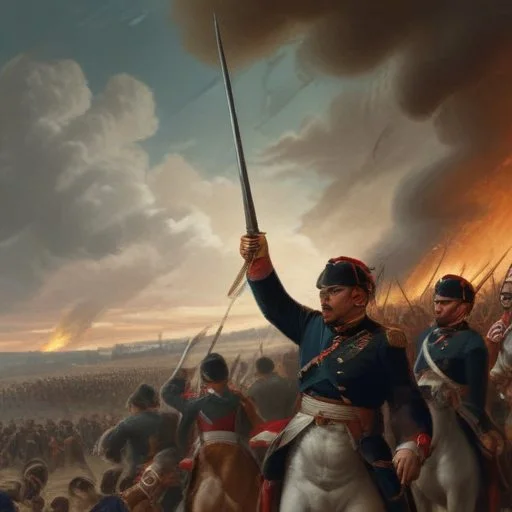
On August 31, 1870, the Prussian army, armed with breech-loading cannons and mobile artillery, laid siege to Sedan. The French army, relying on outdated tactics and equipment, was quickly overwhelmed. Despite initial successes, the French lines were soon breached, and the Prussians broke through to the city center. Napoleon III, realizing the futility of further resistance, raised the white flag and surrendered.
Consequences of Defeat
The fall of Sedan marked the end of Napoleon III's reign and the collapse of the Second Empire. The French army, once the pride of Europe, was humiliated and demoralized. The Prussian army, on the other hand, emerged victorious and confident, paving the way for German unification.
- The Treaty of Frankfurt, signed on May 10, 1871, imposed harsh terms on France, including a massive indemnity and the loss of Alsace and Lorraine to Germany.
- The fall of the Second Empire led to the establishment of the Third Republic, marking a new era of French history.
- The Battle of Sedan had far-reaching consequences for European politics, leading to a re-evaluation of military strategy and the rise of Germany as a dominant power.
Lasting Legacy
The Battle of Sedan serves as a reminder of the unpredictable nature of war and the dangers of complacency. It also highlights the importance of adapting to changing circumstances and staying attuned to the pulse of modern warfare. As Otto von Bismarck famously quipped, "We Germans fear God, and nothing else in the world, least of all the French."
Timeline of Events
- July 19, 1870: France declares war on Prussia.
- August 31, 1870: The Prussian army lays siege to Sedan.
- September 1, 1870: Napoleon III surrenders, marking the end of the Battle of Sedan.
- May 10, 1871: The Treaty of Frankfurt is signed, imposing harsh terms on France.
Personal Accounts and Anecdotes
Napoleon III's surrender was met with a mixture of shock and disbelief among the French people. One eyewitness account describes the scene: "The Emperor, pale and anxious, rode through the streets of Sedan, accompanied by a handful of officers, as the Prussian troops cheered and jeered."
"Sedan is a wound that will take a long time to heal." - Victor Hugo
This crushing defeat marked the end of an era for France, but it also paved the way for a new era of growth and transformation. As the dust settled on the battlefield, the French people began to rebuild and look towards a brighter future, one that would be shaped by the lessons of Sedan.
Character Overview
Otto von Bismarck: The Mastermind Behind the Franco-Prussian War
Otto von Bismarck, the Prime Minister of Prussia, was the architect of the Franco-Prussian War. A shrewd politician and skilled diplomat, Bismarck had long been seeking to unify the German states under Prussian leadership. He saw the conflict with France as an opportunity to achieve this goal and secure Prussia's position as a dominant power in Europe.
Bismarck's clever manipulation of events, including the Ems Dispatch, led to France declaring war on Prussia. However, Bismarck had already secured the support of the other German states, ensuring that Prussia would not fight alone.

Detailed Geopolitical Context
The Geopolitical Context of the Franco-Prussian War
The Franco-Prussian War took place against the backdrop of a rapidly changing European landscape. The unification of Italy and Germany had created a power vacuum, which both France and Prussia sought to fill. The war was, in part, a struggle for dominance in Europe.
The conflict also had implications for the balance of power in Europe. The decline of French influence and the rise of Prussia marked a significant shift in the European order, with far-reaching consequences for international relations and diplomacy.
Thorough Economic Influence Study
The Economic Impact of the Franco-Prussian War
The Franco-Prussian War had a devastating impact on the French economy. The war effort had drained the country's finances, and the subsequent Treaty of Frankfurt imposed a massive indemnity on France, forcing the country to pay 5 billion francs to Prussia.
The war also disrupted trade and commerce, leading to widespread economic hardship and unemployment. The French economy would take years to recover from the devastating effects of the war.

Historiographical Analysis
Historiographical Perspectives on the Battle of Sedan
Historians have long debated the significance of the Battle of Sedan, with some viewing it as a decisive turning point in European history. Others have argued that the battle was merely a symptom of deeper structural flaws in the French army and government.
Recent scholarship has sought to reevaluate the role of Napoleon III, with some historians portraying him as a capable leader who was ultimately overwhelmed by circumstances beyond his control.
Comprehensive Technological Influence Study
The Technological Advantage of the Prussian Army
The Prussian army's victory at Sedan was, in part, due to its superior technology. The Prussians had adopted the breech-loading cannon, which allowed for faster and more accurate artillery fire. Additionally, the Prussians had developed a sophisticated system of railways and telegraphs, enabling them to mobilize troops and communicate quickly and efficiently.
The French army, on the other hand, relied on outdated tactics and equipment, including muzzle-loading cannons and slow-moving cavalry units. The technological advantage of the Prussians proved decisive in the battle.


