


The Yazidi genocide was marked by heroic acts of resistance and humanitarian efforts, amidst the chaos and devastation:
The Yazidi faith, with its rich cultural heritage and unique traditions, has been pushed to the brink of extinction.
The forced displacement of Yazidi civilians has led to a diaspora, with many seeking refuge in Europe, North America, and other parts of the world.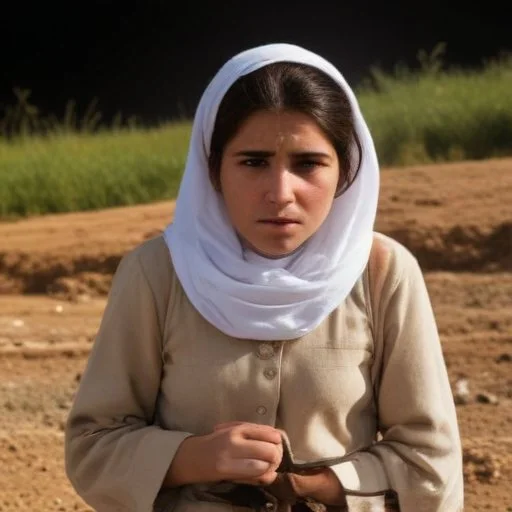
The Yazidi genocide has sparked heated debates about the international community's response to humanitarian crises:
Critics argue that the initial delay in responding to the crisis allowed ISIL to perpetrate further atrocities, while others contend that the international community's eventual intervention averted a potentially even greater catastrophe.
The Yazidi genocide has also raised questions about the global community's responsibility to protect minority groups and prevent genocide.
Survivors' testimonies provide a harrowing glimpse into the brutality of the Yazidi genocide:
"I saw my brother being beheaded, and my sister being taken away as a sex slave... I will never forget the sounds of gunfire and screams." — Yazidi survivor
"We were forced to convert to Islam, or face death. I chose to convert, but I knew I would never truly abandon my Yazidi faith." — Yazidi survivor
The Yazidi genocide serves as a stark reminder of the importance of protecting vulnerable minority groups and preventing genocides:
The international community must strengthen its Early Warning Systems and rapid response mechanisms to prevent similar atrocities from occurring in the future.
The Yazidi genocide has galvanized global efforts to combat human trafficking, forced labor, and sexual slavery.
Despite the unimaginable suffering they have endured, the Yazidi community continues to inspire with their resilience and determination:
In the aftermath of the genocide, Yazidi survivors have established community centers, schools, and cultural institutions, providing a beacon of hope for their people.
The Yazidi genocide has also sparked a renewed sense of solidarity among minority groups, with many advocating for greater recognition and protection of their rights.
The Yazidi faith has its roots in ancient Mesopotamia, dating back to the 12th century. The religion is believed to have originated from the teachings of Sheikh Adi ibn Musafir, a Sufi mystic who preached a unique blend of Zoroastrianism, Islam, and Christianity. Over time, the Yazidi community developed a distinct cultural identity, with their own religious practices, customs, and traditions.
One of the most fascinating aspects of Yazidism is its emphasis on angels and demons. According to Yazidi mythology, the world is governed by a complex hierarchy of angels, with the Peacock Angel, Melek Taus, being the most revered. This unique belief system has led to widespread misunderstanding and persecution of the Yazidi community throughout history.

Nadia Murad, a Yazidi survivor of ISIL's atrocities, has become a powerful advocate for the rights of her people. Born in 1993 in the Sinjar region, Nadia was captured by ISIL militants in 2014 and forced into sexual slavery. She managed to escape and has since dedicated her life to raising awareness about the Yazidi genocide and the plight of minority groups.
As a Nobel Peace Prize laureate and UN Goodwill Ambassador, Nadia has traveled the world, sharing her harrowing story and demanding accountability from world leaders. Her tireless efforts have inspired countless individuals and organizations to join the fight against human trafficking and genocide.
The Yazidi New Year, known as Sere Sal, is a significant cultural event that marks the beginning of spring. Celebrated on the first day of April, Sere Sal is a time for Yazidis to come together, renew their faith, and honor their ancestors.
During the celebrations, Yazidis adorn themselves in traditional attire, prepares delicious meals, and engage in joyful songs and dances. The festival is also marked by the lighting of fires, symbolizing the purification and renewal of the community.
The Yazidi New Year has become an important symbol of resilience and hope for the Yazidi community, particularly in the face of persecution and displacement. Despite the challenges they face, the Yazidis continue to celebrate Sere Sal with pride, preserving their cultural heritage for future generations.

Yazidism is rooted in a unique philosophical framework that emphasizes the duality of good and evil. According to Yazidi belief, the world is governed by a delicate balance between the forces of light and darkness. This worldview is reflected in the Yazidi concept of the "Two Principles," which posits that the universe is governed by both a good and an evil principle.
This philosophical approach has led to accusations of devil worship, as some outsiders have misinterpreted the Yazidi belief in the Peacock Angel, Melek Taus, as a veneration of evil. However, Yazidis believe that Melek Taus is a symbol of the fallen angel who repented and was forgiven by God.
The philosophical underpinnings of Yazidism have also led to a strong emphasis on moral responsibility and free will. Yazidis believe that individuals have the power to choose between good and evil, and that their actions have consequences in the afterlife.
The Yazidi genocide was not an isolated event, but rather a symptom of a broader geopolitical crisis in the Middle East. The rise of ISIL in 2014 was fueled by a complex web of regional and international factors, including political instability, sectarianism, and foreign intervention.
The Sinjar region, where the Yazidi community is concentrated, has long been a flashpoint for regional tensions. The area is strategically located near the Syrian-Turkish border, making it a key crossing point for arms, fighters, and migrants.
The Yazidi genocide also highlights the failure of the international community to address the root causes of conflict in the region. As the world's attention was focused on other crises, the Yazidi community was left vulnerable to attack, highlighting the need for more effective diplomacy and conflict prevention strategies.