


In a seismic shift of power, the German referendum of 1934 catapulted Adolf Hitler to the pinnacle of authority, solidifying his position as the supreme Führer of Nazi Germany. This pivotal event, which took place on August 19, 1934, marked the beginning of a dark era in German history, as Hitler's autocratic rule led to widespread oppression, war, and genocide.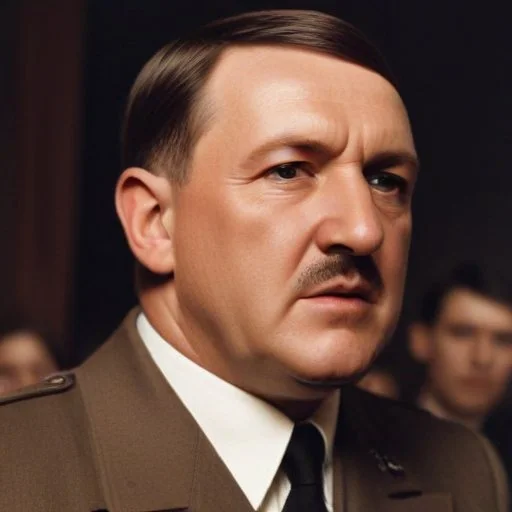
The seeds of Hitler's ascension to power were sown in the aftermath of World War I, as Germany struggled to rebuild and recover from the devastating consequences of the Treaty of Versailles. Amidst the chaos and instability, the Nazi Party, led by Hitler, capitalized on the widespread discontent and disillusionment, promising a return to greatness and prosperity.
The pathway to the referendum was paved by a series of strategic maneuvers, as Hitler skillfully exploited the power vacuum created by the death of President Paul von Hindenburg. On August 1, 1934, Hitler merged the offices of President and Chancellor, effectively making himself the head of state. However, this move was not merely a formality, as Hitler sought to legitimize his grip on power through a national referendum.
On August 19, 1934, German voters were called upon to approve Hitler's new title, with the question "Do you agree to the law concerning the Head of State of the German Reich?" appearing on the ballot. The outcome was never in doubt, as an overwhelming majority of 89.9% of voters endorsed Hitler's appointment as Führer, effectively making him the supreme leader of Nazi Germany.
The referendum marked the beginning of Hitler's unchecked rule, as he wielded absolute authority over Nazi Germany. The consequences were far-reaching and devastating, as Hitler's regime embarked on a campaign of aggressive militarization, territorial expansion, and brutal persecution of minorities and political opponents.
The referendum had a profound impact on German culture and society, as the Nazi regime sought to impose its ideology on every aspect of public life. The regime's emphasis on militarism, nationalism, and anti-Semitism permeated every level of society, shaping public opinion and influencing cultural expression.
The legitimacy of the referendum was questioned by many, both within Germany and beyond its borders. Critics argued that the vote was a sham, with widespread intimidation and manipulation of voters. Despite these concerns, the referendum was hailed as a resounding success by the Nazi regime, which claimed it as a mandate for Hitler's leadership.
"I am the Führer, and I shall be the Führer until my dying breath!" - Adolf Hitler, shortly after the referendum.
Ernst Hanfstaengl, a close associate of Hitler, recalled the Führer's elation on the evening of the referendum, as he celebrated with his inner circle at the Reich Chancellery. Hanfstaengl described Hitler as "exultant, his eyes shining with excitement, his voice trembling with emotion."
The German referendum of 1934 played a crucial role in shaping the course of world history. Hitler's consolidation of power paved the way for Nazi Germany's aggressive expansion, leading to the outbreak of World War II and the devastating consequences that followed.
Despite the dire consequences of the referendum, it serves as a poignant reminder of the importance of democratic accountability and the dangers of unchecked power. As we reflect on this pivotal event, we are reminded of the need for eternal vigilance and the protection of individual liberties and freedoms.
The German referendum of 1934 has been subject to varying interpretations by historians, with some viewing it as a cynical power grab by Hitler, while others see it as a legitimate expression of popular will. Recent scholarship has highlighted the complex interplay between ideology, propaganda, and political manipulation that characterized the Nazi regime's rise to power.
Historians have also debated the extent to which Hitler's consolidation of power was facilitated by the weakness of the Weimar Republic and the complicity of conservative elites.
The German referendum of 1934 can be compared to other instances of authoritarian leaders consolidating power through plebiscites, such as Napoleon Bonaparte's coup in 1800 or Benito Mussolini's Acerbo Law in 1923. These parallels highlight the dangers of unchecked executive power and the erosion of democratic institutions.
Moreover, the referendum can be seen as part of a broader trend of fascist and nationalist movements in interwar Europe, which exploited popular discontent and manipulated democratic processes to seize power.
The German referendum of 1934 took place against the backdrop of rising tensions in Europe, with the continent still reeling from the aftermath of World War I. The referendum can be seen as a key moment in the emergence of Nazi Germany as a major power, which would go on to challenge the status quo of European politics and ultimately contribute to the outbreak of World War II.
The referendum also had significant implications for Germany's relationships with its European neighbors, many of which viewed Hitler's consolidation of power with unease and suspicion.

The German referendum of 1934 had a profound impact on German culture, as the Nazi regime sought to promote a sanitized and militarized version of German identity. The regime's emphasis on national unity and strength led to the suppression of dissenting voices and the manipulation of cultural institutions.
The referendum also marked a turning point in the Nazis' campaign to control and dominate German culture, which would ultimately lead to the persecution of artists, intellectuals, and minorities.
The German referendum of 1934 marked a critical juncture in the development of Nazi Germany's political system, as Hitler consolidated his power and eliminated potential rivals. The referendum cemented the Nazi regime's authoritarian character and paved the way for further repression and violence.
The referendum also highlighted the complicity of conservative elites and the weakness of democratic institutions, which had failed to prevent Hitler's rise to power.