


In a historic moment, U.S. President George H. W. Bush declared on February 27, 1991, that Kuwait was finally liberated from the clutches of Iraqi occupation, marking the culmination of a six-week-long intense combat operation led by the United States and its coalition partners. This monumental announcement restored Kuwait's sovereignty and crushed Saddam Hussein's ambitions, symbolizing a new dawn for the tiny nation.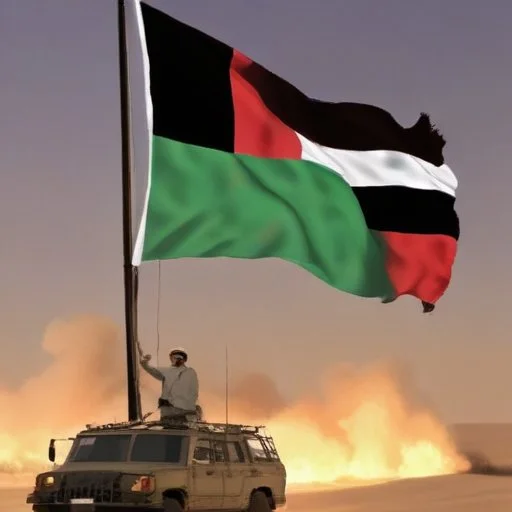
The seeds of conflict were sown when Iraq, led by Saddam Hussein, invaded Kuwait on August 2, 1990, under the pretext of a long-standing territorial dispute. The international community condemned the invasion, and the United Nations Security Council passed Resolution 660, demanding Iraq's immediate withdrawal. When diplomacy failed, the United States, along with a coalition of 34 nations, launched Operation Desert Storm on January 17, 1991, to liberate Kuwait.
August 2, 1990: Iraq invades Kuwait.
August 7, 1990: The United States begins deploying troops to Saudi Arabia.
January 17, 1991: Operation Desert Storm commences.
February 24, 1991: Ground troops enter Kuwait.
February 27, 1991: President George H. W. Bush announces the liberation of Kuwait.
The liberation of Kuwait had a profound impact on the cultural and social fabric of the nation. The war led to a renewed sense of national pride and identity, as well as a deeper appreciation for the country's sovereignty. The international community's response to the invasion also underscored the importance of protecting small nations from aggression.
"This will not stand, this aggression against Kuwait." - George H. W. Bush
The Gulf War shares parallels with other conflicts, such as the Korean War, where an international coalition came together to defend a nation against aggression. The war also drew comparisons with World War II, where the Allied forces fought against an expansionist power.
One notable account is that of a Kuwaiti citizen, who recalled the day of liberation: "We were huddled around the radio, listening to the news. When we heard President Bush's announcement, we erupted in tears and cheers. It was a moment of pure jubilation."
The Gulf War set a precedent for international cooperation in response to aggression, paving the way for future coalitions and interventions. The war also highlighted the importance of rapid and decisive action in the face of humanitarian crises.
President George H. W. Bush was awarded the Purple Heart for his service in World War II, and his leadership during the Gulf War earned him the respect and admiration of the international community.
The Gulf War has been extensively studied in academic circles, with scholars analyzing its implications for international relations, coalition-building, and humanitarian intervention.
The Gulf War marked a significant shift in the field of international relations, highlighting the importance of collective security and coalition-building. The war also underscored the need for rapid and decisive action in the face of humanitarian crises.
The war was marked by several milestones, including the liberation of Kuwait City, the withdrawal of Iraqi forces, and the restoration of Kuwait's sovereignty.
The Gulf War was the first major conflict to be televised extensively, with CNN providing 24-hour coverage of the war.
In the aftermath of the war, many speculated about the potential for a more robust international response to humanitarian crises, as well as the potential for a shift in the global balance of power.
The international community's response to the Gulf War led to a significant increase in charitable contributions to humanitarian organizations, as well as a renewed focus on protecting vulnerable nations and populations.
The bravery and resilience of the Kuwaiti people, as well as the international community's response to the invasion, serve as a testament to the power of collective action and the importance of standing up against aggression.
The liberation of Kuwait had a profound impact on the cultural identity of the nation. The war led to a resurgence of national pride and a renewed sense of unity among the Kuwaiti people. The international community's response to the invasion also underscored the importance of protecting small nations from aggression, and Kuwait's sovereignty became a symbol of resistance against oppressive powers.
The war also had a significant impact on the arts, with many Kuwaiti artists creating works that reflected the nation's struggle for independence. Music, literature, and visual arts all played a role in expressing the emotions and sentiments of the Kuwaiti people during this time.
In addition, the war led to a greater emphasis on education and cultural exchange programs, as Kuwait sought to rebuild and strengthen its ties with the international community.

Sabah Al-Ahmad Al-Jaber Al-Sabah, the Emir of Kuwait, was a key figure in the nation's struggle for independence. During the Iraqi invasion, he fled to Saudi Arabia, where he established a government-in-exile and worked tirelessly to rally international support for Kuwait's liberation.
Emir Sabah's leadership and diplomatic skills were instrumental in securing the support of the international community, and his return to Kuwait after the war marked a new era of independence and self-determination for the nation.
Despite the challenges he faced, Emir Sabah remained committed to his people and to the cause of Kuwaiti independence, earning him the respect and admiration of the international community.
The Gulf War shares parallels with other conflicts, such as the Falklands War, where a small nation fought against a more powerful aggressor. Both wars saw an international coalition come together to defend a nation's sovereignty, highlighting the importance of collective security and cooperation.
Similarly, the Gulf War drew comparisons with the Vietnam War, where a coalition of nations fought against a communist insurgency. Both conflicts saw the use of advanced military technology and tactics, and both resulted in significant consequences for the participating nations.
The economic impact of the Gulf War was significant, with the cost of the war estimated to be over $60 billion. The war led to a significant increase in oil prices, which had a ripple effect on the global economy.
In addition, the war resulted in significant damage to Kuwait's infrastructure, including its oil fields, which had to be rebuilt and restored after the war.
However, the war also led to increased economic cooperation between nations, with many countries working together to stabilize the global economy and provide humanitarian aid to Kuwait.
The Gulf War was fought against the backdrop of a rapidly changing global political landscape. The end of the Cold War had created a new era of international relations, with the United States emerging as the sole superpower.
The war marked a significant shift in the balance of power in the Middle East, with the United States and its allies emerging as the dominant force in the region.
The war also highlighted the importance of international cooperation and collective security, as nations worked together to address the humanitarian crisis in Kuwait.