


In the shadow of his father's death, Henry VIII emerged as the new king of England, marking the beginning of a reign that would be etched in the annals of history as one of extravagance, brutality, and unbridled power. The 17-year-old monarch's ascension to the throne in 1509 would set the tone for a dynasty marred by beheadings, wars, and a ruthless pursuit of absolute authority.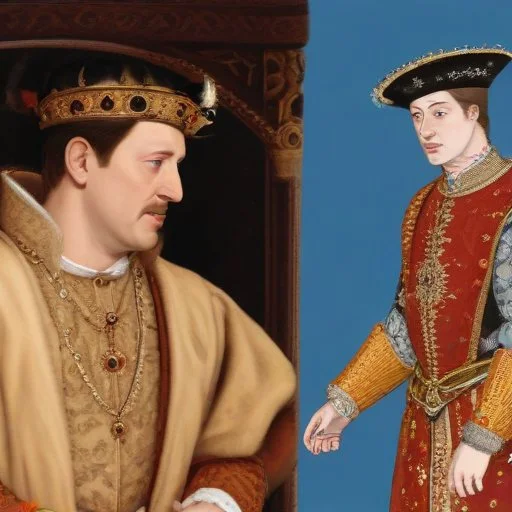
Henry VII, the first Tudor king, had ruled England with an iron fist, carefully consolidating power and amassing wealth through strategic marriages and shrewd financial management. His son, Henry VIII, inherited a centralized government, a replenished treasury, and a kingdom ripe for expansion. However, the new king's priorities lay more in grandeur and self-aggrandizement than in the prudent stewardship of his father.
Henry VIII's lavish spending and love of grandeur marked a stark departure from his father's frugal nature. The young king's court became a hub of extravagance, with elaborate tournaments, feasts, and architectural projects draining the royal coffers. The construction of grand palaces, such as Hampton Court and Whitehall, symbolized the monarch's newfound power and ambition.
Henry VIII's ascension to the throne also marked the beginning of a reign of terror, as he sought to consolidate power and crush opposition. The execution of Empson and Dudley, two of his father's most trusted advisors, sent a chilling message to potential rivals and dissenters. The king's ruthless pursuit of authority would eventually lead to the English Reformation, the establishment of the Church of England, and the infamous executions of wives, nobles, and commoners alike.
The reign of Henry VIII would leave an indelible mark on English history, shaping the course of politics, religion, and culture for centuries to come. The Tudor dynasty, marked by its excesses and brutalities, would eventually give way to the Stuarts, but the legacy of Henry VIII's tyranny would continue to influence the monarchy and the nation.
As the curtain rises on Henry VIII's tumultuous reign, the course of English history is forever altered. The dramatic, and often brutal, events that unfold would leave an indelible mark on the nation, shaping its politics, culture, and identity for centuries to come.
Thomas Wolsey, a shrewd politician and advisor, played a crucial role in shaping Henry VIII's early reign. Born in 1473, Wolsey rose through the ranks of the clergy, eventually becoming the Archbishop of York and a trusted counselor to Henry VII.
Wolsey's influence on Henry VIII was immense, as he helped the young king navigate the complexities of statecraft and diplomacy. He was instrumental in orchestrating Henry's marriage to Catherine of Aragon and securing the Treaty of London, a pact that established a temporary peace among European powers.
However, Wolsey's meteoric rise to power would eventually lead to his downfall. His failure to secure an annulment of Henry's marriage to Catherine, combined with his perceived arrogance and extravagance, led to his eventual dismissal and later, his execution.

Henry VIII's ascension to the throne occurred at a critical juncture in European history. The continent was witnessing a shift in power dynamics, with emerging nations like England, France, and Spain vying for dominance.
In this context, Henry VIII's early reign was marked by a series of strategic alliances and marriages, aimed at strengthening England's position on the global stage. His marriage to Catherine of Aragon, for instance, cemented an alliance with Spain and secured England's influence in Europe.
Henry's aggressive foreign policy, exemplified by his invasion of France in 1513, further solidified England's reputation as a military power. However, this aggressive posturing also led to increased tensions with European rivals, setting the stage for a series of costly and protracted conflicts.
Henry VIII's love of grandeur and opulence is perhaps best exemplified by his extensive palace-building projects. The construction of Whitehall Palace, Hampton Court, and other lavish residences not only showcased the king's wealth and power but also had a profound impact on English culture.
These palaces became centers of artistic and cultural innovation, attracting some of the most talented architects, artists, and craftsmen of the time. The fusion of Renaissance and Gothic styles, which characterized Henry's architectural projects, would influence English design for centuries to come.
The cultural significance of Henry VIII's palace building extends beyond aesthetics, however. These grandiose structures also served as symbols of royal authority, reinforcing the monarch's status as the epitome of power and sophistication.

Historians have long grappled with the enigmatic figure of Henry VIII, attempting to reconcile the contradictions of his personality and reign. Traditional interpretations have portrayed Henry as a ruthless tyrant, driven by lust and ambition.
However, recent scholarship has sought to nuance this view, highlighting the complexities of Henry's character and the context in which he ruled. This more balanced approach recognizes the king's genuine achievements, such as his promotion of education and the arts, while still acknowledging the brutalities of his reign.
This historiographical reassessment has significant implications for our understanding of Henry VIII's legacy, encouraging a more multifaceted appreciation of this pivotal figure in English history.
Henry VIII's extravagance had far-reaching economic consequences, influencing the course of English economic development for generations to come. The king's lavish spending on palaces, tournaments, and wars drained the royal coffers, leading to a significant increase in taxation and debt.
The economic burden of Henry's spending was not limited to the crown, as the king's subjects also felt the pinch. The debasement of the English currency, combined with inflation and trade disruptions, contributed to widespread economic instability.
Despite these challenges, Henry VIII's reign also witnessed significant economic innovations, including the establishment of a central bank and the development of new trade networks. These reforms helped lay the foundations for England's emergence as a major economic power in the centuries that followed.