


The Hindenburg Line, a seemingly impenetrable series of German fortifications, had stood firm against the Allied forces for years. But on a fateful day in 1918, the unyielding walls came tumbling down, marking a crucial turning point in the First World War that would forever change the course of history.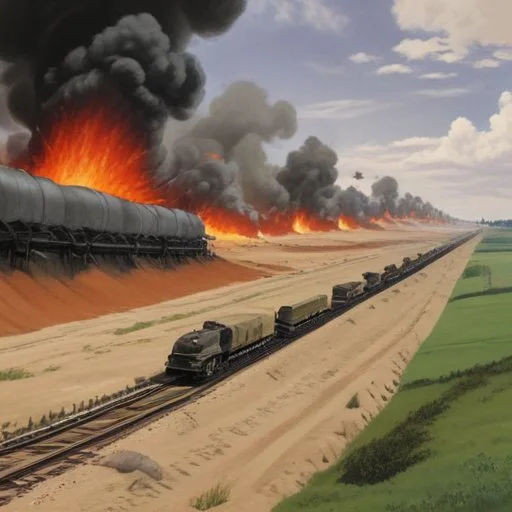
Constructed in 1916, the Hindenburg Line was a 95-mile-long system of trenches, dugouts, and fortifications stretching from Césarville, a village in northeastern France, to the Belgian city of Armentières. This formidable barrier was designed to protect Germany's industrial heartland, the Ruhr Valley, from Allied incursions. The line was nicknamed the "Hindenburg Line" after Field Marshal Paul von Hindenburg, the German commander-in-chief.
On September 29, 1918, General Henry Rawlinson's British Fourth Army, bolstered by tanks and artillery, launched a massive assault on the Hindenburg Line. The Allies unleashed a torrent of firepower, shattering the German defenses with an unprecedented barrage of artillery shells. As the German lines wavered, British and Australian forces surged forward, breaching the fortifications and shattering the German army's morale.
The breakthrough at the Hindenburg Line opened up a path for the Allies to push deep into German territory, paving the way for the eventual defeat of Germany. As the German army stumbled backward, the Allies poured in, exploiting the breach and advancing toward the German heartland. The fall of the Hindenburg Line marked the beginning of the end of Germany's grip on occupied territory, and the start of a desperate retreat that would culminate in the Armistice of November 11, 1918.
The breach of the Hindenburg Line had far-reaching consequences. The German army's collapse led to the surrender of Bulgaria and Turkey, weakening the Central Powers' grip on the war effort. The Allies' newfound momentum paved the way for the eventual defeat of Germany and the emergence of the Treaty of Versailles, redrawing the world order and setting the stage for the tumultuous 20th century.
German General Erich Ludendorff would later describe the breach of the Hindenburg Line as "a black day for Germany." As the Allies poured into German territory, the once-mighty German war machine began to unravel. The loss of the Hindenburg Line marked a turning point in the war, and the beginning of Germany's long, painful descent into defeat.
The breach of the Hindenburg Line stands as a testament to the unyielding determination and sacrifice of soldiers on both sides of the conflict. This pivotal moment in history serves as a reminder of the devastating consequences of war and the importance of diplomacy and cooperation in preventing such catastrophes from occurring again.
As we reflect on the centennial of this momentous event, we are reminded of the solemn duty to learn from the lessons of history, and to strive for a world free from the scourge of war.
Field Marshal Paul von Hindenburg was a seasoned military strategist who oversaw the construction of the Hindenburg Line. Born in 1847, Hindenburg was a decorated veteran of the Franco-Prussian War and had served as a corps commander during the early years of World War I. His experience and tactical prowess made him the ideal candidate to spearhead Germany's defensive efforts.
Despite his impressive military credentials, Hindenburg was also known for his modest demeanor and willingness to listen to his subordinates, traits that earned him the respect and admiration of his troops.

The Hindenburg Line was more than just a physical barrier; it was also a symbol of Germany's complex web of alliances. The line was constructed in part to protect Germany's industrial heartland, but it also served as a bulwark against the Allied forces, which had been bolstered by the entry of the United States into the war.
The intricate network of alliances that characterized World War I created a complex geopolitical landscape, with multiple actors and interests vying for dominance.
The Hindenburg Line was not the only formidable defensive system of its time. The Maginot Line, constructed by France in the 1930s, was another infamous example of military engineering. While both lines shared similar goals, they differed significantly in design and implementation.
The Hindenburg Line was a more fluid, adaptable system, designed to respond to changing circumstances on the battlefield, whereas the Maginot Line was a more static, fortified structure.

Historians have long debated the importance of the Hindenburg Line in the larger context of World War I. Some have argued that the line was a crucial factor in the war's outcome, while others have downplayed its significance.
Recent scholarship has sought to reevaluate the role of the Hindenburg Line, highlighting its impact on the war's momentum and the psychological toll it took on the German army.
The Allied forces' success in breaching the Hindenburg Line was due in part to the innovative use of tanks and artillery. The deployment of these technologies marked a significant shift in the nature of modern warfare.
The development of tanks, in particular, allowed the Allies to overcome the sturdy fortifications of the Hindenburg Line, paving the way for a new era of mechanized warfare.