


The Vel d'Hiv Roundup, a brutal and devastating episode in human history, marked a day of infamy on July 16, 1942, when the Vichy French government, in collaboration with the Nazi regime, arrested and detained 13,152 Jews at the Vélodrome d'Hiver in Paris, condemning them to a one-way journey to Auschwitz. This heinous act remains a dark stain on the conscience of humanity, a poignant reminder of the horrors of racial segregation and genocide.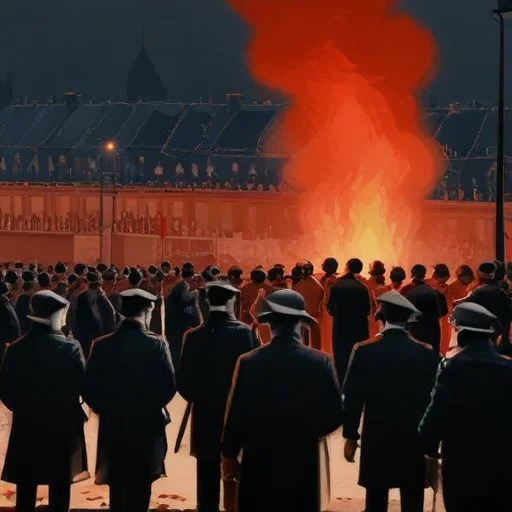
In the early 1940s, as the Nazi occupation of France tightened its grip, anti-Semitic sentiment began to simmer beneath the surface. The Vichy regime, led by Marshal Philippe Pétain, actively collaborated with the Nazis, introducing a series of laws aimed at persecuting Jews, including the infamous Statut des Juifs (Jewish Statute) of 1940. This toxic environment laid the groundwork for the Vel d'Hiv Roundup.
'Operation Vent Printanier' (Operation Spring Breeze) was the codename for the Vel d'Hiv Roundup, a meticulously planned and executed operation that saw French police, assisted by German authorities, conduct a massive sweep of Jewish homes and neighborhoods. Over 13,000 Jews, including women, children, and the elderly, were arrested and transported to the Vélodrome d'Hiver, a converted indoor cycling track in the heart of Paris.

The Vélodrome d'Hiver, with its cramped and unsanitary conditions, became a temporary internment camp, where detainees were subjected to overcrowding, hunger, and thirst. The camp's windows were sealed, and prisoners were denied access to basic amenities, including toilets and running water. As the days passed, the Vélodrome d'Hiver became a symbol of inhumanity, a testament to the brutality of the Nazi-Vichy alliance.
The Vel d'Hiv Roundup marked the beginning of the end for the 13,152 detainees. After several days of confinement at the Vélodrome d'Hiver, they were forcibly deported to Auschwitz-Birkenau, where the majority were sent to the gas chambers, their lives brutally cut short in the name of racial purity.
The Vel d'Hiv Roundup remains a painful chapter in French history, with many regarding it as a national shame. In the decades following the war, France struggled to come to terms with its complicity in the Holocaust, only acknowledging its responsibility in the 1990s. The event has sparked ongoing debates about collective responsibility, guilt, and the dangers of xenophobia.
The Vel d'Hiv Roundup serves as a somber reminder of the devastating consequences of racial prejudice, hatred, and collaboration. It has inspired numerous works of literature, art, and film, ensuring that the voices of the victims are never silenced. The event has also prompted numerous commemorations and tributes, including the 1995 inauguration of the Mémorial de la Shoah in Paris.
"Those who cannot remember the past are condemned to repeat it." - George Santayana
The Vel d'Hiv Roundup is a stark reminder of the importance of confronting the darkest corners of human history, lest we repeat the mistakes of the past. May the victims of this tragedy never be forgotten, and may their stories serve as a beacon of hope, guiding us toward a future built on tolerance, compassion, and understanding.
The Vel d'Hiv Roundup was a brutal display of the Vichy regime's complicity with the Nazi occupation. However, it also sparked a turning point for the French Resistance. As news of the roundup spread, Resistance groups began to organize and coordinate their efforts to disrupt the Nazi war machine. The roundup galvanized the Resistance, leading to increased sabotage, intelligence gathering, and guerrilla warfare against the occupiers.
One notable example is the establishment of the Resistance network, Combat, which was instrumental in disrupting the Nazi's communication networks and facilitating the escape of Jews and other persecuted individuals. The roundup also prompted the creation of the Mouvements Unis de la Résistance, a unified resistance movement that would go on to play a crucial role in liberating France.
René Bousquet, the Chief of the French Police, was a key figure in the planning and execution of the Vel d'Hiv Roundup. A high-ranking official in the Vichy regime, Bousquet was instrumental in implementing the Nazi's anti-Semitic policies in France. His zealous collaboration with the Nazis earned him the nickname "the French Eichmann."
Bousquet's role in the roundup was instrumental, as he worked closely with German authorities to identify and arrest Jews. His efforts were rewarded with a promotion to General Secretary of the Vichy Police, solidifying his position as a key enabler of the Holocaust in France.
The Vel d'Hiv Roundup was not an isolated incident. Across Nazi-occupied Europe, similar atrocities were committed, revealing a pattern of brutal suppression and extermination. In the Netherlands, the Jodenverordening, or "Jew Ordinance," forced Jews to register with the authorities, paving the way for their deportation to concentration camps.
In Poland, the Nazis established the Warsaw Ghetto, confining thousands of Jews to a cramped and unsanitary environment. Similarly, in Denmark, the Nazis attempted to round up Jews, but a daring rescue effort by the Danish Resistance saved thousands.
The Vel d'Hiv Roundup has left an indelible mark on French culture, influencing literature, art, and film. Claude Lanzmann's documentary, Shoah, explored the roundup and its aftermath, while Marcel Ophüls' film, The Sorrow and the Pity, examined the Vichy regime's complicity in the Holocaust.
In literature, the roundup has inspired works such as The Diary of a Young Girl by Anne Frank and Night by Elie Wiesel. The tragedy has also been commemorated through numerous monuments and memorials, including the Mémorial de la Shoah in Paris.
The Vel d'Hiv Roundup was not solely a French or German phenomenon, but rather a product of the complex geopolitics of World War II. As the war raged on, the Nazis sought to expand their territory and consolidate power, leveraging collaborators like the Vichy regime to achieve their goals.
The roundup was also influenced by the international community's response to the war. The United States' reluctance to intervene, combined with the British government's limited ability to act, created a power vacuum that allowed the Nazis to wreak havoc across Europe.